NHK: The History and Evolution of Japan's Public Broadcaster
NHK, known natively as Nippon Hōsō Kyōkai, stands as the cornerstone of Japanese media. As a statutory corporation chartered under the Broadcasting Act of 1950, it serves as Japan's primary public broadcaster, delivering radio, television, and online content to audiences both domestically and worldwide through NHK World-Japan.
From its early roots in the 1920s to its current status as a multi-platform media giant, NHK has mirrored the technological and social transformations of Japan. Headquartered at the NHK Broadcasting Center in Shibuya, Tokyo, the organization has evolved from a collection of regional stations into a sophisticated global network.
Key Facts
- Founded: Originally established in August 1926; current incarnation established June 1, 1950.
- Founder: Gotō Shinpei.
- Type: Statutory corporation.
- Headquarters: Shibuya, Tokyo, Japan.
- Services: Radio, television, and online broadcasting.
- Global Reach: NHK World-Japan provides international services.
Historical Foundations
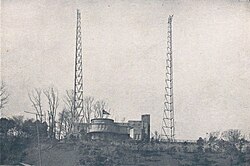
The origins of NHK can be traced back to 1924 with the founding of the Tokyo Broadcasting Station under the leadership of Count Gotō Shinpei. In 1925, separate radio broadcasting operations began in Tokyo, Osaka, and Nagoya. These entities merged in August 1926 to form the first incarnation of NHK, a move modeled after the United Kingdom's BBC.
During the 1930s, NHK expanded its reach through experimental shortwave broadcasting. By 1935, it began regular English and Japanese-language broadcasts under the name Radio Japan, initially targeting ethnic Japanese populations in Hawaii and the North American West Coast. By 1941, these overseas operations were officially known as Radio Tokyo.
The Modern Era: Television and Satellite Expansion
A pivotal shift occurred with the enactment of the 1950 Broadcasting Act. This legislation transformed NHK into a listener-supported independent corporation and established the framework for commercial broadcasting in Japan. Following this, NHK entered the television era, beginning broadcasts in 1953, launching an educational TV channel in 1959, and introducing color television in 1960.
Satellite and Digital Innovation
NHK has consistently remained at the forefront of broadcasting technology. In the 1980s, the broadcaster pioneered satellite services with the launch of NHK BS 1 in 1984 and NHK BS 2 in 1985. The organization later expanded its international footprint, launching NHK World in 1998 and providing free-to-air satellite services in Europe by 2008.
The transition to digital was equally significant. NHK began digital television broadcasting via BS Digital in December 2000, followed by terrestrial digital broadcasts in major metropolitan areas in 2003. By July 24, 2011, digital coverage spanned almost all of Japan, marking the end of the analog era (with exceptions for areas affected by the 2011 Tōhoku earthquake and tsunami).
Organizational Structure and Services
NHK operates through various specialized channels and subsidiaries to manage its vast array of content. Its radio services include NHK AM, which provides 24-hour news, weather, and entertainment, similar in structure to the UK's BBC Radio 4.
Television services are categorized into several key streams:
- NHK BS: Focused on information, international documentaries, sports, and culture.
- NHK BS Premium 4K: Dedicated to high-definition cultural and entertainment programming.
- NHK World-Japan: The international arm providing global news and culture.
The organization also manages several subsidiaries, including NHK Media Holdings, NHK Technologies, and the NHK Symphony Orchestra, which was established in 1942.
Summary of NHK Operations
| Category | Details |
|---|---|
| Primary Media | Radio, Television, Online |
| Key Radio Service | NHK AM (24-hour news and entertainment) |
| Key TV Services | NHK BS, NHK BS Premium 4K, NHK General |
| International Brand | NHK World-Japan |
| Digital Transition | Completed nationwide by July 2011 |
Frequently Asked Questions
What is the legal status of NHK?
NHK is a statutory corporation chartered under the Broadcasting Act of 1950. It operates as a listener-supported independent corporation.
How does NHK reach an international audience?
NHK reaches global audiences through NHK World-Japan, which provides content via satellite and online platforms, including free-to-air services in Europe.
What is the significance of the 1950 Broadcasting Act?
The 1950 Act made NHK an independent, listener-supported corporation and simultaneously opened the Japanese market to commercial broadcasting.
Does NHK provide news in English?
Yes, NHK offers bilingual news programming. Flagship programs like News 7 and News Watch 9 are broadcast with both Japanese and English audio tracks on various channels.
What is the longest-running children's show on NHK?
Okaasan to Issho (With Mother) is the longest-running children's show in Japan, having aired continuously since 1959.