News Anchors: The Tension Between Journalism and Performance
In the landscape of American media, the news anchor occupies a complex and often contested position. While some view them as essential figureheads of truth and wisdom, others argue that the role has devolved into a sensationalized performance where the anchor's persona overshadows the actual news. This tension highlights a broader debate about whether the anchor is a necessary conduit of credibility or a commodified character designed for show business.
Key Facts
- Role Evolution: The rise of citizen journalism and satirical journalism has shifted the interpretation of truth away from traditional professional anchors.
- Credibility Risks: High-profile lapses, such as Brian Williams' fabrication of stories, can corrode trust in both the individual and the entire news medium.
- Alternative Models: Programs like 60 Minutes and networks like Vice eschew a central anchor in favor of multiple correspondents and on-site reporting.
- Psychological Appeal: Some experts argue that anchors build essential familiarity and trust between the network and the viewer.
- Information Bottleneck: Critics suggest that relying on a few public personas to interpret the world creates a bottlenecked stream of information.
The Anchor as a Symbolic Figure
The role of the network anchor is more than just a job; it is a symbolic representation of an integrated institutional order. According to scholar Margaret Morse, the anchor represents a complex nexus involving the news itself, the corporate conglomerate owning the network, the institution of television, and the public interest. This position is compared to high-level roles such as the president or a Supreme Court justice, though it originates from corporate rather than political processes.
However, this prestige often comes with a trade-off. Frank Rich of New York magazine suggests that since World War II, major news anchors have been aligned with show business, where the ability to read headlines appealingly to a camera is often incentivized over rigorous reporting.
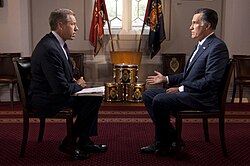
The Cost of Lost Credibility
The danger of prioritizing persona over reporting is evident in the case of Brian Williams, a former anchor for NBC Nightly News. In 2015, Williams apologized for fabricating accounts of his experiences during major news events. This indiscretion led to a loss of 700,000 viewers for the program. NPR's David Folkenflik noted that such scandals do not just affect the individual but corrode trust in the network and the profession of journalism as a whole.
Competing Perspectives on the Anchor's Utility
There is a significant divide regarding whether a central anchor is even necessary in modern broadcasting. Some networks have moved toward a decentralized model to emphasize authenticity and on-site reporting.
| Model Type | Key Characteristics | Examples |
|---|---|---|
| Traditional Anchor | Central figurehead; elevated desk; perceived as an arbiter of information. | NBC Nightly News |
| Correspondent-Led | No central figure; multiple reporters with equal importance. | 60 Minutes |
| Documentary-Style | Emphasis on on-site reporting; eschews traditional broadcast formatting. | Vice |
The Argument for the Anchor
Despite criticisms that anchors merely "regurgitate" the work of on-site reporters, some defend the role as a psychological necessity. Journalism professor Elly Alboim argues that the nightly presence of a familiar face builds trust between the network and the audience. This suggests that the American "personality cult"—which favors celebrity and clear hierarchies of authority—makes the presence of an anchor more important to viewers than the specific identity of the person filling the role.
The Intersection of Media and Democracy
The influence of news anchors extends into the political realm. Because there are few other venues for substantial discourse on social and cultural values, a small number of public personas—including the president and lead news anchors—become responsible for interpreting the world and setting the social agenda.
Margaret Morse warns that this creates a bottleneck of information. Furthermore, while the dramaturgy (the use of dramatic techniques) of a news broadcast can make governance more interesting to the public, there is a fundamental difference between drama and democracy. Drama requires spectators, whereas democracy requires active participants.
Conversely, former NBC anchor Tom Brokaw describes news as a "populist medium." He suggests that news stories often evolve based on viewer demand, noting that audiences generally do not turn to television for historically detailed descriptions, but rather for a reflection of the world that resonates with their needs.
Frequently Asked Questions
How has the role of the news anchor changed recently?
The advent of citizen journalism and satirical journalism has shifted the interpretation of truth away from traditional professional anchors, though the role remains a consistent fixture in American media.
Why do some critics argue against having a central news anchor?
Critics argue that anchors can become sensationalized characters who prioritize performance over reporting, and that relying on a few personas creates an information bottleneck for the public.
What is the benefit of having a news anchor according to supporters?
Supporters, such as professor Elly Alboim, argue that anchors provide a necessary sense of familiarity and trust, serving as the primary point of connection between the viewer and the news network.
How do programs like 60 Minutes differ from traditional nightly news?
Unlike traditional nightly news, 60 Minutes does not use a central figurehead, instead utilizing multiple correspondents who hold similarly important roles in delivering stories.
What is the relationship between news dramaturgy and democracy?
While dramatic techniques can make political processes more engaging for the public, critics argue that this transforms the viewer into a spectator (drama) rather than an active participant (democracy).