New Zealand Labour Party: The Early Foundations (1910–1912)
Long before the modern political landscape of New Zealand took shape, a series of short-lived but pivotal movements laid the groundwork for working-class representation. Among these was the original New Zealand Labour Party, a left-wing organization that existed between 1910 and 1912. Though its lifespan was brief, it served as a critical bridge between early labor activism and the establishment of the contemporary Labour Party.
The Origins of the Party
The original Labour Party was founded in 1910 as an effort to revitalize the efforts of the Independent Political Labour League (IPLL). Formed between 1904 and 1905, the IPLL was New Zealand's first genuine working-class political party. While the IPLL achieved a milestone by electing David McLaren to Parliament, the organization eventually succumbed to internal instability.
The collapse of the IPLL was driven by poor coordination, organizational failures, and deep-seated internal disputes regarding the party's political alignment. The 1910 formation of the Labour Party was essentially a strategic relaunch intended to stabilize these efforts and provide a cohesive voice for democratic socialism—a political philosophy that advocates for a democratic political system alongside a socially owned economy.
Parliamentary Presence and the 1911 Election
Despite the fragmented nature of the left-wing vote at the time, the Labour Party managed to secure a foothold in the legislature. During the 1911 election, the party maintained its representation in Parliament through three key figures: John Robertson, John Payne, and the party chair, Alfred Hindmarsh.
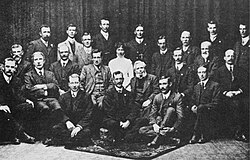
However, the party did not hold a monopoly over left-wing sentiment. Support was split between the Labour Party, the Socialist Party, and various independent candidates, which limited the overall impact of any single group on the national stage.
The Path to Unity and Dissolution
By 1912, there was a growing recognition that the division of the left was counterproductive. This led to the calling of a "Unity Conference," designed to merge the various leftist factions into a single, powerful entity. While the Socialist Party declined to attend, several independent activists, including Bill Veitch, joined the discussions.
The result of this conference was the dissolution of the original Labour Party and the creation of the United Labour Party. This new organization combined the remnants of the Labour Party with various independent elements.
The Evolution into the Modern Labour Party
The political evolution did not stop with the United Labour Party. In a series of subsequent mergers, the majority of the United Labour Party joined forces with the Socialists to create the Social Democratic Party. Eventually, this new group merged with the remaining independent elements of the United Labour Party, finally forming the modern Labour Party that exists in New Zealand today.
Key Facts
- Founded: 1910
- Dissolved: 1912
- Ideology: Democratic socialism
- Political Position: Left-wing
- Preceded by: Independent Political Labour League (IPLL)
- Succeeded by: United Labour Party
- Key 1911 MPs: John Robertson, John Payne, and Alfred Hindmarsh
| Period/Year | Organization | Key Outcome/Status |
|---|---|---|
| 1904–1905 | Independent Political Labour League | First working-class party; elected David McLaren |
| 1910–1912 | New Zealand Labour Party (Original) | Relaunch of IPLL; held 3 seats in 1911 |
| 1912 | United Labour Party | Formed via Unity Conference |
| Post-1912 | Social Democratic Party | Merger of United Labour Party and Socialists |
| Final Stage | Modern Labour Party | Final merger of Social Democrats and remaining independents |
Frequently Asked Questions
What was the original New Zealand Labour Party?
It was a short-lived, left-wing political party founded in 1910 that served as a predecessor to the modern Labour Party.
Why was the original Labour Party formed?
It was created as an attempt to relaunch the Independent Political Labour League (IPLL), which had collapsed due to poor organization and internal disputes.
Who represented the party in the 1911 election?
The party was represented in Parliament by John Robertson, John Payne, and chair Alfred Hindmarsh.
What happened at the 1912 Unity Conference?
The conference aimed to unite leftist factions. While the Socialists did not attend, the Labour Party and several independents merged to form the United Labour Party.
How did this party lead to the modern Labour Party?
The original Labour Party became the United Labour Party, which then partially merged into the Social Democratic Party. A final merger between the Social Democrats and remaining independents created the current Labour Party.