New York Gilbert and Sullivan Players: A Legacy of Light Opera
Founded in 1974, the New York Gilbert and Sullivan Players (NYGASP) has evolved from a small group of passionate alumni into a professional pillar of the New York City theatre scene. Dedicated to the works of W.S. Gilbert and Arthur Sullivan, the company has spent five decades bringing the wit and melody of the Savoy operas—the series of comic operas written by the duo—to diverse audiences across the city and beyond.
The Early Years: From Street Fairs to Symphony Space
The company was established by Albert Bergeret, his wife Gail Wofford, and several colleagues, most of whom were alumni of the Barnard Gilbert and Sullivan Society. This college theatre group had been presenting operas at Columbia University since 1948. NYGASP's journey began on July 14, 1974, with a modest performance in Straus Park on Manhattan's Upper West Side during a street fair.
In its infancy, the group—originally known as the "West Side Gilbert & Sullivan Players"—operated with a cast of nine volunteers. These singers, drawn from Columbia University and the semi-professional theatre community, performed without pay. Using borrowed costumes and an electric piano, they brought scenes from the operas to nursing homes, hospitals, and outdoor venues. Their first indoor venue was the B’nai Jeshurun Community Center, where Bergeret served as the musical and stage director while building the sets himself. By 1975, the company officially incorporated as a not-for-profit organization under its current name.
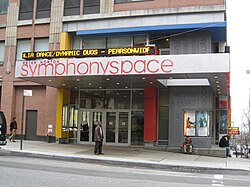
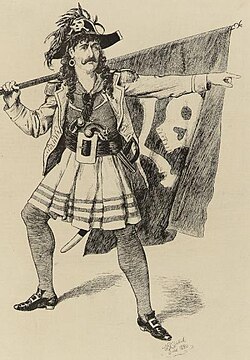
Growth accelerated in 1976 when the company began Sunday repertory runs. A landmark moment occurred on February 29, 1976, with the premiere of The Pirates of Penzance, timed to coincide with the 30th birthday of the character Frederic. By 1978, the company moved into the 700-seat Symphony Space theatre. Bergeret and Wofford secured this home by trading their services as technical director and house manager for office space and performance dates.
Professionalization and Public Recognition
The late 1970s marked a shift toward full professionalism. In May 1979, NYGASP hired its first 25-piece orchestra and began paying performance fees to principal singers. The company gained significant public attention on October 28, 1979, when the New York Times and New York Daily News published photos of the cast performing H.M.S. Pinafore on the Staten Island Ferry.
As the company celebrated the centennials of various G&S operas, it attracted high-profile supporters, including the renowned writer Isaac Asimov. This period established NYGASP as a critical success, earning frequent favorable reviews from major New York publications.
Expansion and Evolution in the 1980s and 1990s
During the 1980s, NYGASP expanded its reach by touring the U.S. East Coast and increasing its financial stability through annual grants from the New York State Council on the Arts. The company also established an independent Board of Directors to manage risk and fundraising.
To broaden its appeal, the company invited guest stars. In 1984, John Reed, the former principal comedian of the D'Oyly Carte Opera Company, joined for a production of Princess Ida. Reed's presence not only attracted other professional singers but also provided invaluable mentorship to the regulars. Other guest stars over the years included Steve Allen in 1995 and Hal Linden in 2008.
The 1980s and 90s saw the company unionize, joining the Actors' Equity union in 1989 and unionizing its orchestra in 1985. While the company briefly experimented with other works—such as Gershwin's Of Thee I Sing in 1989—the high costs led them to return exclusively to Gilbert and Sullivan and a few of Sullivan's other collaborations. Despite a financially difficult period around 1990, NYGASP survived and outlasted other local professional light opera companies, such as the Light Opera of Manhattan.
Modern Era: 2000 to 2024
The turn of the millennium brought changes in venue. When Symphony Space closed for renovations in 2001, NYGASP moved to the 2,750-seat New York City Center in 2002. This move significantly increased the company's visibility and grew its annual budget to nearly 1.5 million dollars. Notable productions during this era included a 2007 performance of The Rose of Persia, a work that had not been professionally staged in over seventy years.
In recent years, the company has performed at the Skirball Center for the Performing Arts and the Sylvia and Danny Kaye Playhouse at Hunter College. NYGASP has also demonstrated a commitment to cultural sensitivity; in 2015, the company withdrew a production of The Mikado following protests regarding stereotypical elements. After consulting with Asian-American theatre professionals, they debuted a redesigned production in 2016 to critical acclaim.
Under the long-term leadership of Albert Bergeret as artistic director and general manager, and Gail Wofford supervising costumes, the company has maintained a distinct style. While some critics have described Bergeret's staging as exaggerated, the musical execution has remained consistently praised. In 2022, Bergeret was honored with a Legend of Off Broadway award for his lifelong contributions to the arts.
Key Facts
- Founded: 1974 by Albert Bergeret and Gail Wofford.
- Core Repertoire: The extant Savoy operas of Gilbert and Sullivan.
- Major Venues: Symphony Space, New York City Center, and the Sylvia and Danny Kaye Playhouse.
- Professional Milestone: Hired its first 25-piece orchestra in May 1979.
- Budget Peak: Reached nearly 1.5 million dollars during the City Center era.
- Recognition: Albert Bergeret received the Legend of Off Broadway award in 2022.
| Year | Milestone | Significance |
|---|---|---|
| 1974 | First Performance | Debut at Straus Park street fair. |
| 1975 | Incorporation | Became a not-for-profit organization. |
| 1978 | Move to Symphony Space | Established a stable home for over two decades. |
| 1989 | Union Agreement | Entered into an agreement with Actors' Equity. |
| 2002 | City Center Move | Expanded to a 2,750-seat venue. |
| 2016 | Redesigned The Mikado | Updated production for cultural sensitivity. |
Frequently Asked Questions
Who founded the New York Gilbert and Sullivan Players?
The company was founded in 1974 by Albert Bergeret, his wife Gail Wofford, and several other alumni of the Barnard Gilbert and Sullivan Society.
What are the Savoy operas?
The Savoy operas are the series of comic operas written by librettist W.S. Gilbert and composer Arthur Sullivan, which form the primary repertoire of NYGASP.
Has NYGASP performed works other than Gilbert and Sullivan?
Yes, though rarely. The company briefly attempted to broaden its repertoire in 1989 by presenting George Gershwin's Of Thee I Sing, but returned to G&S due to the high costs of such experiments.
Where does the company currently perform?
While they have used various venues, including the Skirball Center, they have played mostly at the Sylvia and Danny Kaye Playhouse at Hunter College in recent seasons.
How did the company handle the controversy surrounding The Mikado?
In 2015, NYGASP withdrew a planned revival of The Mikado following protests about stereotypical elements. They consulted with an advisory group of Asian-American theatre professionals and journalists to redesign the production, which premiered in 2016.