New York City Ballet: A Legacy of Innovation and Artistry
The New York City Ballet (NYCB) stands as one of the most influential dance companies in the world. Founded in 1948, it has spent over seven decades redefining the boundaries of classical dance, blending rigorous technique with modern sensibilities. From its inception, the company was designed to be a vehicle for creative freedom, allowing choreographers to push the limits of movement and music.
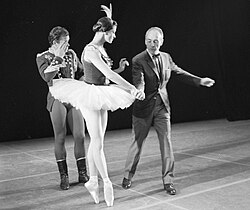
The company's identity is inextricably linked to its founders, choreographer George Balanchine and Lincoln Kirstein. Together, they established a sanctuary for dance that prioritized the artistic vision of the choreographer. This philosophy is best captured by Kirstein, who noted that his primary goal was to enable Balanchine to create exactly what he wanted, in the way he wanted to do it.
Key Facts
- Founded: 1948 by George Balanchine and Lincoln Kirstein.
- Founding Choreographers: George Balanchine and Jerome Robbins.
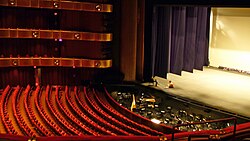
- Principal Venues: David H. Koch Theater (Lincoln Center, NYC) and Saratoga Performing Arts Center.
- Official School: School of American Ballet (SAB).
- Current Artistic Leadership: Jonathan Stafford (Artistic Director) and Wendy Whelan (Associate Artistic Director).
The Evolution of a Dance Powerhouse
The New York City Ballet did not emerge in a vacuum. It was the culmination of several earlier troupes and initiatives, including the Producing Company of the School of American Ballet (1934), the American Ballet (1935), and the Ballet Caravan (1936), which eventually merged into the American Ballet Caravan in 1941. The immediate precursor to the current company was the Ballet Society, established in 1946.
Throughout its history, NYCB has been defined by its landmark festivals and tributes. In 1960, the company presented a "Salute to Italy," featuring premieres such as Monumentum pro Gesualdo and the Donizetti Variations. The company also maintained a deep connection to the music of Igor Stravinsky, hosting a massive eight-day tribute in 1972 and a Centennial Celebration in 1982, the latter of which featured 25 ballets set to Stravinsky's music.
Leadership and Artistic Direction
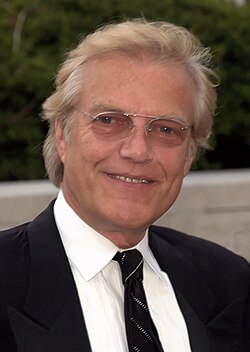
Following the death of George Balanchine in 1983, Peter Martins took over as balletmaster. For 30 years, Martins focused on the company's financial stability and the technical proficiency of the dancers. While he maintained high performance levels, some observers noted a shift away from the strict Balanchine style. Martins retired from his position on January 1, 2018.
Today, the company continues to evolve under the leadership of Jonathan Stafford and Wendy Whelan, supported by a robust artistic staff including Resident Choreographer Justin Peck and Artist in Residence Alexei Ratmansky.
Company Structure and Education
The New York City Ballet operates with a tiered hierarchy of dancers, consisting of Principal Dancers, Soloists, and the Corps de Ballet. The company draws much of its talent from the School of American Ballet, ensuring a consistent standard of training and style.
Beyond professional performances, NYCB is committed to community engagement through various programming:
- Family Saturdays: Interactive programs for children aged 5 and up.
- In Motion Workshops: Pre-performance explorations for children ages 5–11.
- Ballet Essentials: Informal classes for adults (21+) with little to no prior experience.
- $30 for 30: A discounted ticket program for patrons aged 13 to 30.
| Category | Details |
|---|---|
| Founders | George Balanchine & Lincoln Kirstein |
| Music Director | Andrew Litton |
| Primary Training Ground | School of American Ballet |
| Key Collaborators | Igor Stravinsky, Jerome Robbins |
| Main NYC Venue | David H. Koch Theater |
Frequently Asked Questions
Who founded the New York City Ballet?
The company was founded in 1948 by choreographer George Balanchine and Lincoln Kirstein, with Jerome Robbins also serving as a founding choreographer.
What is the relationship between NYCB and the School of American Ballet?
The School of American Ballet (SAB) is the official school of the New York City Ballet, providing the primary training for the company's dancers.
Where does the New York City Ballet perform?
Its principal venue is the David H. Koch Theater at the Lincoln Center for the Performing Arts in New York City, and it also performs at the Saratoga Performing Arts Center in Saratoga Springs, New York.
Who is the current Music Director?
The current Music Director of the New York City Ballet Orchestra is Andrew Litton.
Are there ticket discounts for young people?
Yes, the company offers a "$30 for 30" program, providing select tickets for $30 to patrons between the ages of 13 and 30.