New Ulm, Minnesota: A City of Charm and Tradition
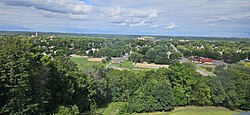
Nestled at the confluence of the Minnesota and Cottonwood Rivers, New Ulm serves as the county seat of Brown County, Minnesota. Known for its deep German roots and a motto that describes it as "A City of Charm And Tradition," New Ulm is a unique blend of historical resilience and cultural pride. With a population of 14,120 as of the 2020 census, the city remains a vibrant center of heritage in the American Midwest.
The city's layout is defined by its geography, sitting on a triangle of land where two major rivers meet before flowing toward the Mississippi. This strategic location helped shape its early development and continues to define its scenic beauty today.
Key Facts
- County Seat: Brown County, Minnesota.
- Cultural Identity: Strong German ethnic origins, reflected in its architecture and festivals.
- Population: 14,120 (2020 Census).
- Key Landmarks: The Hermann Monument and the historic Turner Hall.
- Education: Home to Martin Luther College.
- Geography: Located at the confluence of the Minnesota and Cottonwood Rivers.
A Legacy of German Settlement
The foundations of New Ulm were solidified in 1856 through the efforts of the Settlement Association of the Socialist Turner Society. The Turners (from the German word for "gymnasts") were a secular organization that promoted the philosophy of "Sound Mind, Sound Body," combining physical exercise with intellectual debate and lectures. Following the failed Revolutions of 1848 in Germany, many Turners emigrated to the United States, establishing Vereins (associations) across the country.
The U.S.–Dakota War of 1862
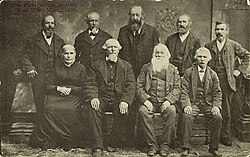
The city's early history was marked by significant conflict during the U.S.–Dakota War. On August 23, 1862, Dakota forces launched a large-scale attack. While defenders, supported by volunteer militia under Charles Flandrau, managed to repel the assault, the town suffered devastating losses. Most buildings outside the barricades were burned, leaving only 49 structures to house 2,500 residents. Due to disease and a lack of ammunition and shelter, the majority of the population evacuated to Mankato on August 25.
World War Perspectives
New Ulm's strong ties to Germany created complex dynamics during the World Wars. Leading up to U.S. entry into World War I in 1917, the community closely followed European events. In an unofficial referendum in April 1917, local voters opposed the war by a margin of 466 to 19. This sentiment culminated in a massive rally on July 25, 1917, where 10,000 people gathered at Turner Hall to protest sending American soldiers to a foreign land.
Cultural Landmarks and Arts
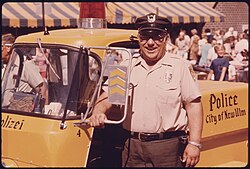
New Ulm is renowned for preserving its ethnic heritage through architecture and public art. The city is often referred to as the Polka capital of the nation, celebrating a musical tradition that remains central to its identity.
The Hermann Monument
Dominating the Minnesota River valley, the Hermann Monument was built by the Sons of Hermann, a German-American fraternal organization. Sculpted by Alfons Pelzer, the monument commemorates Arminius, a chieftain of the Cherusci tribe who defeated a Roman army at the Battle of the Teutoburg Forest. It stands as a powerful symbol of cultural heritage for the region's immigrants.
Turner Hall and Local History
The New Ulm Turner Hall, with sections dating back to 1873, is the oldest Turner Hall in the U.S. still serving its original purpose. It is listed on the National Register of Historic Places (NRHP) and features a Rathskeller (a basement bar/restaurant), which is likely the oldest continuously used bar in Minnesota. The hall is adorned with restored murals depicting scenes from Germany.
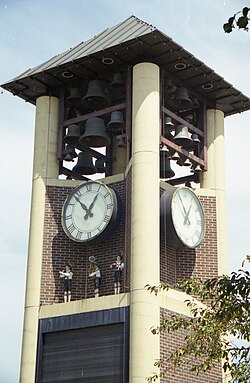
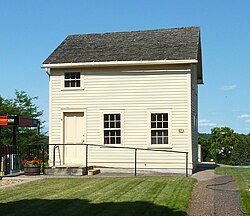
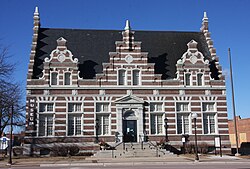
Other notable sites include the Historical Museum, housed in the old post office building, and the Glockenspiel in Schonlau Park.
City Profile and Demographics
New Ulm maintains a stable population with a strong emphasis on family and community. The 2020 census indicates a median age of 41.0 years, with a population that is predominantly White (94.1%).
| Category | Detail |
|---|---|
| Total Area | 10.29 sq mi |
| Elevation | 896 ft |
| 2020 Population | 14,120 |
| Median Age | 41.0 years |
| ZIP Code | 56073 |
| Sister City | Neu-Ulm, Bavaria, Germany |
Education and Notable Residents
The city is an educational hub, featuring Martin Luther College alongside New Ulm High School, Cathedral High School, and Minnesota Valley Lutheran High School. The local press is served by The Journal, a daily newspaper founded in 1898.
New Ulm has been the birthplace or home to various distinguished individuals, including Olympic wrestler Ali Bernard, audiologist pioneer Marion Downs, and several prominent Minnesota legislators and judges.
Frequently Asked Questions
What is the significance of the Turners in New Ulm?
The Turners were a German-American organization that combined gymnastics with intellectual pursuits. They were instrumental in the early settlement and cultural development of New Ulm, establishing the historic Turner Hall.
What happened during the U.S.–Dakota War of 1862 in New Ulm?
The city was attacked by Dakota forces, resulting in the burning of most of the town. Only 49 buildings survived, and the population was eventually forced to evacuate to Mankato due to a lack of resources and the spread of disease.
What is the Hermann Monument?
It is a large monument overlooking the city that commemorates the Germanic chieftain Arminius. It was built by the Sons of Hermann to represent the cultural heritage of German immigrants in the United States.
Is New Ulm still connected to Germany today?
Yes, New Ulm maintains a sister-city relationship with Neu-Ulm in Bavaria, Germany, and continues to celebrate its German origins through its architecture, the Glockenspiel, and various festivals.
What is the climate like in New Ulm?
New Ulm experiences a range of temperatures, with record highs reaching 111°F and record lows dropping to -37°F. It sees significant snowfall in the winter and peak precipitation typically occurs in May.