New Orleans Fire Department: History, Operations, and Emergency Services
The New Orleans Fire Department (NOFD) serves as the primary provider of fire protection and first responder emergency medical services for the city of New Orleans, Louisiana. Tasked with safeguarding a diverse urban landscape, the department protects a population of 378,715 residents across a vast operational area of 350 square miles. This territory is uniquely challenging, as it includes 170 square miles of water, requiring specialized maritime and land-based rescue capabilities.
Key Facts
- Established: December 15, 1891.
- Leadership: Led by Fire Chief Roman Nelson.
- Workforce: 656 employees (as of 2014).
- Annual Budget: $96,378,884 (as of 2014).
- Infrastructure: 31 stations organized into 6 battalions.
- Specialized Fleet: Includes fireboats, rescue boats, and airport crash units.
History and Evolution
Before the formal establishment of the department, firefighting in the city was managed by the Firemen's Charitable Association, a volunteer organization. This volunteer-led era concluded on December 15, 1891, with the official creation of the New Orleans Fire Department. Thomas O'Connor, who had previously led the volunteer corps, transitioned into the role of the department's first chief.
The city's history was marked by significant disasters even before the NOFD was formed, most notably the Great New Orleans Fires of 1788 and 1794, which underscored the critical need for organized fire suppression services.
Operational Infrastructure and Apparatus
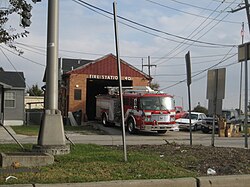
The NOFD utilizes a comprehensive network of stations and specialized equipment to ensure rapid response times across the city's various districts. The fleet is composed of a variety of apparatus, including 29 engines, 6 trucks, 2 squads, 2 rescues, 2 tenders, and a dedicated HAZMAT (Hazardous Materials) unit.
Specialized environments require specific tools. For instance, the Louis Armstrong New Orleans International Airport is served by four airport crash units (Fox 2, 5, 7, and 8), while the city's waterways are protected by the fireboat "Blaze" (Fireboat 805) and multiple rescue boats.
Resource Distribution Summary
| Category | Quantity/Detail |
|---|---|
| Total Stations | 31 |
| Battalions | 6 |
| Engines | 29 |
| Trucks | 6 |
| Rescue/Squad Units | 4 (2 Rescue, 2 Squad) |
| Water-Based Units | 3 (1 Fireboat, 2 Rescue Boats) |
| IAFF Members | 632 |
Major Incidents and Impact
One of the most defining moments in the department's modern history was the landfall of Hurricane Katrina on August 29, 2005. The storm caused catastrophic damage, resulting in 1,464 deaths and flooding 80% of the city. The disaster led to numerous building fires and forced the disbandment of several fire companies, such as Engine 3 and Engine 22, due to the severity of the destruction.
Frequently Asked Questions
When was the New Orleans Fire Department officially founded?
The department was officially created on December 15, 1891, transitioning from a volunteer-based system managed by the Firemen's Charitable Association.
Who was the first chief of the NOFD?
Thomas O'Connor, who previously led the volunteer firefighting corps, served as the first chief of the newly created department.
How does the NOFD handle the city's extensive waterways?
The department employs specialized maritime equipment, including the fireboat "Blaze" and several rescue boats, to provide protection across the 170 square miles of water within its jurisdiction.
What impact did Hurricane Katrina have on the department's infrastructure?
Hurricane Katrina caused widespread flooding and fires, leading to the loss of life and the permanent disbandment of several fire companies, including Engine 3 and Engine 22.
How many people does the NOFD serve?
The department provides emergency services to 378,715 people living within a 350 square mile operational area.