New Mexico historySanta FeAlbuquerqueLand of EnchantmentNew Mexico geography

New Mexico: The Land of Enchantment's Rich History and Diverse Landscapes

Discovering New Mexico: The Land of Enchantment Known affectionately as The Land of Enchantment, New Mexico is a state defined by its profound history, diverse landscapes, and vibrant cul...

Discovering New Mexico: The Land of Enchantment

Known affectionately as The Land of Enchantment, New Mexico is a state defined by its profound history, diverse landscapes, and vibrant cultural tapestry. From the high-altitude peaks of the Sangre de Cristo Range to the vast, shimmering stretches of White Sands, the state offers a unique blend of ancient heritage and modern innovation. Whether you are exploring the deep history of its indigenous peoples or the cutting-edge technology of its aerospace sectors, New Mexico provides an experience unlike any other in the United States.

Ancestral Pueblo territory shown in pink over New Mexico
: Ancestral Pueblo territory shown in pink over New Mexico

Key Facts

A Hispano boy in Chamisal, 1940
  • Capital: Santa Fe
  • Largest City: Albuquerque
  • Statehood: Admitted to the Union on January 6, 1912
  • Motto: Crescit eundo (It grows as it goes)
  • Total Area: 121,589 sq mi
  • Highest Point: Wheeler Peak (13,161 ft)
  • Official Languages: None (English and Spanish are working languages)

A Journey Through History

A homesteader and his children at the New Mexico Fair in Pie Town, New Mexico, 1940

The history of New Mexico is a complex narrative of shifting territories and diverse civilizations. Long before statehood, the region was home to the Ancestral Pueblo peoples, whose legacy remains etched in the landscape and culture today.

"The indigenous people of northern New Mexico" by Balduin Möllhausen, 1861
: "The indigenous people of northern New Mexico" by Balduin Möllhausen, 1861

The Spanish colonial period began in 1598, establishing Nuevo México. This era saw the introduction of new architectural styles and religious traditions, some of which are still visible in historic structures like the San Miguel Chapel in Santa Fe, believed to be the oldest church structure in the continental United States.

San Miguel Chapel, built in 1610 in Santa Fe, is the oldest church structure in the continental U.S.
: San Miguel Chapel, built in 1610 in Santa Fe, is the oldest church structure in the continental U.S.

Following the Spanish colonial era, the region transitioned through the Mexican territorial period before becoming a U.S. territory in 1850. New Mexico finally achieved statehood in 1912, becoming the 47th state to join the Union.

Territory of Santa Fe de Nuevo México when it belonged to Mexico in 1824
: Territory of Santa Fe de Nuevo México when it belonged to Mexico in 1824

Historical Landmarks and Trails

The state is crisscrossed by historic routes that once facilitated trade and migration, such as the Santa Fe Trail. These paths helped connect the remote territories to the growing American nation.

Santa Fe trail sign
Santa Fe trail sign
: Santa Fe trail sign

Geography and Natural Wonders

ภาพประกอบบทความ
ภาพประกอบจากบทความต้นฉบับ

New Mexico's geography is incredibly varied, ranging from high-altitude mountains to low-lying deserts. The state's elevation plays a significant role in its diverse ecosystems and climates.

Wheeler Peak in the Sangre de Cristo Range
: Wheeler Peak in the Sangre de Cristo Range

Diverse Landscapes

Nature lovers can find sanctuary in numerous protected areas. The state boasts an impressive array of National Parks, National Monuments, and National Forests. Notable destinations include:

  • Carlsbad Caverns National Park: Famous for its massive underground cave systems.
  • White Sands National Park: Known for its stunning gypsum sand dunes.
  • Gila National Forest: A vast expanse of wilderness and forest.
Carlsbad Caverns National Park
: Carlsbad Caverns National Park
White Sands National Park
: White Sands National Park

Water features also define the landscape, from the dramatic Rio Grande Gorge to the unique geological formations like Shiprock.

Rio Grande Gorge and Bridge
: Rio Grande Gorge and Bridge
Shiprock
Shiprock
: Shiprock

Climate Patterns

The climate of New Mexico is characterized by significant seasonal shifts. While summers can be intense, with record highs reaching well above 120°F in some areas, winters can bring freezing temperatures. The state experiences varying levels of precipitation, with much of the region being semi-arid.

Köppen climate types of New Mexico, using 1991–2020 climate normals
: Köppen climate types of New Mexico, using 1991–2020 climate normals

Demographics and Culture

ภาพประกอบบทความ
ภาพประกอบจากบทความต้นฉบับ

New Mexico is a melting pot of ethnicities and traditions. The population is a rich blend of Hispanic/Latino, Native American, and White (non-Hispanic) ancestries, among others. This diversity is reflected in the state's languages, where both English and Spanish are widely used in daily life.

Largest alone or in any combination ethnic origin by county in New Mexico, per the 2020 census
: Largest alone or in any combination ethnic origin by county in New Mexico, per the 2020 census

Cultural Identity

The culture is deeply influenced by its indigenous and Spanish roots. This is evident in the local cuisine, traditional arts, and even the symbols found in local markets, such as the ristra (a string of dried chile peppers).

Symbols of the Southwest: a string of dried chile pepper pods (a ristra) and a bleached white cow's skull hang in a market near Santa Fe.
: Symbols of the Southwest: a string of dried chile pepper pods (a ristra) and a bleached white cow's skull hang in a market near Santa Fe.

The state's identity is also celebrated through its unique symbols, including the Greater Roadrunner, which serves as the state bird.
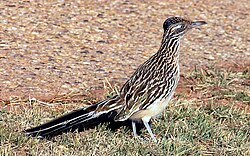
Greater roadrunner (the state bird of New Mexico)
: Greater roadrunner (the state bird of New Mexico)

Statehood and Governance

ภาพประกอบบทความ
ภาพประกอบจากบทความต้นฉบับ

As a sovereign state, New Mexico operates under a structured government consisting of a Governor, a Lieutenant Governor, a bicameral legislature (the Senate and the House of Representatives), and a Supreme Court. The current Governor is Michelle Lujan Grisham.

Governor Michelle Lujan Grisham (D)
: Governor Michelle Lujan Grisham (D)

Economy and Infrastructure

New Mexico's economy is supported by various sectors, including aerospace, which is highlighted by facilities like Spaceport America. Transportation is facilitated by a network of highways, rail services like the New Mexico Rail Runner Express, and historic scenic railroads.

The New Mexico Rail Runner Express is a commuter operation that runs along the Central Rio Grande Valley.
: The New Mexico Rail Runner Express is a commuter operation that runs along the Central Rio Grande Valley.
Spaceport America terminal, The Gateway
: Spaceport America terminal, The Gateway

Summary of New Mexico State Profile:

New Mexico Quick Reference Guide
Category Details
Capital City Santa Fe
Largest City Albuquerque
Total Area 121,589 sq mi
Population (2025 est.) 2,125,498
Highest Elevation 13,161 ft (Wheeler Peak)
Time Zone Mountain Time (UTC−07:00)

Frequently Asked Questions

ภาพประกอบบทความ
ภาพประกอบจากบทความต้นฉบับ
ภาพประกอบบทความ
ภาพประกอบจากบทความต้นฉบับ
ภาพประกอบบทความ
ภาพประกอบจากบทความต้นฉบับ
ภาพประกอบบทความ
ภาพประกอบจากบทความต้นฉบับ
New Mexico population density map
New Mexico population pyramid
Largest Non-Hispanic Native American ancestry by county and numbers of people reporting "Native American Alone"
Counties in New Mexico by racial plurality, per the 2020 U.S. census Legend Non-Hispanic White 40–50% 50–60% 60–70% 70–80% Native American 40–50% 80–90% Hispanic or Latino 40–50% 50–60% 60–70% 70–80%
New Mexico state quarter, circulated in April 2008
In this photo, the Mexico–United States border divides Sunland Park and the Mexican state of Chihuahua.
ภาพประกอบบทความ
ภาพประกอบจากบทความต้นฉบับ
The Cumbres and Toltec Scenic Railroad
The railway station in Tucumcari
Downtown Santa Fe train station
2024 U.S. presidential election results by county in New Mexico Democratic Republican
Party registration by New Mexico county (February 2023): Democratic ≥ 30% Democratic ≥ 40% Democratic ≥ 50% Democratic ≥ 60% Democratic ≥ 70% Republican ≥ 40% Republican ≥ 50% Republican ≥ 60%
The New Mexico Public Education Department is in Santa Fe.
Public New Mexico colleges and universities. New Mexico Higher Education Department.
Interior of the Crosby Theater at the Santa Fe Opera, viewed from the mezzanine
Luminarias in the old mission church, Jemez State Monument
The Santa Ana Star Center

What is the capital of New Mexico?

The capital of New Mexico is Santa Fe.

What are the official languages of New Mexico?

New Mexico has no official language, but English and Spanish are used as working languages throughout the state.

What is the highest point in New Mexico?

The highest point in the state is Wheeler Peak, which reaches an elevation of 13,161 feet.

When did New Mexico become a state?

New Mexico was admitted to the Union on January 6, 1912, as the 47th state.

What is the nickname of New Mexico?

New Mexico is famously known as "The Land of Enchantment."