The Life and Legacy of Nelson Mandela: From Activist to President
Nelson Mandela, affectionately known by his Xhosa clan name Madiba, remains one of the most iconic figures of the 20th century. A lawyer, activist, and philanthropist, his journey from a young man in Mvezo to the first democratically elected President of South Africa is a profound testament to resilience and the pursuit of justice.
Mandela's life was defined by his unwavering fight against apartheid—the systemic racial segregation enforced by the South African government. Through decades of activism, imprisonment, and eventual leadership, he transformed a nation and inspired the world.
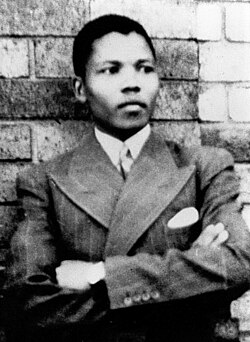
Key Facts
- Full Name: Rolihlahla Mandela
- Born: 18 July 1918, Mvezo, South Africa
- Died: 5 December 2013 (aged 95), Johannesburg, South Africa
- Political Party: African National Congress (ANC)
- Presidency: 10 May 1994 – 14 June 1999
- Primary Cause: Anti-apartheid activism and national reconciliation
Early Life and Political Awakening
Born in 1918, Mandela's early years were shaped by his education at institutions such as Clarkebury, Healdtown, and the University of Fort Hare. After arriving in Johannesburg in the early 1940s, he began his journey into political activism. He studied law and became deeply involved with the African National Congress (ANC), eventually helping to form the ANC Youth League.
During the 1950s, Mandela played a central role in the Defiance Campaign and served as the Transvaal ANC President. His involvement in the Congress of the People and the subsequent Treason Trial marked his rise as a prominent leader in the struggle for equality.
![Mandela and Evelyn in July 1944 at Walter and Albertina Sisulu's wedding party in the Bantu Men's Social Centre[57]](/images/be/85/be858c8f7b93785a24fb8c7feccc2b9f74980b00fcfad03f889ba5fd188a80f8.jpg)
The Struggle Intensifies
As the government's oppression grew, Mandela's methods evolved. He became involved with Umkhonto we Sizwe (MK), the armed wing of the ANC, and the South African Communist Party (SACP). His efforts to organize resistance led to his arrest in 1962.
![The ANC's tricolour flag; black for the people, green for the land, and gold for the resources of Africa[69]](/images/38/4f/384fc05673470357dafd1f0b560c67a18e9cdc88737746c7cb33d8d99f5a526a.webp)
Imprisonment and Resistance
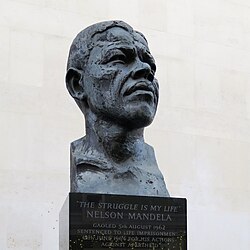
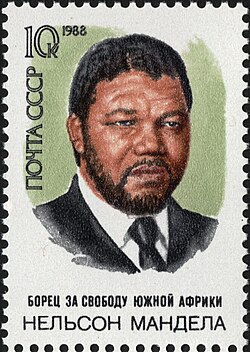
Mandela's defiance led to his conviction for sabotage and conspiracy against the state. He was sentenced to life imprisonment, a sentence he served over 27 years. His time in captivity was spent in several locations, most notably Robben Island, where he was subjected to hard labor.
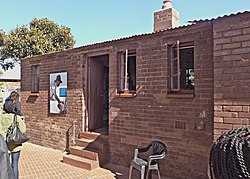
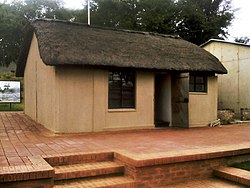
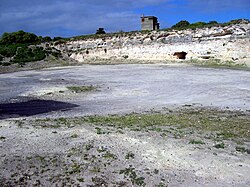
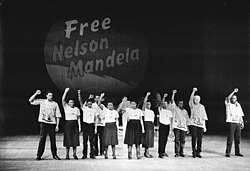
Despite the physical and mental toll of imprisonment, Mandela remained a global symbol of resistance. International movements, such as the "Free Mandela" protests, kept his cause alive on the world stage.
The Path to Democracy
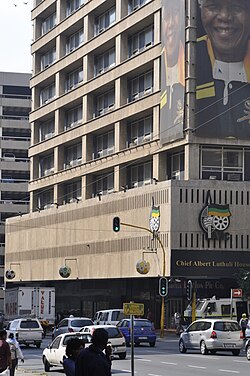
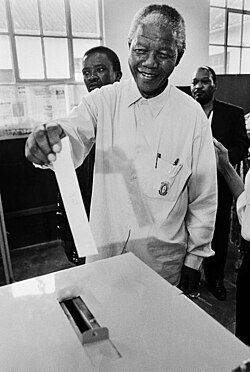
Following his release from prison in 1990, Mandela entered a period of intense negotiation to end apartheid. Through the CODESA talks and negotiations with the government, the foundation for a multi-racial democracy was laid. This culminated in the historic 1994 general election, where Mandela was elected as the first President of a democratic South Africa.

The Presidency (1994–1999)
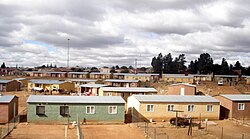
Mandela's presidency was characterized by a focus on national reconciliation—the process of healing the divisions caused by apartheid. He worked to unite a fractured country while implementing domestic programs to improve the lives of all citizens, including housing initiatives like the RDP program.
Post-Presidency and Global Legacy
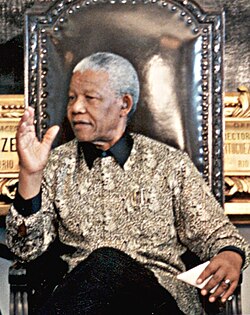
After stepping down in 1999, Mandela did not retire from public life. He continued his work in philanthropy and activism, addressing global issues and supporting various humanitarian causes. He remained a respected elder statesman, meeting with world leaders and continuing to advocate for peace and equality.
![Mandela with US president Bill Clinton. Despite publicly criticising him on several occasions, Mandela liked Clinton, and personally supported him during his impeachment proceedings.[295]](/images/af/0b/af0bb86af00350d80c232321876e05701fd7109f362cd2f08212ba414420b7a6.jpg)
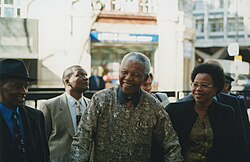
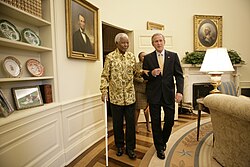
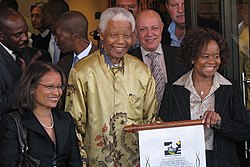
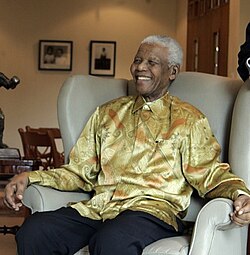
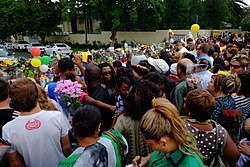
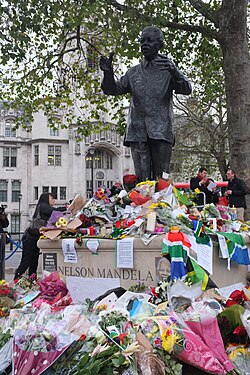
Mandela passed away in 2013 at the age of 95. His death prompted a global outpouring of grief, with monuments and tributes appearing in cities across the world.
Summary of Leadership Roles
| Organization/Office | Role | Period |
|---|---|---|
| ANC (Youth League/Leadership) | Various Leadership Roles | 1940s–1960s |
| ANC | Deputy President | May 1985 – July 1991 |
| ANC | President | July 1991 – Dec 1997 |
| South Africa | President | May 1994 – June 1999 |
| Non-Aligned Movement | Secretary-General | Sept 1998 – June 1999 |
Frequently Asked Questions
What were Nelson Mandela's nicknames?
Mandela was known by several names, most notably Madiba (his clan name), Tata, and Dalibunga.
How long was Nelson Mandela imprisoned?
Mandela served 27 years in prison, including time at Robben Island, Pollsmoor Prison, and Victor Verster Prison.
Who succeeded Nelson Mandela as President?
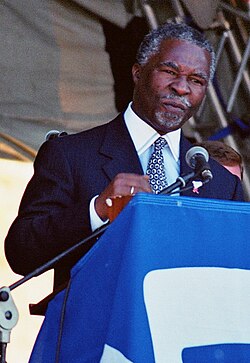
Thabo Mbeki succeeded Nelson Mandela as the President of South Africa in 1999.
What was the significance of the ANC's tricolour flag?
The flag's colors represent the nation: black for the people, green for the land, and gold for the resources of Africa.
What was the "Madiba shirt"?
The "Madiba shirt" refers to the brightly coloured, patterned garments that Mandela frequently wore, which became a recognizable part of his personal style.