Navi Mumbai: A Comprehensive Guide to India's Planned Twin City
Once envisioned as a strategic expansion to alleviate the pressure on Mumbai, Navi Mumbai has evolved into a thriving, modern metropolis. Known affectionately as the "Flamingo City" due to its vibrant local wildlife, this planned urban center offers a unique blend of organized infrastructure, expansive green spaces, and rapid economic growth. From its historical roots at Belapur Fort to its current status as a hub for commerce and education, Navi Mumbai represents a successful model of urban development in the Konkan division of Maharashtra.
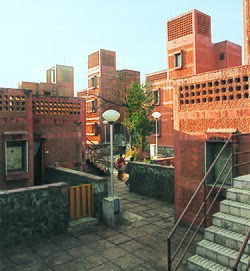
Key Facts
- Nickname: Flamingo City
- Planning Authority: City and Industrial Development Corporation (CIDCO)
- Governance: Navi Mumbai Municipal Corporation (NMMC)
- Cleanliness Ranking: Ranked 3rd in the Swachh Survekshan (Indian Commonwealth Cleanliness Survey) for 2022 and 2023.
- Major Transport Hubs: Mumbai Suburban Railway, Navi Mumbai Metro, and the upcoming Navi Mumbai International Airport.
- Primary Language: Marathi (spoken by at least 60% of the population).
Historical Foundations
The history of the region is deeply tied to the strategic importance of its forts. In 1733, the Marathas, led by Chimaji Appa, reclaimed control of the local fort from the Portuguese. Following this victory, the fort was named Belapur Fort, honoring a vow made by Appa to place a garland of beli leaves in the nearby Amruthaishwar temple. The Marathas maintained control until 1817, when the British East India Company, under Captain Charles Gray, captured the area and partially destroyed the fort as part of their policy to dismantle Maratha strongholds.
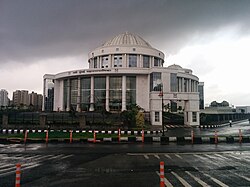
Urban Planning and Development
The modern identity of Navi Mumbai began with the Maharashtra Regional and Town Planning Act of 1966. This led to the creation of the Mumbai Metropolitan Region, with a vision to develop a "twin city" across the harbor. The City and Industrial Development Corporation (CIDCO) was tasked with the monumental job of planning and constructing the roads, railway stations, and public spaces that define the city today.
Significant milestones in the city's growth include:
- 1973: The opening of the Vashi bridge, connecting residents to Vashi, CBD Belapur, and Nerul.
- 1990s: The expansion of the Mumbai Suburban Railway's Harbour line and the commissioning of a wholesale agricultural market at Turbhe.
- 2018: The opening of the new rail link (Port line) between Nerul and Uran.
- 2024: The inauguration of the Mumbai Trans Harbour Link (MTHL), a 22-kilometer freeway connecting South Mumbai with South Navi Mumbai.
Infrastructure and Connectivity
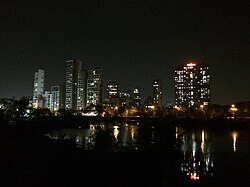
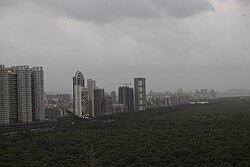
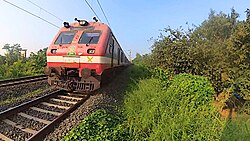
Navi Mumbai boasts a robust transportation network designed to support its growing population. The city is serviced by the Mumbai Suburban Railway and the newly operational Navi Mumbai Metro. The first phase of the metro, which opened in November 2023, connects CBD Belapur to Pendhar village.
For air travel, the Navi Mumbai International Airport is a major upcoming project designed to provide multimodal connectivity to the region. On the roads, the Sion Panvel Highway and the Mumbai-Pune Expressway (starting at Kalamboli) ensure seamless movement across the state.
Healthcare and Education
The city has prioritized social infrastructure, particularly in the sectors of medicine and learning. The urban design follows a specific ratio to ensure accessibility: one primary school per 5,000 people, one high school per 12,500, and one college per 50,000 residents.
Medical Excellence
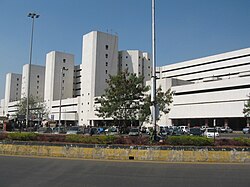
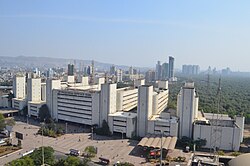
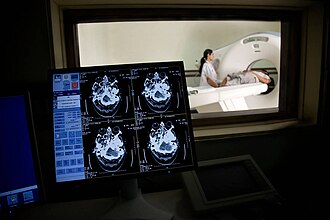
Navi Mumbai features advanced medical facilities, ranging from specialized diagnostic centers to large-scale research institutions. The presence of institutions like the Dr. D. Y. Patil Medical College and various specialized radiology networks highlights the city's growing healthcare capabilities.
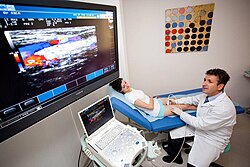
![A modern diagnostic imaging and radiology facility, representing commercial healthcare infrastructure growth and advanced clinical research settings in Navi Mumbai.[49]](/images/ed/1a/ed1ad0a13771f367234f17bf1bc0cb4db54946dac620d68e15ccd3d02b89b282.jpg)
Educational Institutions
The city is a significant educational hub, hosting various engineering, medical, and maritime colleges. Notable institutions include:
- Engineering: Ramrao Adik Institute of Technology (Nerul) and SIES Graduate School of Technology (Nerul).
- Medical: Terna Medical College (Nerul) and MGM Institute of Health Sciences (Kalamboli).
- Specialized: Indian Maritime University Navi Mumbai.
Sports and Recreation
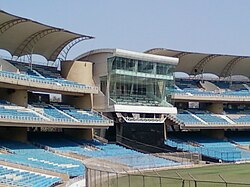
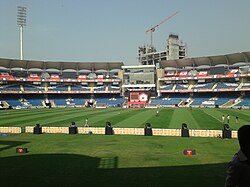
Cricket is the heartbeat of the city's sporting culture. The DY Patil International Stadium in Nerul is a world-class venue that has hosted IPL T-20 finals and matches for the Women's Premier League (WPL). The city also played a role in global football, hosting matches for the 2017 and 2022 FIFA U-17 World Cups.
City Overview Summary
| Category | Details |
|---|---|
| Total Area | 343.70 km² |
| Population (2011 Census) | 1,618,000 |
| Population Density | 4,700/km² |
| Elevation | 14 m |
| Major Districts | Thane and Raigad |
Frequently Asked Questions
What is the main difference between Mumbai and Navi Mumbai?
Navi Mumbai was planned by CIDCO as a "twin city" to act as an organized expansion of the Mumbai Metropolitan Region, offering more planned infrastructure and, generally, lower pollution levels compared to Mumbai.
How is Navi Mumbai ranked in terms of cleanliness?
Navi Mumbai has performed exceptionally well in the Swachh Survekshan (national sanitation survey), holding the third rank among 73 surveyed cities for two consecutive years in 2022 and 2023.
What is the significance of the "Flamingo City" nickname?
The nickname refers to the large populations of flamingos that frequent the area, making the city a notable location for observing local flora and fauna.
Is the Navi Mumbai Metro fully operational?
The first line of the Navi Mumbai Metro opened to the public on November 17, 2023. The system is being developed in phases to eventually connect various nodes, including the new international airport.
Which major sports events have been held in Navi Mumbai?
The city has hosted IPL T-20 finals, Women's Premier League (WPL) matches, and FIFA U-17 Men's and Women's World Cup events.