Nature Journal: Prestige, Impact, and Scientific Legacy
In the world of academia, publishing in Nature is widely regarded as a mark of significant prestige. As one of the most influential scientific journals globally, alongside its primary competitor, Science, Nature serves as a gateway to increased visibility, grant funding, and professional promotion. For many researchers, an empirical paper in Nature can trigger a positive feedback loop, drawing attention from both the scientific community and mainstream media.
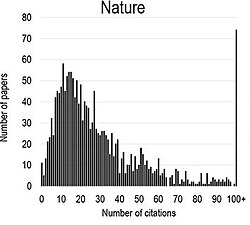
The journal's influence is often quantified by its impact factor—a metric representing the average number of citations generated by its articles. In 2019, Thomson ISI measured Nature's impact factor at 42.778. However, this number can be misleading; the distribution of citations follows a "long tail," meaning a small number of highly cited papers drive the average, while most articles receive far fewer citations.
Key Facts
- 2019 Impact Factor: 42.778 (Thomson ISI).
- Core Process: Uses a combination of initial editorial screening and rigorous peer review.
- Selection Criteria: Focuses on topical, ground-breaking research.
- Historical Role: Has published foundational discoveries in DNA, nuclear physics, and genomics.
- Controversies: Has faced criticism for rejecting landmark papers and for certain social/political editorials.
The Publication Process and Mission
Nature employs a strict selection process to maintain its high standards. Every submission undergoes an initial screening by an editor. If the work is deemed topical and sufficiently ground-breaking, it proceeds to peer review. During this stage, independent experts in the field critique the research, and the authors revise their work based on this feedback. Due to the high threshold for "ground-breaking" content, the majority of submitted papers are rejected before they ever reach the peer-review stage.
The journal's mission has evolved over time. Originally, it sought to present the "grand results of Scientific Work" to the general public and provide a forum for scientists to discuss advances in natural knowledge. Its revised mission emphasizes the prompt publication of significant advances and the rapid dissemination of science to the global public to highlight its importance for culture and daily life.
Landmark Scientific Breakthroughs
Throughout its history, Nature has been the first to publish some of the most pivotal discoveries in modern science. These papers have fundamentally altered our understanding of the physical and biological worlds.
| Year | Discovery | Key Authors |
|---|---|---|
| 1927 | Wave nature of particles | C. Davisson and L. H. Germer |
| 1932 | The neutron | J. Chadwick |
| 1939 | Nuclear fission | L. Meitner and O. R. Frisch |
| 1953 | Structure of DNA | J. D. Watson and F. H. C. Crick |
| 1966 | Plate tectonics | J. Tuzo Wilson |
| 1985 | The ozone hole | J. C. Farman, et al. |
| 1997 | First mammal cloning (Dolly) | I. Wilmut, et al. |
| 2001 | The human genome | International Human Genome Sequencing Consortium |
Controversies and Editorial Missteps
Despite its prestige, Nature has a history of notable errors. The journal has famously rejected papers that later became foundational. Examples include Enrico Fermi's work on beta decay and the initial research on MRI by Paul Lauterbur and Peter Mansfield. In a 2003 editorial, Nature admitted to "faux pas," including the rejection of work on Cherenkov radiation and Stephen Hawking's black-hole radiation.
The journal has also been criticized for bypassing its own protocols. For instance, the 1953 DNA paper by Watson and Crick was not peer-reviewed because the editor, John Maddox, believed its correctness was "self-evident." Other controversies include the publication of Jacques Benveniste's refuted "water memory" study in 1988 and various social and political editorials that sparked public backlash, including a 2017 piece on historical monuments and the endorsement of Joe Biden for US President.
Research Retractions
Maintaining scientific integrity requires the removal of flawed or fraudulent work. Between 2000 and 2001, Nature published five papers by Jan Hendrik Schön regarding semiconductors; these were retracted in 2003 after data falsification was discovered. More recently, in 2024, a 2002 paper on mesenchymal stem cells was retracted due to figure concerns, making it the most-cited retracted paper in history.
Frequently Asked Questions
What is the impact factor of Nature?
As of 2019, Nature's impact factor was 42.778, according to Thomson ISI. This measures the average number of citations the journal's articles receive.
How does the peer review process work at Nature?
After an initial editorial screening, selected papers are sent to independent scientists with subject matter expertise. These reviewers critique the work, and authors must make revisions based on this feedback before potential publication.
Has Nature ever rejected important scientific discoveries?
Yes. Nature has rejected several papers that later became foundational, including Enrico Fermi's theory of beta decay and early research on MRI.
Why are some Nature papers retracted?
Papers are retracted when scientific fraud, such as falsified data (as seen in the Jan Hendrik Schön case), or significant errors in figures and data are discovered after publication.
Does every paper in Nature receive a high number of citations?
No. While the impact factor is high, the citation distribution has a "long tail," meaning most papers receive significantly fewer citations than the average impact factor suggests.