National University of Mongolia: A Comprehensive History
The National University of Mongolia (NUM) stands as a cornerstone of higher education in the region, representing the evolution of academic thought and institutional growth in Mongolia. From its inception as a Soviet-supported project to its current status as a modern multidisciplinary institution, the university has mirrored the political and social transformations of the nation.
Founding and Early Years
The conceptual roots of the university trace back to the 10th Congress of the ruling party held between March and April 1940. A resolution passed on April 5 provided the mandate to prepare for the establishment of an institution of higher learning. Historical accounts suggest that Yumjaagiin Tsedenbal, a future leader of Mongolia, was one of the primary proponents of this initiative.
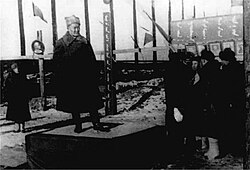
Officially established on October 5, 1942, the National University of Mongolia became the first modern university in the country. Its initial academic focus was divided among three faculties: Pedagogy (the study of teaching), Medicine, and Veterinary Sciences. Because the Soviet Union provided essential staff and materials, much of the early instruction was conducted in Russian.
The first cohort of students faced rigorous entry requirements. Out of 93 students selected for a preparatory course based on their Russian language proficiency, 57 graduated to enroll in the university. When combined with selected teachers who already possessed Russian skills, the first total enrollment reached 93 students. A significant portion of these early students—estimated between 70% and 90%—were of the Buryat ethnic group, including children of those purged during the 1930s, alongside a minority of USSR citizens.
Expansion During the Socialist Period
The university underwent rapid expansion throughout the 1940s and 1950s to meet the growing needs of the state. The Faculty of Zootechnics was added in 1943, and the university celebrated its first graduation ceremony in 1946 with 35 graduates.
Academic diversification continued with the creation of the Faculty of Social Sciences in 1947, which included history and economics. In 1949, the Faculty of Agriculture was formed through the merger of Veterinary Sciences and Zootechnics. By 1951, the university added faculties for Chemistry and Biology, while the Faculty of Pedagogy transitioned into a separate entity, now known as the Mongolian State University of Education.
Further growth occurred in the late 1950s and 1960s. Foreign language programs were introduced in 1956, followed by performing arts in 1957. In 1958, the Faculty of Agriculture became the independent Mongolian State University of Agriculture. The 1960s saw the introduction of Legal studies (1960), Geology, and Mechanical Engineering (1961). During this time, the Faculty of Medicine also branched off to become the Mongolian National University of Medical Sciences.
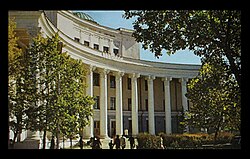
The university continued to push into technical and scientific frontiers, adding programs in Meteorology, Construction, and Energy Engineering in 1962. A milestone in scientific research was reached in 1965 with the establishment of the Nuclear Research Center, created in collaboration with the Joint Institute for Nuclear Research in Dubna, USSR.
In 1969, the university established the Polytechnical Institute, which housed faculties for Civil Engineering, Power Engineering, Geology and Mining, Mechanical Engineering, and Engineering Economics. This institute eventually became the independent Mongolian University of Science and Technology in 1982. Similarly, a Russian language institute founded in 1979 became a separate entity in 1982, eventually evolving into the University of the Humanities.
The Modern Era and Democratic Transition
The National University of Mongolia played a pivotal role during the Mongolian Revolution of 1990, serving as a hub for secret groups advocating for democratic reforms. Following this political shift, the university focused on advancing its academic credentials.
In 1994, the university awarded its first 13 master's degrees. To support this growth in advanced scholarship, the Department of Postgraduate Affairs was created in 1997. That same year, the university's academic scope was further broadened by the merger of the Mathematical Institute into NUM. To improve strategic oversight, a governing board was established in 1999.
Regional development also saw changes; the Khovd branch of the university became the independent Khovd University in 2004.
Institutional Restructuring
The early 21st century was marked by several organizational shifts. In 2010, the university merged with Ulaanbaatar University and the Institute of Commerce and Business. However, these were temporary unions; Ulaanbaatar University became Ulaanbaatar State University in 2015, and the Institute of Commerce and Business became the University of Commerce and Business in 2017.
A comprehensive restructuring began in 2014 to streamline the university's operations. Today, the National University of Mongolia is organized into five primary faculties:
- Faculty of Business
- Faculty of International Relations and Public Administration
- Faculty of Law
- Faculty of Engineering and Applied Sciences
- Faculty of Sciences
| Period/Year | Key Milestone | Outcome/Result |
|---|---|---|
| 1942 | Official Founding | First modern university in Mongolia |
| 1946 | First Graduation | 35 graduates completed studies |
| 1951-1961 | Institutional Spin-offs | Creation of separate Education and Medical universities |
| 1965 | Nuclear Research Center | Collaboration with Dubna, USSR |
| 1990 | Democratic Revolution | Center for pro-democracy gathering |
| 2014-Present | Modern Restructuring | Consolidation into five main faculties |
Key Facts
- Founded: October 5, 1942.
- First Faculties: Pedagogy, Medicine, and Veterinary Sciences.
- Early Influence: Heavily supported by the Soviet Union, with initial instruction in Russian.
- Demographics: 70-90% of the first students were of Buryat ethnicity.
- Political Role: Served as a gathering place for democratic movements during the 1990 Revolution.
- Current Structure: Organized into five specialized faculties since 2014.
Frequently Asked Questions
Who was the primary proponent of the university's founding?
It is argued that future leader Yumjaagiin Tsedenbal was the first proponent, as he was involved in the April 5, 1940, resolution that laid the groundwork for the institution.
Why was the Russian language so prominent in the early years?
The university's early operations were supported by staff and materials provided by the Soviet Union, leading to a curriculum largely conducted in Russian.
Which current universities originated as faculties of NUM?
Several institutions began as part of NUM, including the Mongolian State University of Education, the Mongolian State University of Agriculture, the Mongolian National University of Medical Sciences, and the Mongolian University of Science and Technology.
What role did the university play in the 1990 Mongolian Revolution?
The university acted as a significant gathering place for various secret groups that were advocating for the transition to democracy in Mongolia.
How is the university structured today?
Following a restructuring process that began in 2014, the university now operates with five main faculties: Business, International Relations and Public Administration, Law, Engineering and Applied Sciences, and Sciences.