National Museum Wales: A History of Preserving Welsh Heritage
The National Museum Wales, known today as Amgueddfa Cymru, stands as the definitive guardian of Wales's natural, artistic, and industrial legacy. From its inception in the early 20th century to its current status as a modern network of specialist sites, the institution has evolved to reflect the changing identity of the Welsh people.
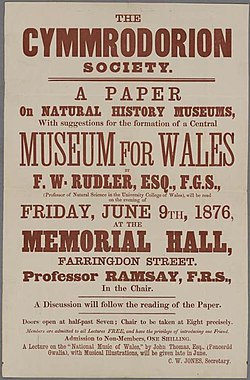
The drive to establish a national repository for Welsh culture began in the late 19th century. Early efforts, such as those by the Honourable Society of Cymmrodorion, highlighted the urgent need for a dedicated space to house the nation's treasures.
Founding and Early Years (1905–1907)
Founded in 1905, the museum received its royal charter from King Edward VII on 19 March 1907. This charter defined the museum's core mission: to provide a complete illustration of Wales's geology, mineralogy, zoology, botany, ethnography, archaeology, art, history, and special industries. This movement coincided with the founding of the National Library of Wales, which was granted its charter on the same day.
Cardiff's successful bid to host the museum was bolstered by the gift of the Cardiff Museum Collection. Previously known as the "Welsh Museum of Natural History, Archaeology and Art," this collection had operated as a sub-department of the Cardiff Library until 1893 and was formally handed over to the National Museum in 1912.
Construction and Early Leadership (1908–1927)
The museum's home in the Cathays Park civic complex was designed by architects Cecil Brewer and Arnold Dunbar Smith. Although King George V laid the Foundation Stone on 26 June 1912, the First World War caused significant delays. Consequently, the museum did not open its doors to the public until 28 October 1922, with the official opening ceremony following in 1927.
The institution's early trajectory was shaped by three key directors: William Evans Hoyle (1908–1924), the distinguished archaeologist Sir Mortimer Wheeler (1925–1926), and Sir Cyril Fox (1926–1948), who managed much of the initial expansion.
Expanding the Network: St Fagans and Beyond
In the mid-20th century, the museum expanded beyond its Cardiff headquarters. A pivotal moment occurred in 1946 when the Earl of Plymouth donated St Fagans Castle and 18 acres of land. This led to the opening of the Welsh Folk Museum on 1 July 1948, the first national open-air museum in the United Kingdom.
The open-air concept was developed by curator and poet Iorwerth Peate, who drew inspiration from Skansen, a museum of vernacular (traditional local) architecture in Stockholm, Sweden. The roots of St Fagans can be traced back to the 'Welsh Bygones' gallery, which first opened at the Cathays Park site in 1926.
Preserving Industrial Heritage (1970s–1990s)
The 1970s saw a period of internal growth with the opening of three new galleries: Material Culture (1970), Agricultural (1974), and Costume (1976).
By the 1980s, the museum recognized that Wales's industrial communities were facing the same threats of disappearance as the rural way of life had decades prior. This led to a strategic shift toward industrial heritage. A landmark event in 1987 was the relocation of the Rhyd-y-car ironworkers' cottages from Merthyr Tydfil to St Fagans.
This expansion continued with the creation of several specialist museums:
- n
- National Slate Museum in Llanberis
- Big Pit National Coal Museum in Blaenavon
- National Wool Museum in Dre-fach Felindre
Modernization and the Digital Era
The 21st century has been defined by investment and rebranding. St Fagans underwent a £30-million redevelopment completed in 2018, which included three new galleries and improved facilities. This effort was recognized in 2019 when the site was named the Art Fund Museum of the Year.
In 2015, the organization adopted a new vision: "Inspiring people, changing lives." This was followed by a significant rebranding in August 2022, introducing a new logo and the visual identity "Amgueddfa Cymru" (Museum Wales in Welsh) to emphasize pride in the Welsh language.
Recent leadership has included Michael Houlihan (2003–2010) and David Anderson (2010–2023), with Jane Richardson serving as Director General since 2023. In October 2025, the museum launched Amgueddfa Cymru Images, a digital library providing free access to over 2,000 images, including works by Monet, Renoir, and Van Gogh.
Key Facts
- n
- Founded: 1905 (Royal Charter granted March 19, 1907).
- First Open-Air Museum: St Fagans opened in 1948 as the first of its kind in the UK.
- Key Sites: Includes the Cardiff headquarters, St Fagans, National Slate Museum, Big Pit, and National Wool Museum.
- Major Investment: A £30-million revamp of St Fagans was completed in 2018.
- Digital Access: The Amgueddfa Cymru Images library offers 2,000+ free images of Welsh heritage and world-class art.
| Period | Key Milestone | Focus/Achievement |
|---|---|---|
| 1905–1927 | Founding & Construction | Establishment of the Cardiff site and Royal Charter. |
| 1946–1948 | St Fagans Establishment | Creation of the UK's first national open-air museum. |
| 1980s–1990s | Industrial Expansion | Focus on coal, slate, and wool industries. |
| 2015–Present | Modernization | Rebranding to Amgueddfa Cymru and digital library launch. |
Frequently Asked Questions
When did the National Museum Wales first open to the public?
The museum opened to the public on 28 October 1922, although the official opening ceremony did not take place until 1927.
What is the significance of St Fagans National Museum of History?
St Fagans is significant for being the first national open-air museum in the United Kingdom, focusing on vernacular architecture and the rural and industrial life of Wales.
What does "Amgueddfa Cymru" mean?
Amgueddfa Cymru is the Welsh language translation for "Museum Wales." The name was adopted as part of a 2022 rebranding to reflect the institution's pride in the Welsh language.
Which world-famous artists are represented in the museum's digital library?
The Amgueddfa Cymru Images library includes artworks from the collection by Vincent van Gogh, Claude Monet, and Pierre-Auguste Renoir.
Who is the current Director General of the museum?
Jane Richardson has served as the Director General since 2023.