National Autonomist Party: The Ruling Force of Argentina (1874–1916)
The National Autonomist Party (Spanish: Partido Autonomista Nacional, or PAN) served as the dominant political entity in Argentina for over four decades. From its inception in 1874 until its decline in 1916, the PAN shaped the nation's economic trajectory and political structure, representing a period often characterized by the influence of a wealthy and powerful elite.
Key Facts
- Founded: March 15, 1874, through the merger of the Autonomist Party and the National Party.
- Duration: Ruled Argentina from 1874 to 1916.
- Core Ideologies: Liberalism, Conservatism, Secularism, and Positivism (a philosophical system recognizing only that which can be scientifically verified).
- Economic Focus: Promoted an agricultural export model centered on cattle and cereal production.
- Key Figure: Julio Argentino Roca, who served as president twice.
- Dissolution: De facto in 1916; de jure on July 31, 1931.
The Foundation and Rise of the PAN
The PAN was established on March 15, 1874, by founders Nicolás Avellaneda and Adolfo Alsina. It was formed by the union of the National Party and the Autonomist Party, creating a powerful political machine based in Buenos Aires. The party's political position ranged from center-right to right-wing, utilizing light blue and white as its official colors.
A pivotal moment occurred in 1880 when Julio Argentino Roca assumed the presidency. His administration operated under the motto "peace and administration," focusing on stabilizing the state and expanding its reach.
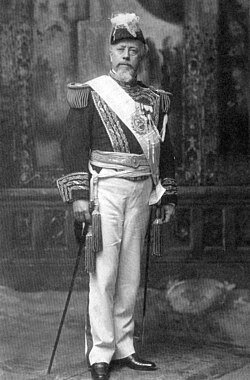
Economic Influence and the "Oligarchy"
Economically, the PAN championed an agricultural exports model. This strategy heavily favored cereal and cattle producers in the Pampas region and played a critical role in the rapid development of the Argentine Railroad system. Because of its tight control over the state and its alignment with the land-owning class, historians have described the PAN as an "organ of the elite," functioning as an oligarchy of wealth and power.
Internal Conflict and the Path to Democracy
The party's hegemony was challenged following the 1890 Revolución del Parque. This event sparked the creation of the Radical Civic Union (UCR), which became the PAN's primary opposition. Internally, a rift developed within the PAN, leading to the emergence of the PAN-línea modernista (modern faction).
Led by figures such as Roque Sáenz Peña, Carlos Pellegrini, and Ramón J. Cárcano, the modernists sought to institutionalize the country. They aimed to replace the system of electoral fraud—which the party had used to maintain power—with a true democratic system. This effort culminated in the administration of Roque Sáenz Peña, who authored a law establishing secret universal suffrage.
The Fall of the PAN and its Legacy
The electoral reforms of 1912 fundamentally changed Argentine politics. In the free elections of 1916, the Radical Civic Union (UCR) emerged victorious, leading to the fracture and eventual disappearance of the PAN from the political forefront.
Following this collapse, the party's remnants reorganized. Many joined the Conservative Party, while others formed the Democratic Progressive Party. In 1930, after a military coup, conservative forces returned to power via the National Democratic Party (PDN) as part of the Concordancia coalition. However, these forces were largely marginalized after World War II and the rise of Peronism, with the PDN disintegrating after 1955.
| Attribute | Details |
|---|---|
| Founded | March 15, 1874 |
| Key Leaders | Julio Argentino Roca, Nicolás Avellaneda, Adolfo Alsina |
| Ideology | Conservative Liberalism, Positivism, Secularism |
| Economic Model | Agricultural Exports (Cattle and Cereals) |
| Successor Entities | Conservative Party, National Democratic Party |
Presidents Associated with the PAN
- Nicolás Avellaneda (1874–1880)
- Julio Argentino Roca (1880–1886, 1898–1904)
- Miguel Juárez Celman (1886–1890)
- Carlos Pellegrini (1890–1892)
- Luis Sáenz Peña (1892–1895)
- José Evaristo Uriburu (1895–1898)
- Manuel Quintana (1904–1906)
- José Figueroa Alcorta (1906–1910)
- Roque Sáenz Peña (1910–1914)
- Victorino de la Plaza (1914–1916)
Frequently Asked Questions
What was the primary economic goal of the PAN?
The PAN promoted an agricultural exports model that prioritized the production of cattle and cereals in the Pampas, which also drove the expansion of the Argentine Railroad.
Who was the most influential figure of the party?
Julio Argentino Roca was the principal figure of the PAN, serving as the President of Argentina during two separate terms.
How did the PAN maintain power for so long?
The party is often described as an oligarchy that utilized its wealth and power, as well as electoral fraud, to perpetuate its control over the government.
What led to the eventual downfall of the PAN?
The party declined after the 1912 electoral reform (the Sáenz Peña Law), which introduced secret universal suffrage. This allowed the opposition Radical Civic Union (UCR) to win the 1916 presidential election.
What happened to the party after 1916?
The PAN fractured, with members reorganizing into the Conservative Party and the Democratic Progressive Party. Later, some returned to power through the National Democratic Party before being marginalized by the rise of Peronism.