Namsan Cable Car: A Historic Aerial Journey Over Seoul
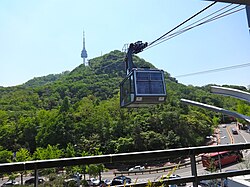
Rising above the bustling streets of Seoul, the Namsan Cable Car offers more than just a scenic view; it provides a connection to the history of South Korean transportation. As the nation's first commercial cable car service for passengers, this aerial tramway has been a landmark feature of the Seoul skyline for decades.
Historical Significance and Route
Established in 1962, the Namsan Cable Car serves as a vital link between the urban center and the natural beauty of Namsan Mountain. The system operates between two primary platforms:
- Hoehyeon-dong platform: Located near the vibrant Myeong-dong district.
- Yejang-dong platform: Situated near the summit of Namsan and the iconic Namsan Seoul Tower.
Technical Specifications and Transit Details
The cable car is engineered to navigate the steep terrain of Namsan with precision. The journey provides a brief but breathtaking perspective of the city's geography.
Operational Metrics
The tramway spans a total cable length of 605 metres (1,985 ft). Because the route climbs an altitude difference of 138 metres (453 ft), the system maintains a gradient of 13°. Passengers can expect a smooth ride as the cabins move at a consistent speed of 3.2 metres per second (10 ft/s), making the total transit time between platforms approximately three minutes.
| Feature | Specification |
|---|---|
| Year Built | 1962 |
| Cable Length | 605 metres (1,985 ft) |
| Altitude Difference | 138 metres (453 ft) |
| Gradient | 13° |
| Cabin Speed | 3.2 m/s (10 ft/s) |
| Transit Time | Approximately 3 minutes |
Accessibility and Modern Improvements
To ensure the mountain remains accessible to all visitors, the Seoul Metropolitan Government introduced significant infrastructure improvements in 2009. Recognizing the need for better access for senior citizens and individuals with disabilities, a specialized elevator was commissioned.
Opened in June 2009, this elevator operates from the vicinity of the Namsan Tunnel Three entrance up to the cable car station. Running along the slope of Namsan, the elevator has a capacity of 20 passengers, providing a reliable alternative for those who may find the steep terrain challenging.
Key Facts
- The Namsan Cable Car was the first commercial passenger cable car service in Korea.
- It was originally built in 1962.
- The transit time between the Hoehyeon-dong and Yejang-dong platforms is about three minutes.
- An accessibility elevator was added in June 2009 to assist seniors and the disabled.
- The cable car connects the Myeong-dong area to the Namsan Seoul Tower vicinity.
Frequently Asked Questions
When was the Namsan Cable Car built?
The Namsan Cable Car was built in 1962.
How long does the cable car ride take?
The transit between the two platforms takes approximately three minutes.
Is there access for people with disabilities?
Yes, an elevator was opened in June 2009 near Namsan Tunnel Three that runs to the cable car station, specifically designed to provide better access for senior citizens and the disabled.
Where does the cable car start and end?
The service runs from the Hoehyeon-dong platform (near Myeong-dong) to the Yejang-dong platform near the top of Namsan.
How fast do the cabins move?
The cabins move at a speed of 3.2 metres per second (10 ft/s).