Namdaemun: The Historic Sungnyemun Gate of Seoul
Standing as a monumental link to Korea's past, Namdaemun—officially known as Sungnyemun—is one of the most significant landmarks in Seoul. As the southern gate of the historic Seoul City Wall, this pagoda-style gateway served as a vital entry point during the Joseon period. Today, it remains a symbol of national identity, located in the Jung District between Seoul Station and Seoul Plaza, adjacent to the bustling Namdaemun Market.
The Legacy of the South Great Gate
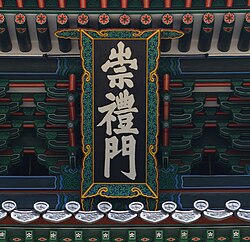
The gate's dual names reflect different aspects of its history and cultural significance. While commonly referred to as Namdaemun (meaning "South Great Gate"), its official name is Sungnyemun, which translates to "Honoring Propriety Gate." The name Sungnyemun holds deep spiritual meaning; according to feng shui (the traditional practice of geomancy), the nearby Mt. Gwanak is shaped like fire. To protect the capital from this elemental threat, the name was chosen so that the Chinese characters, when written vertically, would visually represent protection against fire.
Construction of the gate began in 1395 during the reign of King Taejo and was completed in 1398. It was designed to greet foreign emissaries, regulate access to the capital, and protect the city from wildlife, such as the Siberian tigers that once roamed the region. The structure was later rebuilt in 1447 during the reign of King Sejong.
Design and Architectural Significance
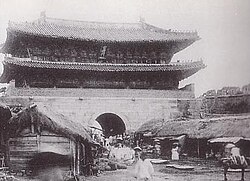
Namdaemun is a historic pagoda-style gateway characterized by a two-tiered, tiled roof. It was once one of three major gateways in the city, part of an 18.2-kilometer stone circuit that defined Seoul's original boundaries. In 1962, the gate was designated as South Korea's first National Treasure.
A Turbulent History
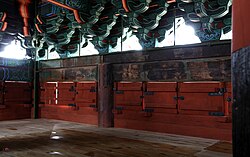
Throughout the centuries, the gate has survived numerous challenges. In the early 20th century, much of the Seoul City Wall was demolished to improve urban traffic flow. The gate itself was closed to the public in 1907 following the construction of a nearby electric tramway. During the Korean War, the structure sustained extensive damage and underwent significant repairs in 1961.
In 2005, the gate underwent a renovation that included the installation of a surrounding lawn, reopening to the public in 2006. However, this period of stability was short-lived.
The 2008 Fire and Restoration Efforts
On the evening of February 10, 2008, a devastating arson attack destroyed the wooden pagoda atop the gate. Despite the efforts of over 360 firefighters, the structure was severely damaged. An investigation led to the arrest of Chae Jong-gi, who confessed to the crime. The incident prompted the most expensive restoration project in South Korean history.
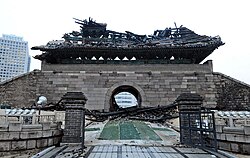
The restoration, managed by the Cultural Heritage Administration, was a massive undertaking costing approximately ₩20 billion (roughly $14 million). The project focused on rebuilding the wooden structure using traditional methods, including the production of 22,000 roof tiles in a traditional kiln in Buyeo. After five years of meticulous work, the gate was officially reopened to the public on May 5, 2013.
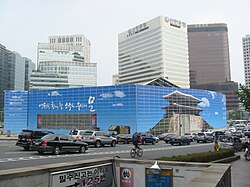
Key Facts
- Official Name: Sungnyemun (Honoring Propriety Gate)
- Common Name: Namdaemun (South Great Gate)
- Original Construction: Completed in 1398 during the Joseon Dynasty
- Designation: South Korea's first National Treasure (designated 1962)
- Location: Jung District, Seoul, South Korea
- Restoration Period: 2010–2013 following the 2008 arson attack
Summary of Namdaemun History
| Year | Event |
|---|---|
| 1398 | Original completion of the gate |
| 1447 | Reconstruction during King Sejong's reign |
| 1962 | Designated as National Treasure No. 1 |
| 2008 | Destruction by arson fire |
| 2013 | Official reopening after restoration |
Frequently Asked Questions
Why is the gate called both Namdaemun and Sungnyemun?
Namdaemun is the colloquial name meaning "South Great Gate," which has been used since the Joseon period. Sungnyemun is the official name, meaning "Honoring Propriety Gate," chosen for its symbolic protection against fire.
What caused the damage to the gate in 2008?
The damage was caused by an act of arson. A man named Chae Jong-gi was arrested and convicted for setting fire to the wooden structure using paint thinner.
How long did the restoration take?
The restoration project began in February 2010 and was completed in April 2013, lasting approximately five years.
Is Namdaemun part of the Seoul City Wall?
Yes, Namdaemun was one of the eight gates that formed part of the original Seoul City Wall, which marked the city's boundary during the Joseon period.
What is the significance of the name Sungnyemun in feng shui?
The name was chosen to provide spiritual protection. Because Mt. Gwanak is shaped like fire according to feng shui principles, the name and the vertical arrangement of its characters were intended to ward off fire.