Nagorno-Karabakh Declaration of 2008: A Diplomatic Milestone
The pursuit of peace in the South Caucasus has long been marked by complex diplomatic efforts. One of the significant attempts to stabilize the region was the Nagorno-Karabakh Declaration, formally known as The Declaration of the Republic of Azerbaijan, Armenia and the Russian Federation. Signed on November 2, 2008, this document represented a concerted effort by three nations to find a political resolution to one of the region's most enduring conflicts.
The signing ceremony took place at the Meyendorf Castle in the Moscow Oblast, bringing together the leaders of the involved nations to commit to a framework of stability and security.
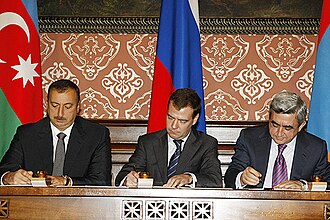
Key Facts
- Date Signed: November 2, 2008.
- Location: Meyendorf Castle, Moscow Oblast.
- Signatories: Presidents of Azerbaijan, Armenia, and the Russian Federation.
- Primary Goal: To establish regional stability through a political settlement based on international law.
- Mediation Framework: Reaffirmed the role of the OSCE Minsk Group and the 2007 Madrid document.
The Framework for Peace
The core objective of the declaration was to foster a "healthier situation" in the South Caucasus. The signatories pledged to work toward a political settlement of the Nagorno-Karabakh conflict, ensuring that any resolution adhered to the principles and norms of international law, as well as previously adopted decisions and documents.
The Role of International Mediation
A critical component of the agreement was the reaffirmation of the OSCE Minsk Group—the Organization for Security and Co-operation in Europe's body tasked with mediating the conflict. The declaration specifically highlighted the importance of continuing mediation efforts in alignment with the Madrid document, which had been established on November 29, 2007.
Legal Guarantees and Direct Dialogue
The parties agreed that any eventual peaceful settlement must not be a mere handshake agreement; rather, it required legally binding international guarantees to cover every aspect and stage of the process. This was intended to ensure the long-term viability of the peace agreement.
Yuri Merzlyakov, the Russian co-chair of the OSCE Minsk Group, emphasized the unique value of this declaration. He noted that it was the first agreement regarding the settlement of the Karabakh conflict since 1994 to be concluded directly between the two conflicting parties.
Summary of the 2008 Declaration
| Feature | Details |
|---|---|
| Formal Name | The Declaration of the Republic of Azerbaijan, Armenia and the Russian Federation |
| Signatories | Azerbaijan, Armenia, and Russia |
| Key Reference Document | Madrid document (November 29, 2007) |
| Mediation Body | OSCE Minsk Group |
| Requirement for Peace | Legally binding international guarantees |
Frequently Asked Questions
When and where was the Nagorno-Karabakh Declaration signed?
The declaration was signed on November 2, 2008, at the Meyendorf Castle located in the Moscow Oblast.
Which countries were party to the agreement?
The agreement was signed by the presidents of Azerbaijan, Armenia, and the Russian Federation.
What was the significance of the OSCE Minsk Group in this declaration?
The declaration reaffirmed the importance of the OSCE Minsk Group's mediation efforts, specifically referencing the Madrid document dated November 29, 2007.
Why was this declaration considered unique compared to previous efforts?
According to Yuri Merzlyakov, it was the first agreement since 1994 regarding the settlement of the conflict that was concluded directly between the two conflicting parties.
What was required for the peaceful settlement to be valid?
The parties agreed that any peaceful settlement must be accompanied by legally binding international guarantees across all its stages and aspects.