Myxobolus cerebralis and the Impact of Whirling Disease in Salmonids
Myxobolus cerebralis is a highly pathogenic myxosporean parasite that targets salmonid fish, including various species of salmon and trout. This parasite is the causative agent of whirling disease, a condition that severely affects both wild populations and farmed fish. First described in rainbow trout in Germany in 1893, the parasite has since spread globally through the shipment of cultured and wild fish.
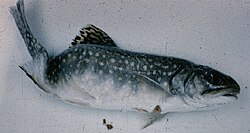
The disease is particularly devastating to juvenile fish, such as fry and fingerlings. It attacks the cartilage and potentially the nervous tissue, leading to skeletal deformities and neurological impairment. Infected fish often exhibit a characteristic "whirling" behavior—swimming in an awkward, corkscrew-like pattern—which makes feeding difficult and increases their vulnerability to predators.
Key Facts
- Host Range: Primarily affects salmonids; requires a tubificid oligochaete (segmented worm) to complete its life cycle.
- Mortality: Can reach up to 90% in infected fingerling populations.
- Primary Symptoms: Skeletal deformation, "black tail," and erratic swimming patterns.
- Transmission: Not transmissible to humans.
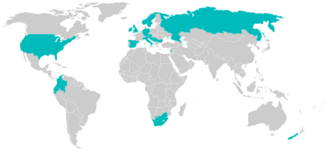
- Global Reach: Reported in Europe, North America, South Africa, New Zealand, and beyond.
Taxonomy and Biological Classification
While once classified as a protozoan, M. cerebralis is now recognized as a member of the phylum Cnidaria. This classification is based on the presence of cnidocysts—specialized stinging tentacles used to attach to and penetrate the host. Molecular studies, including a definitive 2015 study, confirm its relationship to cnidarians due to these extrusive filaments.
The parasite exhibits a complex life cycle with diverse stages, ranging from single cells to large spores, utilizing mitosis, endogeny, and plasmotomy for development.
Morphology and Developmental Stages
The parasite transitions through several distinct forms to ensure survival and infection across its two hosts.
Triactinomyxon Stage
This is the stage that infects the fish. The triactinomyxon spore consists of a central style (approximately 150 μm long) and three "tails" or processes (approximately 200 μm each). It contains a sporoplasm packet with 64 germ cells and three polar capsules. These capsules eject polar filaments that pierce the host's body, allowing the sporoplasm to enter.
Sporoplasm Stage
Once the polar capsules fire, the sporoplasm migrates into the fish's gut lining or epithelium. It undergoes mitosis to produce amoeboid cells, which then migrate deeper into the tissues to reach the cerebral cartilage.
Myxosporean Stage
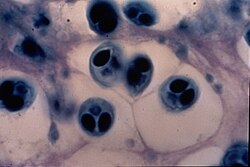
Inside the fish, sporogonic cells develop into lenticular myxospores (about 10 μm in diameter). These spores consist of six cells: two polar capsules, a binucleate sporoplasm, and two protective valves. These myxospores are released into the water upon the fish's death and are the stage that infects the oligochaete worm.
The Complex Life Cycle
M. cerebralis requires two hosts: a salmonid fish and a tubificid oligochaete, specifically Tubifex tubifex.
- Worm Infection: Myxospores are ingested by the worm. They attach to the gut epithelium, where a germ cell penetrates the intestinal wall and multiplies via merogony.
- Spore Release: After 60–90 days, the parasite develops into pansporocysts, releasing triactinomyxon spores through the worm's anus into the water. This typically occurs when water temperatures are between 10°C and 15°C.
- Fish Infection: Triactinomyxon spores are carried by currents and penetrate the skin of a salmonid within seconds.
- Tissue Damage: The parasite reproduces in the fish's cartilage via asexual endogeny, eventually forming myxospores that are released back into the environment when the fish decomposes.
Pathology and Susceptibility
The impact of whirling disease varies significantly based on the age and species of the fish. The most severe effects occur in fish under five months old because their skeletons have not yet ossified, providing more cartilage for the parasite to consume.
Different species show varying levels of resistance:
- Highly Susceptible: Rainbow trout and brook trout.
- Moderately to Low Susceptibility: Bull trout, Chinook salmon, brown trout, and Arctic grayling.
Interestingly, brown trout often harbor the parasite without showing symptoms, suggesting they may have been the original host. However, the introduction of non-native rainbow trout—which lack innate immunity—has amplified the parasite's presence, sometimes overloading even resistant species.
Diagnosis and Identification
Clinical diagnosis is often based on behavioral changes and physical deformities appearing 35 to 80 days post-infection. However, because dietary deficiencies (such as lack of tryptophan or ascorbic acid) can cause similar signs, laboratory confirmation is required.
Diagnostic methods include:
- Microscopic Examination: Searching for spores in the cartilage.
- Pepsin-Trypsin Digest (PTD): Digesting cranial cartilage with proteases to isolate spores.
- Histopathology: Examining tissue sections for spore morphology.
- Molecular Testing: Using Polymerase Chain Reaction (PCR) to amplify the 415 base pair 18S rRNA gene.
Global Distribution and Economic Impact
| Region/Country | First Reported/Key Detail |
|---|---|
| Germany | 1893 (First description in rainbow trout) |
| United States | 1956/1958 (Heavy impact in Rocky Mountain states) |
| New Zealand | 1971 (Found in South Island rivers) |
| Canada | 2016 (Confirmed in Banff National Park) |
| Other | Italy, Russia, South Africa, Norway, Colombia, Lebanon, Spain, England |
In the United States, the disease threatens the tourism and recreational fishing industries. In Montana alone, trout fishing has been estimated to generate US$300,000,000 in recreational expenditures. Furthermore, the parasite threatens endangered species like cutthroat trout and steelhead.
Prevention and Control
Controlling M. cerebralis focuses on breaking the life cycle by managing the environment and host populations.
Aquaculture Management
- Infrastructure: Using smooth-faced concrete or plastic-lined raceways instead of earthen ponds to avoid tubificid worms.
- Water Treatment: Implementing filtration, chlorination, and ultraviolet (UV) bombardment.
- Strain Selection: Utilizing fish strains that exhibit higher natural resistance.
Chemical Treatments
Certain drugs, such as fumagillin, furoxone, and proguanil, can impede spore development. For example, fumagillin has reduced infection rates in rainbow trout from 73–100% down to 10–20%. However, these are unsuitable for wild populations and have not met FDA approval for widespread use.
Frequently Asked Questions
Can humans contract whirling disease?
No, Myxobolus cerebralis is a parasite specific to salmonids and tubificid worms; it is not transmissible to humans.
Why are juvenile fish more affected than adults?
Juvenile fish (under five months) are more susceptible because their skeletons have not yet ossified. This provides the parasite with more cartilage to feed on and makes the fish more prone to permanent skeletal deformities.
How does the parasite spread between different bodies of water?
The parasite is primarily spread through the shipment of infected wild or cultured fish, as well as the movement of infected tubificid worms.
What is the "whirling" behavior in infected fish?
The whirling behavior is a result of neurological damage and skeletal deformation caused by the parasite. This causes the fish to swim in an awkward, corkscrew-like pattern instead of swimming normally.
Which fish species is the most resistant?
Brown trout (Salmo trutta) are typically the most resistant and often harbor the parasite without showing any clinical symptoms.