The Evolution and Varieties of Mystery Fiction
At its core, mystery fiction is a genre where the nature of an event—most commonly a murder or a crime—remains hidden from the reader until the story's conclusion. These narratives often revolve around a closed circle of suspects, each possessing a credible motive and the opportunity to commit the crime. The central figure is frequently a detective who uses logical deduction (the process of reaching a conclusion through reasoning and evidence) to solve the puzzle.
While many associate the genre with intellectual puzzles, it has evolved into a vast landscape of subgenres, ranging from gritty, realistic crime stories to supernatural tales that defy logic. Whether through the classic "whodunit" or the modern "legal thriller," mystery fiction continues to captivate audiences by challenging the human intellect and our desire for justice.
Key Facts
- Origins: The modern mystery genre emerged in the early 19th century alongside rising literacy and the institutionalization of police forces.
- Foundational Works: Edgar Allan Poe's "The Murders in the Rue Morgue" (1841) is credited with inventing the modern detective story.
- The Sherlock Holmes Effect: Arthur Conan Doyle's creation, Sherlock Holmes, was singularly responsible for the genre's massive popularity.
- Golden Age: The 1920s–1940s saw the rise of the "whodunit," a subgenre where readers are provided clues to solve the crime alongside the detective.
- Hardboiled vs. Cozy: Hardboiled fiction focuses on gritty realism and urban crime, while cozy mysteries emphasize intellect, small communities, and minimal violence.
The History of the Mystery Genre
The Rise of Reason and Policing
The mystery novel is a relatively young literary form, developing significantly since the early 19th century. This growth coincided with the rise of literacy and a cultural shift toward individualism and a respect for human reason. Historically, the lack of professional police forces may have delayed the genre's emergence; in pre-industrial towns, local constables often knew everyone, meaning crimes were either solved instantly or remained forever unknown. As populations moved into cities and formal police departments were established, the need for specialized detectives—and the stories surrounding them—arose.
Literary Pioneers and the Golden Age
Early influences include E. T. A. Hoffmann’s Das Fräulein von Scuderi (1819) and Voltaire’s Zadig (1747). However, the genre reached new heights with Wilkie Collins, author of The Moonstone (1868), and later, Sir Arthur Conan Doyle. In 1905, Maurice Leblanc introduced the gentleman burglar Arsène Lupin, providing a creative rival to the deductive methods of Sherlock Holmes.
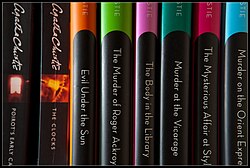
The 1920s marked a period of massive expansion. This era saw the birth of juvenile mysteries through Edward Stratemeyer, who created the Hardy Boys and Nancy Drew series. Most notably, the 1920s introduced Agatha Christie, one of history's most successful authors, known for masterpieces such as And Then There Were None (1939).
The Era of Pulp Magazines
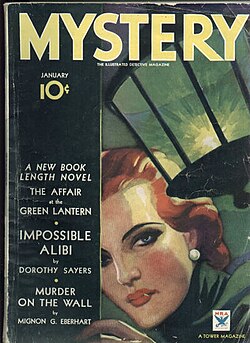
During the 1930s and 1940s, pulp magazines—cheaply produced fiction magazines—became a dominant force. Titles like Dime Mystery and Thrilling Mystery offered a variety of stories. Interestingly, some magazines, such as Dime Mystery, transitioned from standard crime fiction to "weird menace" stories involving supernatural horror. While the popularity of pulps declined in the 1950s due to the rise of television and paperbacks, the legacy continues through digest-sized magazines like Alfred Hitchcock's Mystery Magazine.
Major Classifications of Mystery
Detective Fiction and the Whodunit
While often used interchangeably with "mystery," detective fiction has distinct characteristics. While mystery fiction often focuses on amateur detectives and the identity of the culprit, detective fiction frequently features professional investigators and focuses on the process of the investigation itself. A popular subgenre is the whodunit, which reached its peak during the Golden Age of Detective Fiction. In a whodunit, the reader is provided with clues throughout the narrative, allowing them the opportunity to solve the crime before the final reveal.
Hardboiled and Police Procedurals
In contrast to the "drawing-room" mysteries of the Golden Age, hardboiled fiction emerged from the American urban underworld. Popularized by authors like Dashiell Hammett and Raymond Chandler, this style emphasizes gritty realism, violence, and a cynical view of society. Characters like Sam Spade and Philip Marlowe moved the mystery from polite society to the "streets."
The police procedural evolved in the 1940s, presenting detectives who were constrained by rules, regulations, and human error. Unlike the "superman" detectives of earlier eras, these protagonists deal with the mundane realities of police work.
Specialized Subgenres
- Cozy Mystery: Characterized by minimal violence, humorous tones, and amateur detectives in small, closed communities.
- Legal Thriller: Focuses on the justice system and courtroom proceedings, often starting after an investigation has closed.
- Howcatchem: An inverted detective story where the crime and the perpetrator are revealed at the beginning, and the plot follows the detective's attempt to solve it.
- Locked-Room Mystery: A puzzle where a crime is committed under seemingly impossible circumstances, such as in a room that is sealed from the inside.
- True Crime: A non-fiction genre that recounts real crimes, often focusing on the motivations of the perpetrator and how they were caught.
| Subgenre | Primary Focus | Typical Detective | Tone/Style |
|---|---|---|---|
| Whodunit | Solving the identity of the culprit | Amateur or Professional | Intellectual puzzle |
| Hardboiled | Urban crime and social injustice | Private Investigator | Gritty and realistic |
| Cozy Mystery | Community and intellect | Amateur (often female) | Lighthearted/Minimal violence |
| Police Procedural | Rules and police methodology | Professional Police | Realistic and regulated |
| Howcatchem | The detective's pursuit | Professional or Amateur | Inverted plot structure |
Frequently Asked Questions
What is the difference between a mystery and a detective story?
While they overlap, mystery fiction typically focuses on the identity of the culprit and the "who" of the crime, often featuring amateur detectives. Detective fiction tends to focus more on the detective's methods and the "how" of the investigation, often featuring professional investigators.
What defines a "locked-room" mystery?
A locked-room mystery is a subgenre where a crime is committed in a setting that appears impossible to enter or exit, such as a room locked from the inside, creating a logical puzzle for the detective and the reader to solve.
What is "hardboiled" fiction?
Hardboiled fiction is a style of crime writing that focuses on gritty realism, often set in modern urban environments. It typically features tough, cynical private investigators and deals with themes of mayhem and injustice.
How do "cozy mysteries" differ from other crime novels?
Cozy mysteries are characterized by their lack of explicit violence, sex, or heavy social relevance. They usually feature amateur detectives in small, tight-knit communities and focus on intellectual solutions rather than intense police procedures.
What is a "howcatchem"?
A "howcatchem" is an inverted detective story. Unlike a whodunit, where the killer is a surprise, a howcatchem reveals the perpetrator and the crime at the very beginning, focusing the tension on how the detective will eventually catch them.