MusokKorean shamanismmudanggut ritualKorean folk religion

Musok: The Rich Traditions and Rituals of Korean Shamanism

Understanding Musok: The Traditions of Korean Shamanism Korean shamanism, known natively as Musok, is a diverse folk religion that has shaped the spiritual landscape of the Korean peninsu...

Understanding Musok: The Traditions of Korean Shamanism

Korean shamanism, known natively as Musok, is a diverse folk religion that has shaped the spiritual landscape of the Korean peninsula for centuries. Unlike many organized religions, Musok lacks a central governing authority, resulting in a rich tapestry of varied beliefs and local practices. While it is often viewed as a distinct facet of Korean vernacular religion, it frequently exists alongside—and sometimes intersects with—Buddhism, Daoism, and Confucianism.

At its heart, Musok is a polytheistic tradition centered on the relationship between humans, gods, and ancestral spirits. The practice is driven by specialized ritualists who act as bridges between the physical and supernatural realms, helping individuals navigate misfortune and seek divine favor.

A circle that is equal parts yellow, blue, and red
The taegeuk symbol, representing the cosmos, is often displayed on the exterior of guttang, or Musok shrine-buildings
: The taegeuk symbol, representing the cosmos, is often displayed on the exterior of guttang, or Musok shrine-buildings

Key Facts

  • Core Belief: A polytheistic religion focused on gods and ancestral spirits.
  • Primary Practitioners: Known as mudang, most of whom are female.
  • Central Ritual: The gut, a ceremony involving song, dance, and offerings.
  • Historical Context: Earliest references to practitioners date back to the 12th century.
  • Regional Diversity: Practitioners are divided into subtypes, such as the northern mansin and the southern/eastern sesŭp-mu.

The Practitioners: Mudang and Ritual Styles

The mudang (often referred to as shamans in English) serve as mediators. They use divination—the practice of seeking knowledge of the future or the unknown by supernatural means—to identify the causes of a client's problems. Once a cause is identified, they perform a gut, a ritual designed to appease or entertain spirits through storytelling, music, and dance.

Mudang are not a monolithic group; they are categorized by regional styles and the nature of their connection to the divine:

  • Mansin (or Kangsin-mu): Predominant in northern regions, these practitioners experience direct possession by deities or ancestral spirits during rituals.
  • Sesŭp-mu: Found in eastern and southern regions, these practitioners practice spirit mediumship but do not undergo the same type of personal possession.
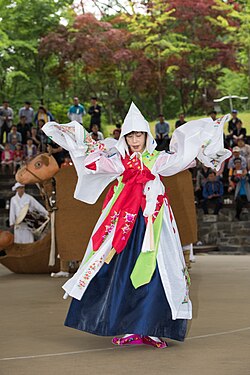
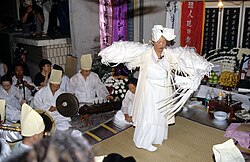
A person wearing flowing clothes with arms raised
A mudang performing a gut ritual in Yangju, South Korea
: A mudang performing a gut ritual in Yangju, South Korea
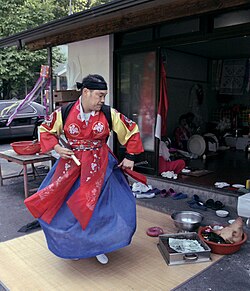
A man wearing red, blue, yellow and white clothes
A paksu, or male mudang, performing a ritual in South Korea
: A paksu, or male mudang, performing a ritual in South Korea
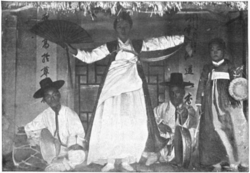
A person standing holding a paper fan with other people to the left and right
A mudang photographed in the early 20th century
: A mudang photographed in the early 20th century
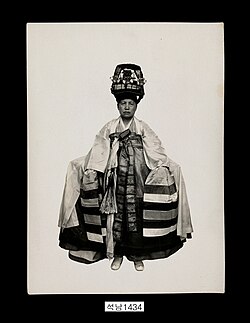
A person in ornate dress
A mudang dressed as a barigongju.
: A mudang dressed as a barigongju.
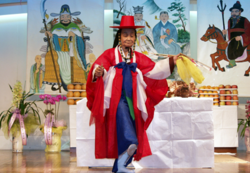
A person in red clothing performing a ritual
The mudang Oh Su-bok, mistress of the dodang-gut of Gyeonggi, holding a service to placate angry spirits of the dead.
: The mudang Oh Su-bok, mistress of the dodang-gut of Gyeonggi, holding a service to placate angry spirits of the dead.
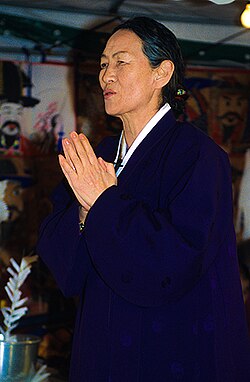
A woman dressed in black with her palms pressed together
Kim Kŭm-hwa became one of the world's most famous mudang from the 1980s onward
: Kim Kŭm-hwa became one of the world's most famous mudang from the 1980s onward

The Role of the Client

Clients seek out mudang to address various life challenges. In modern times, this can range from traditional spiritual concerns to contemporary personal issues. The relationship is transactional, with the mudang providing spiritual services to help the client resolve misfortune.
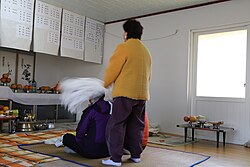
Two people on a mat, one sitting and the other standing behind them
A client undergoing a procedure with a mudang in 2019
: A client undergoing a procedure with a mudang in 2019

Rituals, Offerings, and Sacred Spaces

The gut is the most vital expression of Musok. These rituals can be held in private homes or at dedicated shrines known as guttang. These shrines are frequently located in significant natural settings, such as mountains.

The Gut Ceremony

A gut is a highly sensory experience. It involves specific preparations and performances to ensure the spirits are properly honored. Key elements include:

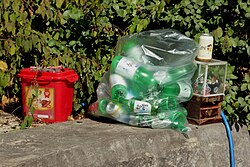
  • Offerings: Food and drink are presented to the gods. This can include meat and even items like soju.
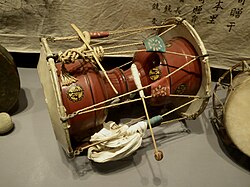
  • Performance: The mudang uses song, dance, and storytelling. Musical instruments, such as the janggu (a traditional drum), play a crucial role in the ceremony.
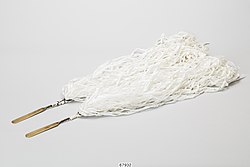
  • Spiritual Channeling: Practitioners may use tools, such as sticks with white paper streamers, to help channel spirits into their bodies.
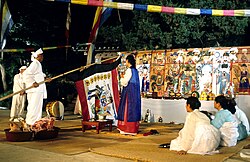
White and blue-clothed people performing a ritual
A Korean gut ritual performed in 2002
: A Korean gut ritual performed in 2002
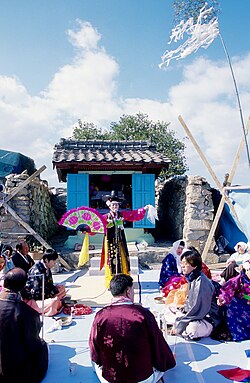
Brightly clothed people, one holding a paper fan, performing a ritual at daytime
A Donghaean Byeolsingut (Village Gut of the East Coast) performed in 2002
: A Donghaean Byeolsingut (Village Gut of the East Coast) performed in 2002
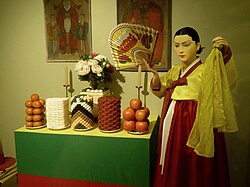
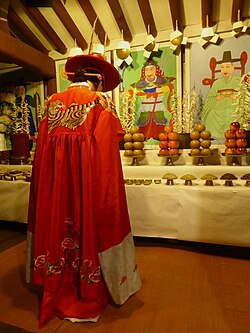
Diorama depicting a shrine table and a ritual practicioner
Diorama of a gut inside the National Museum of Korea, Seoul
: Diorama of a gut inside the National Museum of Korea, Seoul
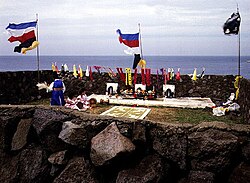
A ritual seen from afar
A gut held on Jeju Island in 2006.
: A gut held on Jeju Island in 2006.
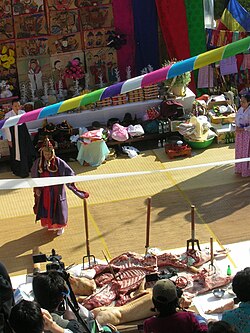
Various prepared meats on a table
A gut performed in South Korea in 2007, showing the offering of meat to the spirits
: A gut performed in South Korea in 2007, showing the offering of meat to the spirits
An ornamented drum
A janggu drum, on display at the National Museum of Korea in Seoul
: A janggu drum, on display at the National Museum of Korea in Seoul
Two sticks with long white strings attached
Sticks with white paper streamers are used by mansin to channel the spirits into their body
: Sticks with white paper streamers are used by mansin to channel the spirits into their body
Bottles in a plastic bag
Discarded soju bottles outside the Guksadang, having been used as offerings
: Discarded soju bottles outside the Guksadang, having been used as offerings
A person dressed entirely in white performing a ritual among other sitting persons
A Jindo Ssitgimgut (Purification Gut of Jindo) performed in 2001
: A Jindo Ssitgimgut (Purification Gut of Jindo) performed in 2001

Shrines and Altars

Sacred spaces in Musok vary from village shrines to mountain altars. Some shrines, known as Sansingak (mountain god shrines), are often managed by Buddhist temples, showing the overlap between the two traditions. Other significant sites include the Guksadang on Inwang Mountain, which many consider a premier shrine.
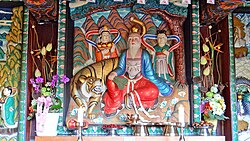
An altar depicting several human figures and a tiger with flowers and candles
An altar in a Sansingak ("mountain god shrine"). Sansingak are often controlled by Buddhist temples. This one belongs to the Jeongsu Temple [ko] of Ganghwa Island.
: An altar in a Sansingak ("mountain god shrine"). Sansingak are often controlled by Buddhist temples. This one belongs to the Jeongsu Temple [ko] of Ganghwa Island.
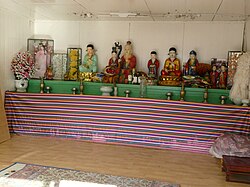
Shrine holding vases of flowers and statues of various humanoid deities
Shrine in the guttang at Ansan, featuring statues of various deities.
: Shrine in the guttang at Ansan, featuring statues of various deities.
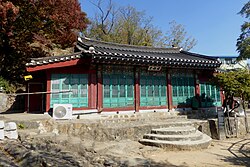
A shrine building with a sloped roof
The Guksadang shrine is located on Inwang Mountain, Seoul; Kendall noted that many mudang "regard the Guksadang as Korea's premier guttang."[217]
: The Guksadang shrine is located on Inwang Mountain, Seoul; Kendall noted that many mudang "regard the Guksadang as Korea's premier guttang."[217]
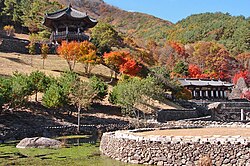
A garden on a hill with many small trees and stone paths
Gardens of the Samseonggung, a shrine for the worship of Hwanin, Hwanung and Dangun.
: Gardens of the Samseonggung, a shrine for the worship of Hwanin, Hwanung and Dangun.
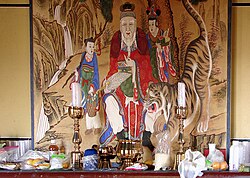
A shrine with a depiction of a mountain spirit, offerings and candles
A shrine to a sansin mountain spirit inside the Buddhist temple at Saseongam in South Korea
: A shrine to a sansin mountain spirit inside the Buddhist temple at Saseongam in South Korea.
A diorama showing a mudang with lowered head in a shrine
A diorama of a mudang worshipping at a shrine in the Lotte World Folk Museum, Seoul
: A diorama of a mudang worshipping at a shrine in the Lotte World Folk Museum, Seoul

Deities and Cosmology

The Musok pantheon is vast, including mountain spirits (sansin), village patron gods, and specific deities governing aspects of life like smallpox. The cosmology is deeply tied to the natural landscape, with mountains and lakes holding profound spiritual significance.

Spirits and Figures

  • Sansin: Mountain spirits that are central to many rituals and often depicted in paintings.
  • Village and Ancestral Spirits: Deities that protect specific communities or family lineages.
  • Mythological Figures: Characters like Gongsim and Jo Tong, who are central to the origin stories of Musok.
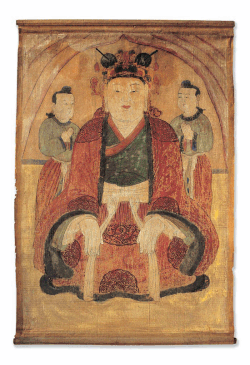
Illustration of a woman
Late Joseon period depiction of Hogu Pyŏlsŏng, goddess of smallpox
: Late Joseon period depiction of Hogu Pyŏlsŏng, goddess of smallpox
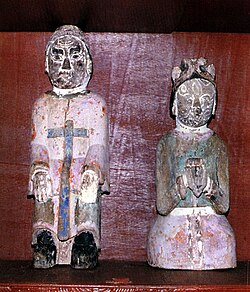
Two painted human statues
Statues of Gongsim (right) and her beloved Jo Tong (left) at Okgwa, Gokseong County. Gongsim is central to a story about Musok's origins.
: Statues of Gongsim (right) and her beloved Jo Tong (left) at Okgwa, Gokseong County. Gongsim is central to a story about Musok's origins.
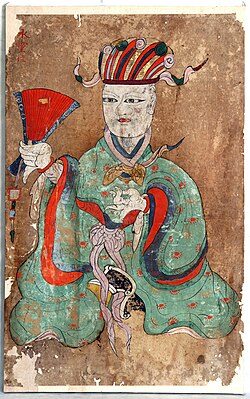
Damaged painting of a humanoid god holding a paper fan
A painting of Suryeong, a village patron god of the Naewat-dang shrine, potentially dating from the 15th century
: A painting of Suryeong, a village patron god of the Naewat-dang shrine, potentially dating from the 15th century
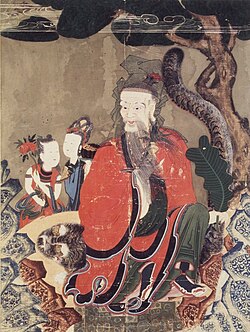
Painting of a humanoid mountain spirit
A 19th-century musindo painting of a sansin (mountain spirit), on display at the Brooklyn Museum; images like this often appeared on altars
: A 19th-century musindo painting of a sansin (mountain spirit), on display at the Brooklyn Museum; images like this often appeared on altars

Sacred Landscapes

The physical world is a map of the spiritual world. Mount Paektu, with its prominent lake, holds a significant place in Musok cosmology.
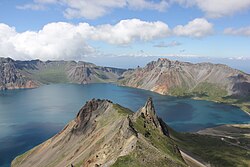
A mountaintop lake surrounded by sharp peaks
The lake atop Mount Paektu, which has a prominent place in Musok
: The lake atop Mount Paektu, which has a prominent place in Musok

Historical Evolution and Reception

The history of Musok is one of resilience. While historical records of mu (practitioners) date back to the 12th century, the tradition has faced significant periods of suppression.

From Suppression to Cultural Identity

During the Joseon period, Confucian elites viewed Musok rites as improper and imposed legal and tax-based restrictions. In the late 19th and early 20th centuries, modernizers often dismissed the practice as misin (superstition). During the Japanese occupation, however, folklorists began to reframe Musok as a vital expression of ancient Korean national culture.

In the mid-20th century, the tradition faced continued pressure in North Korea and through movements in South Korea. However, since the late 1970s, there has been a shift in perception. In South Korea, mudang have been increasingly associated with the minjung (pro-democracy) movement and are now widely regarded as a significant source of Korean cultural identity.
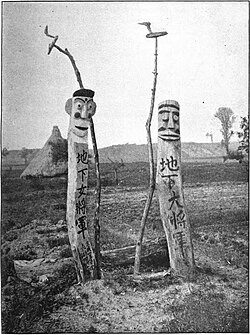
Two posts carved to resemble people
Two jangseung outside a Korean village, photographed in 1903
: Two jangseung outside a Korean village, photographed in 1903
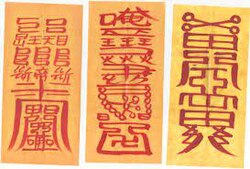
Three talismans, rectangles of paper marked with characters
Three Korean talismans, called pujŏk or bujeok
: Three Korean talismans, called pujŏk or bujeok
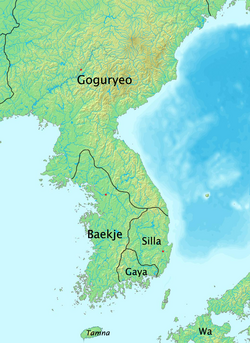
The Korean peninsula, labeled with the locations of 12th-century kingdoms
Historical references to mu appear in the 12th century, in the various Korean kingdoms
: Historical references to mu appear in the 12th century, in the various Korean kingdoms
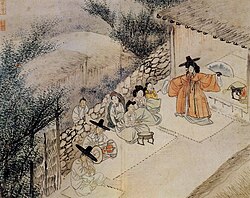
A 19th-century painting depicting a ritual
A mudang performs a gut in a painting titled Munyeo sinmu (무녀신무; 巫女神舞), made by Shin Yunbok in 1805.
: A mudang performs a gut in a painting titled Munyeo sinmu (무녀신무; 巫女神舞), made by Shin Yunbok in 1805

Summary of Musok Traditions

Overview of Musok Elements
Category Key Terms/Elements Description
Practitioners Mudang, Mansin, Sesŭp-mu Ritual specialists who mediate with the spirit world.
Rituals Gut Ceremonies involving music, dance, and offerings.
Spiritual Tools Pujŏk (Talismans), Janggu (Drum) Items used for protection, divination, or ritual performance.
Sacred Sites Guttang, Sansingak Shrines and altars, often located in mountains.

Frequently Asked Questions

What is the difference between a mansin and a sesŭp-mu?

The primary difference lies in how they interact with spirits. A mansin (common in the north) experiences direct possession by deities during a ritual, whereas a sesŭp-mu (common in the south and east) practices mediumship without undergoing personal possession.

What is a "gut" in Korean shamanism?

A gut is a ritual ceremony performed by a mudang. It is used to communicate with gods or spirits, often to solve a client's problems, appease angry spirits, or celebrate community events through song, dance, and offerings of food.

Are mudang considered part of Buddhism?

No, Musok is a distinct folk religion. However, the two traditions often overlap; for example, some mountain god shrines (Sansingak) are located within Buddhist temple grounds.

What are talismans used for in Musok?

Talismans, known as pujŏk or bujeok, are used within the tradition for spiritual purposes, often serving as protective or ritualistic tools.

How has the perception of Musok changed over time?

Musok has moved from being suppressed by Confucian elites and dismissed as "superstition" by modernizers to being recognized as a vital part of Korea's cultural and national identity.