Museo Argentino de Ciencias Naturales Bernardino Rivadavia
Located in the Caballito neighborhood of Buenos Aires, the Museo Argentino de Ciencias Naturales Bernardino Rivadavia stands as a premier public institution dedicated to the study and exhibition of the natural world. As the first museum of its kind in South America, it serves as both a sanctuary for vast biological and geological collections and a hub for ongoing scientific research.
Key Facts
- Established: June 27, 1812.
- Location: Caballito, Buenos Aires, Argentina.
- Current Governance: Managed by the National Research Council (CONICET) since 1996.
- Notable Fossils: Home to specimens of Carnotaurus, Eoraptor, and Megatherium.
- Public Access: Accessible via the Ángel Gallardo Metro station (Line B).
A Turbulent History of Science and Politics
The museum's origins date back to 1812, following a proposal by Bernardino Rivadavia to the First Triumvirate of the United Provinces of the Río de la Plata. While the struggle for independence from Spain delayed the project, Rivadavia successfully promoted the construction of the facility in 1823 while serving in Governor Martín Rodríguez's cabinet.
The institution officially opened in 1826 in a loft within the Santo Domingo Convent. Under the leadership of its first director, Italian Argentine botanist Carlos Ferraris, the museum began with a foundation of 1,500 mineral specimens and 800 animal specimens, largely thanks to a gift from Presbyterian Minister Bartolomé Muñoz. During this early era, astronomer Ottaviano Fabrizio Mossotti established the nation's first meteorological station, experimental physics laboratory, and observatory between 1828 and 1835. The museum's prestige was such that the renowned scientist Alexander von Humboldt consulted its researchers for meteorological data for the Institut de France.
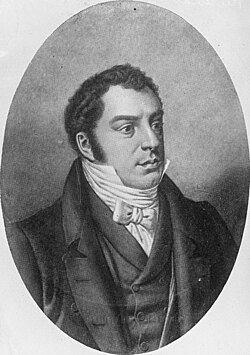
The institution faced a severe setback in 1835 when Governor Juan Manuel de Rosas returned the convent to the Dominican order. This forced a relocation to smaller buildings, resulting in the loss of significant research and equipment, and the departure of Ferraris and Mossotti. However, the museum was revitalized in 1854 by the Society of Friends of Natural History, moving to the "Illuminated block," a former Jesuit academy.
The Era of Expansion and Professionalization
The appointment of German naturalist Hermann Burmeister as director in 1862 marked a turning point. Burmeister professionalized the institution by founding the Argentine Paleontological Society in 1870 and launching the museum's first peer-reviewed periodical in 1874. His influence extended the reach of natural sciences into the Argentine hinterland and attracted other international scholars, such as Dutch zoologist Hendrik Weyenbergh.
Following Burmeister's death in 1892, the museum was led by Florentino Ameghino, the first Argentine director. As the collection grew beyond the capacity of its buildings, Director Martín Doello-Jurado secured congressional authorization in 1925 for a modern facility at the western end of Parque Centenario.
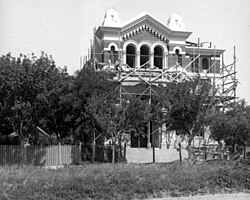
The first wing of the new site opened in 1929, and the museum was fully inaugurated in 1937. Despite political upheavals in 1946 that saw the dismissal of Doello-Jurado and the transfer of some items to the University of Buenos Aires Ethnographic Museum, President Juan Perón ordered the construction of an annex in 1948 to house the National Natural Sciences Institute.
Collections and Facilities
Today, the museum is a comprehensive center for natural science, featuring thirteen permanent exhibition halls. These galleries showcase a diverse array of specimens, from an aquarium to geological collections focused on meteorites found within Argentina.
The paleontology sections are particularly renowned, divided into two primary focuses:
- Mesozoic Paleontology: Featuring fossils of the Carnotaurus, Eoraptor, Herrerasaurus, and Patagosaurus.
- Cenozoic Paleontology: Displaying prehistoric giants such as the Glyptodon, Macrauchenia, Megatherium, and the saber-toothed Smilodon.
Beyond the exhibits, the museum provides a science auditorium, an art gallery, a library, a café, and a specialized display of specimens collected from Argentine research stations in Antarctica.
| Category | Details |
|---|---|
| Founded | June 27, 1812 |
| Current Location | Caballito, Buenos Aires |
| Governing Body | CONICET (since 1996) |
| Key Figures | Bernardino Rivadavia, Hermann Burmeister, Florentino Ameghino |
| Major Exhibits | Antarctic specimens, Meteorites, Cenozoic and Mesozoic fossils |
Frequently Asked Questions
Who was the first director of the museum?
The first director was Carlos Ferraris, an Italian Argentine botanist appointed by Bernardino Rivadavia.
Which prehistoric animals can be seen at the museum?
Visitors can see fossils of the Carnotaurus, Eoraptor, Herrerasaurus, and Patagosaurus, as well as Cenozoic creatures like the Glyptodon, Megatherium, and Smilodon.
How is the museum accessed via public transport?
The museum is conveniently located near the Ángel Gallardo Metro station on Line B.
What is the role of CONICET in the museum?
The museum was transferred to the National Research Council (CONICET) in 1996, which now oversees its administration and scientific research activities.
Did the museum always stay in the same building?
No, it has moved several times, starting in the Santo Domingo Convent, moving to the "Illuminated block" (a former Jesuit academy), and finally settling in its current location in Parque Centenario, which opened in 1937.