Murray Grigor: A Legacy of Architecture and Cinema
Murray Grigor OBE is a distinguished Scottish filmmaker, writer, artist, and exhibition curator whose work bridges the gap between the visual arts and the cinematic screen. With a career spanning over five decades, Grigor has produced more than 50 films, establishing himself as a premier chronicler of architecture and cultural identity.
From his early days at the BBC to his leadership of the Edinburgh International Film Festival, Grigor has consistently explored how physical spaces and cultural myths shape our understanding of the world. His multidisciplinary approach—incorporating elements of amateur architecture and curation—has earned him prestigious honors and a lasting impact on Scottish cultural discourse.
Key Facts
- Profession: Filmmaker, writer, artist, and former Director of the Edinburgh International Film Festival.
- Specialization: Over 50 films focused primarily on arts and architecture.
- Major Honors: Appointed Officer of the Order of the British Empire (OBE) in 2012.
- Academic Ties: Visiting Professor of Film Studies at Anglia Ruskin University and Honorary Doctor of Arts.
- Notable Collaborations: Frequent partnerships with Sir Sean Connery and American Director of Photography Hamid Shams.
Early Life and Career Foundations
Born in 1939 in Inverness, Scotland, Murray Grigor graduated from St Andrews University. He began his professional journey as a film editor at the BBC, a role he held until 1967. His career trajectory shifted significantly when he became the director of the Edinburgh International Film Festival.
In 1972, Grigor co-founded the film company Viz Ltd in Inverkeithing, Scotland, alongside his first wife, Barbara Grigor. Barbara was a multifaceted professional—a teacher of French and German, filmmaker, and chairman of the Scottish Sculpture Trust—who collaborated with Murray on many of his early creative endeavors until her passing in 1994. Grigor later married Carol Colburn Grigor in 2011.
The "Scotch Myths" Era and Cultural Impact
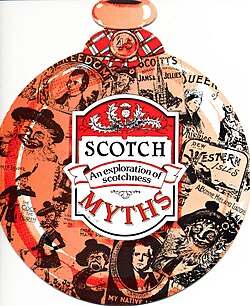
In the early 1980s, Grigor became a pivotal figure in the debate over Scottish identity. Together with Barbara Grigor and Peter Rush, he curated the Scotch Myths exhibition. Debuting at the University of St Andrews' Crawford Centre in 1981, the exhibition later featured at the Edinburgh International Festival.
The project examined popular representations of Scotland, specifically focusing on Tartanry (the romanticized, stereotypical imagery of the Highlands) and the Kailyard (a sentimentalized depiction of rural Scottish life). This exploration sparked significant political and cultural debate, leading to the "Scotch Reels" event at the 1982 Edinburgh Film Festival and a commissioned film for Channel 4 titled Scotch Myths (1983).
Global Expansion and Architectural Focus
Following a cold reception from the Scottish film establishment regarding his cultural critiques, Grigor expanded his scope to international subjects. He found significant success in the United States, notably producing the landmark eight-part series Pride of Place (1986) for PBS, focusing on American architecture in collaboration with Robert A.M. Stern.
Grigor's passion for architecture is evident throughout his filmography. He has produced documentaries on legendary figures such as Charles Rennie Mackintosh, Frank Lloyd Wright, and Carlo Scarpa. His work often explores the intersection of design and legacy, as seen in his films on the designers Robin and Lucienne Day and the cancer care facilities known as Maggie's Centres.
Beyond architecture, Grigor has captured unique cultural moments, including a 1976 video of musician Neil Young busking in Glasgow, and a series on Russia titled The Face of Russia (1997) with Librarian of Congress James Billington.
Professional Appointments and Recognition
Grigor's contributions to the arts have been recognized by several prestigious institutions. He is a fellow of the Royal Society of Arts and holds the distinction of being the first filmmaker to be named an Honorary Fellow of both the Royal Incorporation of Architects in Scotland and the Royal Institute of British Architects.
In 2007, he was appointed to the Scottish Broadcasting Commission. His lifelong service to the film industry and architecture was formally recognized in the 2012 New Year Honours, where he was appointed an Officer of the Order of the British Empire (OBE).
Filmography Summary
| Year | Title | Subject/Focus |
|---|---|---|
| 1968 | Mackintosh | Charles Rennie Mackintosh |
| 1983 | Scotch Myths | Scottish cultural identity |
| 1984 | Pride of Place | American architecture (PBS series) |
| 1999 | Nineveh on the Clyde | Alexander "Greek" Thomson |
| 2005 | Maggie's Centres | Cancer care architecture |
| 2012 | Ever to Excel | University of St Andrews 600th Anniversary |
Frequently Asked Questions
What is the significance of the "Scotch Myths" exhibition?
The exhibition challenged stereotypical representations of Scottish identity, specifically Tartanry and Kailyard traditions, influencing cultural and political debates in Scotland during the early 1980s.
Which architectural figures has Murray Grigor documented?
Grigor has produced films on several world-renowned architects, including Charles Rennie Mackintosh, Frank Lloyd Wright, Carlo Scarpa, Robert Adam, and Alexander "Greek" Thomson.
What is the relationship between Murray Grigor and Sir Sean Connery?
The two collaborated on multiple projects, including the documentary Sean Connery's Edinburgh and the book Being a Scot, as well as the feature documentary Ever to Excel.
What honors has Murray Grigor received for his work?
He was appointed an OBE in 2012, is an Honorary Doctor of Arts from Anglia Ruskin University, and is an Honorary Fellow of both the RIBA and the Royal Incorporation of Architects in Scotland.
Did Murray Grigor work with any American networks?
Yes, he produced significant work for the American public broadcaster PBS, including the series Pride of Place and The Face of Russia.