Murgon: A Hub of Heritage and Nature in the South Burnett
Nestled in the heart of the South Burnett region of Queensland, Murgon is a rural town that blends a rich agricultural legacy with unique prehistoric discoveries. Located approximately 45.5 km north-northeast of Kingaroy and 247 km northwest of Brisbane, Murgon serves as a gateway to the southern part of the Burnett River catchment, an area defined by its fertile lands and diverse industries.
The town's economy is deeply rooted in the land, with primary industries including dairy farming, beef and cattle production, peanuts, and winemaking. Just to the south lies the Indigenous Australian settlement of Cherbourg, adding to the cultural tapestry of the locality.
Key Facts
- Population: 2,220 people (as of the 2021 census).
- Geography: Situated at an elevation of 316 meters in the South Burnett Region.
- Paleontology: Home to a rare early Eocene fossil site dating back 55 million years.
- Infrastructure: Features the first and longest sealed section of the Kilkivan to Kingaroy Rail Trail.
- Culture: Located within the Wakka Wakka language region.
History and Development
The area is traditionally part of the Wakka Wakka language region, an Aboriginal language spoken across the Burnett River catchment. The town's modern development was catalyzed by the arrival of the railway. On September 14, 1903, the fourth stage of the Nanango railway line opened, connecting Goomeri to Wondai and providing Murgon with its own railway station.
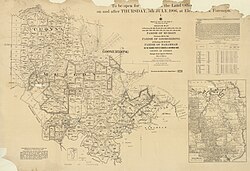
By July 1906, the Department of Public Lands Office began advertising allotments for selection across the Parishes of Murgon, Goomeribong, and Barambah, sparking early residential and commercial growth.
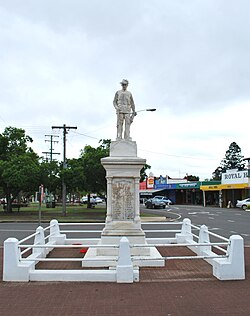
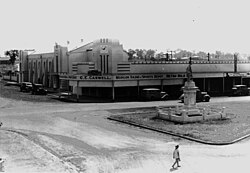
The early 20th century saw a rapid establishment of community pillars. Murgon State School opened in February 1908, followed shortly by the Post Office and the first Methodist Church. The town's commitment to remembering its veterans is evident in the Murgon War Memorial; its foundation stone was laid on ANZAC Day in 1920, and the memorial was dedicated on November 11, 1921.
From 1914 until 2008, Murgon served as the administrative center for the former Shire of Murgon. The town also gained cinematic fame as the setting for the 1986 film The Fringe Dwellers. Filmed in Murgon (and renamed 'Curgon' in the movie), it was the first Australian film to feature Indigenous actors in all major roles, winning an AACTA Award for Best Adapted Screenplay.
Education and Community Amenities
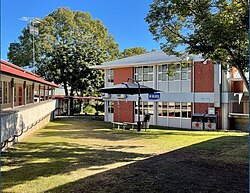
Murgon provides a comprehensive educational network for its residents. Murgon State School, established in 1908, offers primary education from Early Childhood to Year 6. Secondary students are served by Murgon State High School, which opened in 1959. Additionally, St Joseph's School provides Catholic primary education for the community.
The town's civic life is supported by the South Burnett Regional Council, which operates a public library featuring public Wi-Fi. Spiritual life is represented by several denominations, including St Joseph's Catholic Church and the Murgon Goomeri Uniting Church.
Tourism and Natural Attractions
For visitors, Murgon offers a blend of outdoor adventure and historical exploration. The Kilkivan to Kingaroy Rail Trail is a standout attraction. This 88-kilometer trail follows a decommissioned railway line. While the section from Kilkivan to Murgon remains unsealed, the 44-kilometer stretch from Murgon to Kingaroy is the first and longest sealed rail trail in Queensland, dedicated exclusively to walkers and cyclists.
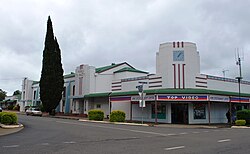
History enthusiasts can visit the Queensland Dairy and Heritage Museum or explore the local heritage-listed sites, such as the former South Burnett Co-operative Dairy Association Factory and the Murgon Civic Centre.
The Murgon Fossil Site
One of the most scientifically significant aspects of the region is the Murgon fossil site. This is the only site in Australia containing a diverse vertebrate fauna from the early Eocene epoch (approximately 55 million years ago). This period is critical for paleontologists as it occurred only 10 million years after the extinction of the dinosaurs.
Regional Overview
| Category | Details |
|---|---|
| LGA | South Burnett Region |
| Postcode | 4605 |
| Population (2021) | 2,220 |
| Elevation | 316 m |
| Key Industries | Dairy, Beef, Peanuts, Wine |
| Notable Residents | Rod Ansell, Leah Purcell, Steve Renouf |
Frequently Asked Questions
What is the significance of the Murgon fossil site?
It is the only site in Australia that preserves a diverse range of vertebrate fauna from the early Eocene epoch, dating back roughly 55 million years.
What is the Kilkivan to Kingaroy Rail Trail?
It is an 88-kilometer trail converted from an old railway line. It features Queensland's first and longest sealed section (44 km) between Murgon and Kingaroy, designed for cyclists and pedestrians.
Which famous film was shot in Murgon?
The 1986 film The Fringe Dwellers was shot in Murgon. The town was renamed 'Curgon' for the movie, which is noted for being the first Australian film with Indigenous actors in all major roles.
What are the main industries in the Murgon area?
The local economy relies heavily on agriculture, specifically dairy farming, beef and cattle production, peanut farming, and winemaking.
Who are some notable people from Murgon?
Notable residents include Rod Ansell (the inspiration for Crocodile Dundee), actress and director Leah Purcell, and rugby league players Steve Renouf, Gavin Cooper, and Dustin Cooper.