Municipality Systems and Global Administrative Structures
A municipality is a single administrative division that possesses corporate status and powers of self-government. These jurisdictions are granted specific authority by national and regional laws to which they remain subordinate. While the term often refers to the geographic territory, it can also describe the governing body that manages that area. Unlike special-purpose districts, a municipality serves as a general-purpose administrative subdivision.
The word originates from the French municipalité, which stems from the Latin municipalis. This was based on municipium, a term for a social contract. In ancient Rome, this referred to communities that provided troops to the Roman state in exchange for Roman citizenship, allowing them to maintain a degree of limited local autonomy.
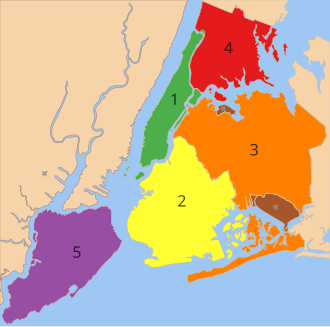
Municipalities vary wildly in scale and scope. A political jurisdiction can range from a sovereign state, such as the Principality of Monaco, to a tiny village like West Hampton Dunes in New York. Depending on the region, a municipality's jurisdiction may cover a single populated place (a city or town), several populated places (such as townships in early New Jersey or municipalities in Mexico and Colombia), or only specific parts of a city, such as the 34 municipalities found in Santiago, Chile.
Key Facts
- Definition: A general-purpose administrative division with corporate status and self-governing powers.
- Scope: Can range from a sovereign state to a small village.
- Powers: Vary from complete state subordination to virtual autonomy, including the right to levy income and property taxes.
- Global Terms: Known as municipio in Spanish, commune in French/Italian, and kommune in Nordic languages.
- Structure: May encompass a single city, multiple villages, or specific urban boroughs.
Political Powers and Governance
The level of authority held by a municipality depends on the national legal framework. Some possess significant autonomy, while others are strictly subordinate to the state. Many municipalities have the legal right to tax individuals and corporations through property, income, and corporate taxes, though they often rely on substantial state funding to operate.
In certain European nations, such as Germany, municipalities hold a constitutional right to provide essential public services through municipally owned public utility companies.
Global Terminology and Variations
The "Municipality" and "Commune" Traditions
Many languages use cognates of "municipality" to describe the territory or political structure, including the Spanish municipio (Spain) and municipalidad (Chile), Catalan municipi, and Portuguese município. In Brazil, the município is the smallest territorial division with executive and legislative powers, and all are members of the federation since the 1988 Constitution.
Other regions use terms derived from "commune," emphasizing the community and common interest. This includes the French commune, Italian comune, Romanian comună, and the Nordic kommune (Denmark, Norway) or kommun (Sweden, Finland). In Poland, the term is gmina, and in Ukraine, it is hromada.
In Greece, the term demos (Δήμος) is used, which means "community" and is the root of the English word "democracy."
English-Speaking Jurisdictions
In Australia, the term Local Government Area (LGA) is used for incorporated areas of states and territories. Canada utilizes a variety of terms based on provincial legislation, including district municipalities, parishes, and townships; Ontario specifically employs a tiered system of upper and lower municipalities.
India defines a municipality (or municipal council) as an urban local body, typically administering cities with populations of 100,000 or more, though exceptions exist for older urban centers. In the United Kingdom, the term "municipality" was common until the 1970s; today, units are generally known as districts (England, Northern Ireland, Wales) or council areas (Scotland).
In the United States, a municipality is generally a city, town, or village formed by a municipal charter from the state. However, some state codes define the term more broadly to include any political subdivision with jurisdiction over a specific area.
Asian Administrative Models
In the People's Republic of China, "direct-administered municipalities" (such as Beijing and Shanghai) hold a status equal to that of a province. Similarly, the Republic of China (Taiwan) utilizes "special municipalities" (such as Taipei and Kaohsiung) that also hold province-level status.
Comparative Municipal Data
The following table summarizes how different countries implement municipal structures.
| Country | Local Term | Subdivision Of | Quantity | Key Note |
|---|---|---|---|---|
| Brazil | município | State | 5,570 | Divided into urban (city) and rural parts. |
| Denmark | kommune | Region | 98 | Standard local administrative unit. |
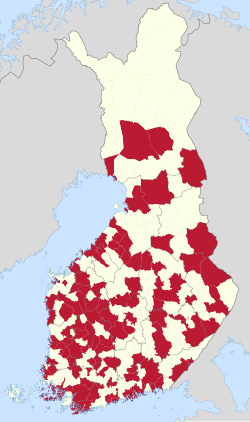
| Finland | Kunta | Region | 308 | General local government unit. |
| India | municipality | State/Union Territory | 1,937 | Governs specific urban areas via elected bodies. |
| Italy | Comune | Province | 7,896 | Larger comuni may be divided into "municipios." |
| Netherlands | gemeente | Province | 345 | Lowest administrative unit of the country. |
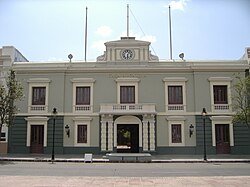
| Puerto Rico | municipio | None | 78 | Includes an urban center and surrounding barrios. |
| Sweden | kommun | Region/County | 290 | Independent of the regions/counties they are in. |
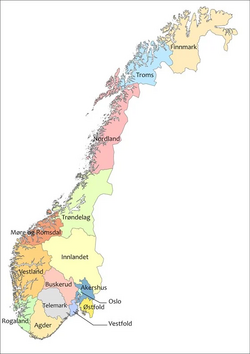
In Norway, the system is unique in that both first-level and second-level administrative divisions are called municipalities. The 15 first-level fylkeskommuner (county municipalities) are further divided into 357 primærkommuner (primary municipalities).
Frequently Asked Questions
What is the difference between a municipality and a special-purpose district?
A municipality is a general-purpose administrative subdivision providing a wide array of services and governance, whereas a special-purpose district is created to handle one specific function, such as water management or fire protection.
Can a municipality be an entire country?
Yes, in some cases a political jurisdiction can be a sovereign state, such as the Principality of Monaco, which functions as a municipality.
How do municipalities in China differ from those in other countries?
In the People's Republic of China, direct-administered municipalities like Beijing and Shanghai have a high administrative status equal to that of a province, rather than being subordinate to one.
What is the relationship between a city and a municipality in Brazil?
While the terms are often used interchangeably in conversation, the Brazilian constitution defines the "city" specifically as the seat of the municipality.
Do all municipalities have the power to tax?
Not all, but many do. Depending on the national laws, some municipalities can levy income, property, and corporate taxes, while others rely primarily on funding provided by the state or regional government.