Municipal Corporations: Local Governance and Corporate Structures Worldwide
A municipal corporation is a legal term used to describe a local governing body. Depending on the jurisdiction, this can include a wide variety of entities such as cities, counties, towns, townships, villages, and boroughs. Beyond governance, the term also refers to corporations that are owned by a municipality to provide specific public services.
When a municipality becomes a self-governing entity under the laws of its state or province, it undergoes municipal incorporation. This process is typically formalized through a municipal charter—a legal document that establishes the municipality and defines its powers and structure.
Key Facts
- Municipal corporations can function as either local government bodies or municipally owned enterprises.
- Incorporation is usually granted via a legal charter from a higher state or provincial authority.
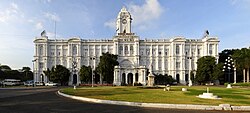
- The Greater Chennai Corporation is the oldest municipal corporation in India and the oldest in the Commonwealth outside of Britain.
- In the United States, local government structures vary significantly by state, including the use of parishes in Louisiana and boroughs in Alaska.
- Municipal enterprises are often viewed as more efficient than traditional bureaucracies due to their independent corporate status.
Global Perspectives on Municipal Governance
India and Pakistan
In India, municipal corporations govern large urban areas. Their establishment is mandated by the 74th amendment, with specific governance provided by municipal acts passed by state legislatures.
In Pakistan, these bodies run the city systems under provincial Local Government Acts. Article 140-A of the Constitution of Pakistan, introduced via the 18th Amendment in 2010, requires provinces to devolve political, administrative, and financial power to elected local representatives.
Bangladesh
Bangladesh distinguishes between city corporations and municipal corporations. A city corporation is a larger, stronger body governing a metropolitan city within a district, whereas a municipal corporation governs a municipal area within a sub-district. Currently, there are 12 city corporations (two in Dhaka and ten in the most populous cities of the eight divisions) and 330 municipalities across the country.
United Kingdom and Ireland
In the UK, ancient boroughs were often incorporated by royal charter. Over time, legislation such as the Municipal Corporations Acts of 1835 and 1882 abolished "rotten boroughs" and small rural corporations. By the Local Government Act 1972, most borough corporations were replaced by councils, with the City of London Corporation remaining a notable exception.
Ireland followed a similar trajectory. Following the Partition of Ireland, several county and non-county boroughs existed. However, the Local Government Act 2001 renamed county boroughs as "cities" and their corporations as "city councils."
North America: United States and Canada
In Canada, municipal charters are granted by provincial authorities. In the United States, the system is highly decentralized. Most states utilize a two-tier system consisting of counties and municipalities, though terminology varies: Louisiana uses parishes, Alaska uses boroughs, and Connecticut uses planning regions.
U.S. population centers may be incorporated as cities, towns, boroughs, or villages. Some cities have consolidated with county governments to form consolidated city-counties, while in Virginia, cities are entirely independent of counties. Additionally, states create special-purpose districts for specific needs, such as school districts, fire protection, or water resource management. As of 2012, the US Census Bureau recorded 89,004 local government units.
New Zealand
The New Zealand Constitution Act 1852 originally allowed for the establishment of municipal corporations. However, the term became less common after the provinces were abolished in 1876.
Municipal Corporations as Enterprises
Beyond governance, a municipal corporation can be an organization with independent corporate status and majority public ownership, managed by an executive board appointed by local officials. These entities often result from "externalization," where a government moves a service into a corporate structure to increase efficiency.
Unlike government agencies funded by taxation, these corporations often rely on user fees. While they may experience higher initial failure rates due to their managerial transition, they are generally observed to be more successful in providing public goods and services than traditional government bureaucracies.
Summary of Municipal Structures
| Type | Primary Purpose | Funding Source | Key Characteristic |
|---|---|---|---|
| Local Governing Body | Civic administration and law | Taxes / Government grants | Established via Charter or Act |
| Municipal Enterprise | Public service delivery | User fees / Public ownership | Independent corporate status |
| Special Purpose District | Specific utility or service | Taxes / Fees | Limited scope (e.g., School District) |
Frequently Asked Questions
What is a municipal charter?
A municipal charter is a legal document that establishes a municipality, such as a city or town, and defines its governing structure and legal powers.
How does a city corporation differ from a municipal corporation in Bangladesh?
A city corporation is a larger and more powerful governing body that manages a metropolitan city of a district, whereas a municipal corporation manages a municipal area within a sub-district.
What are "special-purpose local governments" in the US?
These are government entities created to handle specific functions rather than general governance, such as school districts, public libraries, or sanitary sewer services.
Why are municipally owned corporations considered more efficient?
They are argued to be more efficient because they operate with an independent corporate status and a managerial orientation that differs from traditional government bureaucracies.
Which is the oldest municipal corporation in India?
The Greater Chennai Corporation is the oldest municipal corporation in India and the oldest in the Commonwealth outside of Britain.