Mountain Guns: The Evolution of Portable Artillery
In the challenging terrain of high altitudes and rugged peaks, traditional wheeled transport often becomes impossible. To overcome these geographical barriers, military engineers developed mountain guns—specialized artillery pieces designed specifically for mountain warfare and inaccessible regions.
These weapons are characterized by their ability to be dismantled into smaller, manageable loads. This modular design allows them to be transported via horses, mules, humans, tractors, or trucks, earning them the nicknames "pack guns" or "pack howitzers." This concept of portable firepower dates back significantly; for instance, during the American Civil War, these small portable units were widely utilized and referred to as "mountain howitzers."
Key Facts
- Purpose: Designed for areas where wheeled transport is not feasible.
- Transport: Can be broken down into loads for mules, horses, or humans.
- Innovation: Modern breechloading designs with recoil control were pioneered by Greek engineers in the 1890s.
- Modern Status: Largely superseded by helicopters and lightweight missile systems.
The Engineering Leap: Breechloading and Recoil Control
The transition to modern mountain artillery occurred in the 1890s. Greek army engineers P. Lykoudis and Panagiotis Danglis developed the first designs for modern breechloading mountain guns. A breechloading gun is one where the ammunition is loaded through the rear (breech) of the barrel rather than the muzzle.
These innovations introduced recoil control and the ability to easily break down and reassemble the weapon into highly efficient units. The influence of this work is evident in later weaponry, such as the Schneider-Danglis gun, which was named after Panagiotis Danglis.
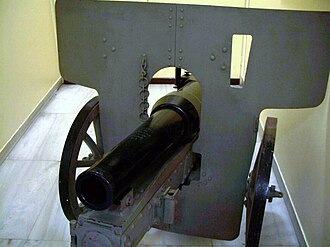
Comparison and Modern Obsolescence
Mountain guns share many similarities with infantry support guns, providing direct fire assistance to ground troops. However, as military technology advanced, the necessity for dismantleable pack guns diminished. Their role has been largely filled by more versatile and powerful systems, including:
- Howitzers and mortars
- Multiple rocket launchers
- Recoilless rifles
- Guided missiles
Today, most modern artillery is constructed from lightweight materials. Rather than being carried in pieces by pack animals, these systems can be transported fully assembled via helicopters, drastically reducing setup time and increasing mobility.
| Era | Primary Transport Method | Key Characteristic |
|---|---|---|
| Early/Civil War | Horses, Mules, Humans | Small portable howitzers |
| Late 19th Century | Pack animals, Trucks | Breechloading and dismantleable |
| Modern Era | Helicopters | Lightweight, fully assembled transport |
Frequently Asked Questions
What is the difference between a mountain gun and a standard gun?
The primary difference is portability. Mountain guns are designed to be dismantled into smaller loads for transport by pack animals or humans in areas where wheeled vehicles cannot travel.
Who were the key innovators of modern mountain guns?
Greek army engineers P. Lykoudis and Panagiotis Danglis were pivotal in the 1890s, creating the first modern breechloading designs with recoil control.
Why are mountain guns called "pack guns"?
They are called pack guns because they can be broken down into sections that are "packed" onto the backs of animals, such as mules or horses, for transport.
Are mountain guns still used today?
They are largely outdated. Their tactical role has been replaced by mortars, missiles, and lightweight artillery that can be airlifted by helicopters.
What is a breechloading gun?
A breechloading gun is an artillery piece where the projectile and propellant are loaded into the rear of the barrel, allowing for faster loading and better protection for the crew compared to muzzle-loading guns.