MotoGP World Championship: The Pinnacle of Grand Prix Motorcycle Racing
Grand Prix motorcycle racing represents the highest level of two-wheeled competition globally. While the championship's roots stretch back to 1949, the modern era is defined by the MotoGP brand, which became the commercial name for the sport in 2000. Today, the championship is a sophisticated ecosystem divided into three primary official classes: MotoGP, Moto2, and Moto3.
The sport has evolved from the raw power of two-stroke engines to the precision of modern four-stroke technology. While the premier MotoGP class captures the most attention, all three categories hold official world championship status, creating a clear ladder for riders to ascend from entry-level competition to the world stage.

Key Facts
- Premier Class: MotoGP is the top division, currently dominated by Ducati.
- 2025 Champions: Marc Márquez (Riders'), Ducati (Constructors'), and Ducati Lenovo Team (Teams').
- Engine Evolution: All three classes now utilize four-stroke engines.
- Tyre Transition: Michelin is the current MotoGP supplier, but Pirelli will take over in 2027.
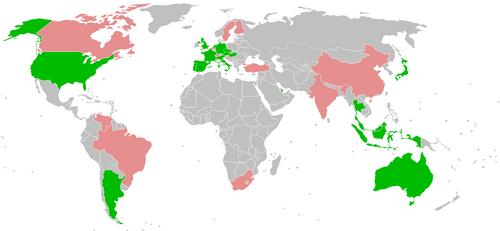
- Global Reach: Races are held across Europe, Asia, the Americas, and Oceania.
The Three Championship Classes
MotoGP: The Premier Class
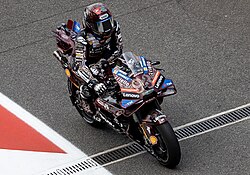
The MotoGP class is the pinnacle of prototype racing. Originally known as the 500cc class, it transitioned to the MotoGP name in 2002 with the start of the four-stroke era. These machines are purpose-built prototypes, not based on production bikes, reaching maximum speeds of 368.6 km/h.
Moto2: The Intermediate Step
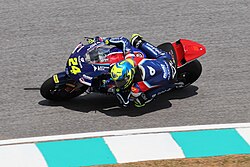
Introduced in 2010 to replace the 250cc two-stroke class, Moto2 serves as the primary feeder to the premier class. Since 2019, the class has utilized a standardized 765cc 3-cylinder Triumph production engine to ensure a level playing field, focusing the competition on rider skill and chassis setup.
Moto3: The Entry Level
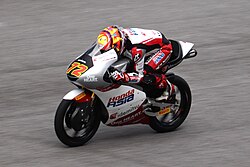
Launched in 2012 to replace the 125cc class, Moto3 features lightweight 250cc four-stroke single-cylinder machines. With a strict weight limit of 65 kg (including fuel), these bikes are designed for agility and close, competitive racing.
Technical Specifications and Regulations
The technical divide between the classes is significant, ranging from the massive power of a MotoGP V4 to the nimble nature of a Moto3 single.
| Specification | MotoGP | Moto2 | Moto3 |
|---|---|---|---|
| Engine Configuration | V-4 / Inline-four | Inline-three (Triumph) | Single-cylinder |
| Displacement | 1,000cc (until 2026) | 765cc | 250cc |
| Power Output | > 290 bhp | > 140 bhp | > 55 bhp |
| Max Speed | 368.6 km/h | 308.5 km/h | 258.6 km/h |
| Tyre Supplier | Michelin (Pirelli 2027) | Pirelli | Pirelli |
Historical Evolution
The championship began in 1949 with five categories, including sidecars. Early milestones include the first non-European race in Argentina (1961) and the first Asian winner, Kunimitsu Takahashi. The 1970s saw the rise of two-stroke dominance, with Yamaha winning the first constructors' title for a Japanese brand in 1974.
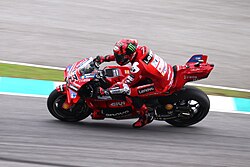
The transition to the modern era was marked by the 2002 shift to four-stroke engines. In recent years, the sport has seen a resurgence of Italian success, highlighted by Francesco Bagnaia becoming the first Italian premier class champion since Valentino Rossi in 2022.
Current Competitive Landscape
The 2025 season showcases a diverse grid of manufacturers including Aprilia, Ducati, Honda, KTM, and Yamaha. Ducati currently holds a dominant position, securing the Riders', Constructors', and Teams' championships.
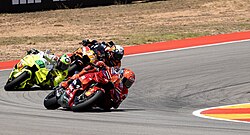
The global calendar spans iconic circuits such as Silverstone in the UK, Mugello in Italy, and Sepang in Malaysia. The racing format rewards consistency and aggression, with a points system that grants 25 points to the winner of a Grand Prix, scaling down to 1 point for 15th place.
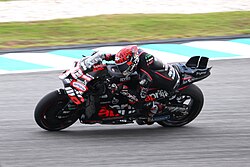
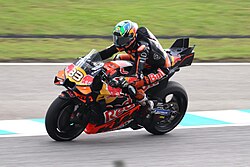
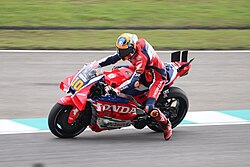
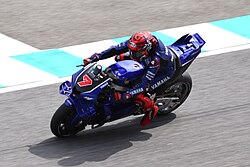
Recent tests and races at Sepang have highlighted the current fleet, featuring riders like Brad Binder on the KTM RC16, Luca Marini on the Honda RC213V, and Augusto Fernández on the Yamaha YZR-M1.
Frequently Asked Questions
What is the difference between MotoGP, Moto2, and Moto3?
MotoGP is the premier class featuring 1,000cc prototype motorcycles. Moto2 is the intermediate class using a spec 765cc Triumph engine. Moto3 is the entry-level class using 250cc single-cylinder engines.
Who are the current world champions?
For the 2025 season, the MotoGP Riders' champion is Marc Márquez, the Constructors' champion is Ducati, and the Teams' champion is the Ducati Lenovo Team.
When will the tyre supplier change for the premier class?
While Michelin currently supplies MotoGP, it has been announced that Pirelli will become the official tyre supplier for the MotoGP class starting in 2027.
What happened to the MotoE class?
MotoE, the electric racing class, gained World Championship status from 2023 until 2025, but it is scheduled to go on hiatus after the 2025 season.
How has the engine capacity changed in MotoGP?
The premier class has moved from 500cc two-strokes to 990cc four-strokes (2002-2006), then to 800cc (2007-2011), and finally to 1,000cc from 2012 through 2026, with a planned shift to 850cc in 2027.