Moths: The Diverse and Ancient World of Lepidoptera
Moths are a massive and ancient group of insects that have shared our planet since the Early Jurassic period, approximately 200 million years ago. As a major division of the order Lepidoptera, moths represent about 90% of all known species in this group, leaving the remaining 10% to be classified as butterflies. With roughly 160,000 species currently described and an estimated total of 500,000, the sheer diversity of these insects is staggering.
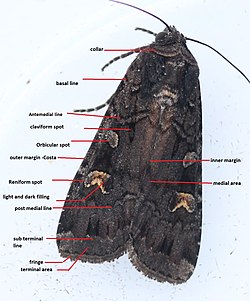
Key Facts
- Temporal Range: Existed since the Early Jurassic (approx. 200 Ma).
- Species Count: ~160,000 described; estimated ~500,000 total.
- Classification: Part of the order Lepidoptera; often historically referred to as Heterocera.
- Economic Impact: The silk industry, driven by the Bombyx mori moth, produces over 130 million kg of raw silk annually.
- Ecological Role: Vital nocturnal pollinators for many plant species.
Taxonomy and Classification
In modern biological classification, moths belong to the kingdom Animalia, phylum Arthropoda, and class Insecta. While the term Heterocera was traditionally used to distinguish moths from butterflies (Rhopalocera), modern taxonomy focuses on more complex evolutionary lineages within the order Lepidoptera. Recent scientific efforts describe over 1,000 new species of Lepidoptera every year, particularly in unexplored tropical regions.
| Rank | Taxon |
|---|---|
| Kingdom | Animalia |
| Phylum | Arthropoda |
| Class | Insecta |
| Order | Lepidoptera |
Biology and Physical Characteristics
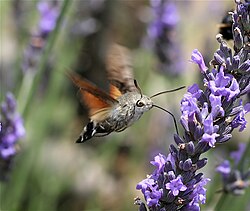
Adult moths possess several specialized anatomical features that aid in survival and feeding. Most species feature a proboscis—a long, coiled tube used to siphon fluids such as water, plant sap, or flower nectar.
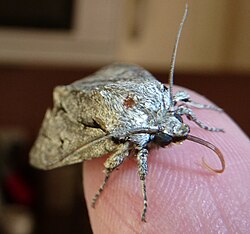
Their sensory capabilities are highly developed. Moths typically have two large compound eyes, which can contain anywhere from 200 to 27,000 individual facets. Additionally, they possess ocelli (simple eyes) located above the compound eyes, which likely assist with orientation. Their antennae are distinctively branch-like and taper to a point, lacking the clubbed ends found on many butterflies.
Life Cycle Stages
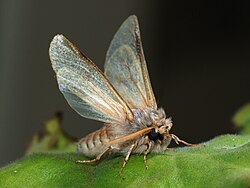
The life cycle of a moth generally progresses through several distinct stages:
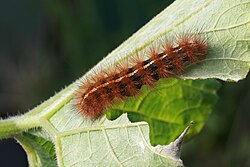
- Caterpillar (Larva): The primary feeding stage where the insect consumes plant matter.
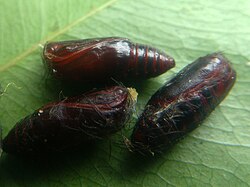
- Pupa: A transformation stage, often occurring within a protective cocoon.
- Adult: The reproductive stage, characterized by wings and specialized feeding apparatus.
Ecology and Behavior
Moths play a critical role in global ecosystems, particularly as nocturnal pollinators. They visit flowers during the night, performing a "night shift" of pollination that many bees and butterflies do not cover. This makes them essential for the reproduction of various wild and agricultural plants.
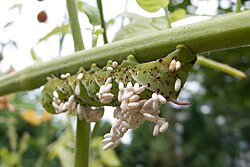
However, moths face significant ecological pressures. They are subject to predation by various animals and parasitism by insects, such as wasps. Some moths have even evolved specialized hearing to detect the ultrasonic calls of predatory bats, with some species even capable of "jamming" bat sonar to escape.
Attraction to Light
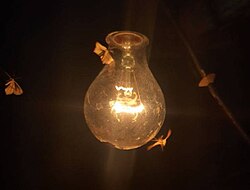
A common phenomenon is the attraction of moths to artificial light sources. While the exact mechanics are studied, it is known that flying insects gather around light, which can disrupt their natural behaviors and impact local pollination cycles. This attraction to light can lead to increased mortality and stress on local populations.
Human Relationship and Economic Value
Beyond their ecological roles, moths have a significant economic relationship with humans. The most prominent example is the silkworm (the larva of Bombyx mori). These larvae are farmed specifically for the silk they use to construct their cocoons. As of 2002, the global silk industry was valued at approximately 250 million U.S. dollars, producing more than 130 million kilograms of raw silk annually.
Frequently Asked Questions
What is the main difference between a moth and a butterfly?
While they share many similarities, moths make up about 90% of the Lepidoptera order. Historically, they were distinguished by their antennae; moths typically have tapered, branch-like antennae, whereas butterflies often have clubbed ends.
How do moths help the environment?
Moths are essential nocturnal pollinators. They visit flowers at night, transporting pollen between plants and supporting the reproduction of many ecosystems.
Why are moths attracted to light?
Moths are known to gather around artificial light sources, a behavior that can be detrimental to their natural life cycles and can disrupt the pollination of plants in the area.
Are all moths pests?
No. While some species are known to consume clothing or crops, many are vital pollinators and play crucial roles in the food web as both predators and prey.
How old are moths?
Moths are an ancient lineage, with fossil evidence suggesting they have existed since the Early Jurassic period, roughly 200 million years ago.