Moon Knight: The Making of Marvel's Egyptian-Inspired Series
The journey of Moon Knight from the comic pages to the screen was a long and winding road. Before becoming a cornerstone of the Marvel Cinematic Universe (MCU) on Disney+, the character faced numerous developmental hurdles, including a planned appearance in a cancelled 2006 Blade series and various unrealized film pitches. It wasn't until 2019 that Marvel Studios officially announced the character would lead his own series, setting the stage for a production that would blend psychological complexity with ancient mythology.
The series was envisioned as a departure from standard superhero fare, focusing on a dark, complex narrative that pushed the boundaries of brutality and tone within the MCU. By partnering with Egyptian director Mohamed Diab, Marvel sought to move away from Orientalist stereotypes—the common Hollywood trope of depicting Middle Eastern people as exotic guides—and instead present Egypt as a modern, living society.
Key Facts
- Budget: The series had a production budget of $147.9 million.
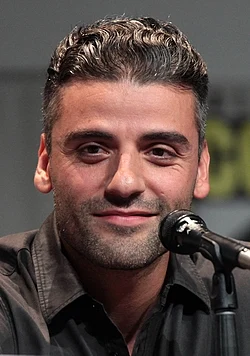
- Lead Actor: Oscar Isaac portrays the lead characters, confirming the character is Jewish-American.
- Cultural Focus: Director Mohamed Diab ensured an authentic depiction of modern Egypt and hired Egyptian crewmembers.
- Format: The series consists of six episodes, each ranging from 40 to 50 minutes.
- Visuals: The Moon Knight suit comprises over 803 individual pieces made from flexible "Euro jersey" material.
Development and Creative Vision
The production of Moon Knight was a collaborative effort between head writer Jeremy Slater and director Mohamed Diab. While Slater initially pitched a story with "Amblin-style magic"—referencing the adventurous spirit of 1980s cinema—Diab brought a more grounded, serious approach. Together, they drew inspiration from films like Raiders of the Lost Ark, Ghostbusters, and The Mummy (1999) to create a supernatural atmosphere mixed with horror elements.
Authenticity and Representation
A primary goal for Diab and his wife, producer Sarah Goher, was to challenge the way Egypt is portrayed in Western media. They submitted a 200-page vision document to Marvel Studios to ensure the Giza pyramids were shown as being adjacent to the modern city of Cairo, rather than isolated in a desert. This commitment to authenticity extended to the casting of Layla El-Faouly, played by May Calamawy. The writers intentionally made Layla Egyptian to avoid "white savior" tropes and imperialism themes that would have occurred had she been a white character alongside Marc Spector.
Writing the Antagonists
Selecting the villains required significant trial and error. The writers initially considered Bushman, Moon Knight's most famous comic book foe, but found him too dangerous for the character of Steven Grant and too similar to the villain Killmonger from Black Panther. Instead, they developed Arthur Harrow, a former avatar of the god Khonshu, to provide a more emotional and psychological connection to the protagonists.
Casting and Characterization
Oscar Isaac was cast as the lead after initially hesitating due to the demanding nature of previous franchise work. He was drawn to the role after researching Dissociative Identity Disorder (DID) and appreciating the creative freedom offered by Marvel Studios president Kevin Feige. Isaac's portrayal allows for an exploration of faith and identity, maintaining the character's Jewish-American heritage from the comics.
The supporting cast includes Ethan Hawke as Arthur Harrow, who joined the project without reading the script—a rarity in his 35-year career—based on his trust in Isaac and Diab. F. Murray Abraham provided the voice for the Egyptian god Khonshu, while Karim El Hakim performed the character on set.
Production Design and Filming
The visual identity of the series was designed to feel supernatural rather than technological. Unlike other MCU suits that use nanotechnology, Moon Knight's costume features Ancient Egyptian bandages that conjure around the wearer. The suit's cape and chest piece are adorned with hieroglyphic symbols representing the oath of Khonshu.
Filming Locations
Although set partially in London and Egypt, the series was primarily filmed in Hungary. Budapest served as a stand-in for London's Soho and Brixton areas, with the Museum of Fine Arts in Budapest doubling as the fictional National Art Gallery. The production used the working title Good Faith during its shoot.
Musical Composition
The score was composed by Hesham Nazih, who blended a 62-piece orchestra with traditional Egyptian folk instruments, including the arghul, mizmar, and rebab. This fusion was intended to showcase contemporary Egyptian art to a global audience while maintaining a universal, cinematic feel.
Production Summary
| Category | Details |
|---|---|
| Total Budget | $147.9 Million |
| Lead Actor | Oscar Isaac |
| Directors | Mohamed Diab, Justin Benson, Aaron Moorhead |
| Primary Filming Location | Budapest, Hungary |
| Composer | Hesham Nazih |
| Episode Count | 6 Episodes |
Frequently Asked Questions
Why was the character of Maya Lopez (Echo) removed from the series?
Although the writers considered making her a love interest for Spector as she is in the comics, she did not fit the specific story they were telling. Marvel Studios eventually decided to introduce her in the Hawkeye series instead.
How does the Moon Knight suit differ from other MCU costumes?
Instead of using nanotech, the suit uses a supernatural bandage design based on the Universe X comics. It consists of over 803 pieces of flexible "Euro jersey" material with 3D printed textures.
Why was the series filmed in Budapest instead of London?
Budapest provided various exterior locations that could effectively stand in for London's Brixton and Soho areas, and the production utilized soundstages at Origo Studios.
What inspired the tone of the series?
The creators were inspired by the adventure and supernatural elements of Raiders of the Lost Ark and Ghostbusters, as well as the 1999 film The Mummy, aiming for a darker and more brutal tone than previous Disney+ Marvel series.
Is Moon Knight connected to other MCU movies?
While set in the MCU (early 2025), the series has very few explicit connections. References to Gorr the God Butcher from Thor: Love and Thunder were removed during writing to ensure the story remained psychologically focused and independent.