Moluccan Diaspora in the Netherlands: A History of Conflict and Exile
The presence of the Moluccan community in the Netherlands is the result of a complex geopolitical transition following the Indonesian War of Independence (1945–1949). This period of upheaval led to the displacement of thousands of people and the establishment of a diaspora defined by a longing for a lost homeland and a fraught relationship with both the Indonesian and Dutch governments.
The Path to Exile
On December 27, 1949, the government of the Netherlands transferred sovereignty of the Dutch East Indies to the United States of Indonesia. However, this transition was not seamless. Tensions rose as the unitary Republic of Indonesia sought to disband the federation, while Moluccans expressed deep distrust toward the predominantly Islamic Javanese authorities based in Jakarta.
These tensions culminated on April 25, 1950, with the creation of the Republic of South Maluku (Indonesian: Republik Maluku Selatan, or RMS). The RMS was an attempt to establish an independent state, but it was short-lived. Following an Indonesian invasion of South Maluku and the subsequent suppression of the independence movement, a crisis emerged for the soldiers of the former Royal Netherlands East Indies Army (KNIL).
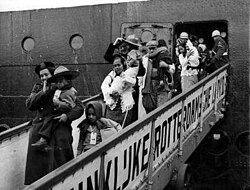
Because these soldiers had refused discharge from Dutch service in territories controlled by Indonesian authorities, they faced a significant risk of retribution. Consequently, the Dutch government decided to evacuate approximately 12,000 Moluccan soldiers and their dependents to the Netherlands.
The Government-in-Exile and Political Tension
Although the Dutch government did not officially support or recognize the RMS, the movement persisted within the diaspora. On April 12, 1966, supporters of the RMS proclaimed a government-in-exile based in the Netherlands. By 2010, the leadership of this movement had transitioned to second-generation Moluccan Dutch, with John Wattilete, who was born in the Netherlands, serving as president.
The "Moluccan Actions"
Over time, a sense of abandonment grew among the diaspora. Many felt that their community leaders were inactive and that the Dutch government was indifferent to their plight. This frustration led to the radicalization of some Free South Moluccan Youths, who initiated a series of violent events known as the Moluccan Actions (Dutch: Molukse Acties).
These actions included several high-profile attacks and hostage crises between 1966 and 1978:
- 1966: An arson attempt on the Indonesian embassy in The Hague.
- 1970 & 1974: Attempted abductions of Indonesian ambassadors.
- 1975: A foiled attempt to abduct Queen Juliana in March, followed by the Wijster train hijacking and a hostage crisis at the Indonesian consulate in December.
- 1977: The De Punt train hijacking and the Bovensmilde school hostage crisis.
- 1978: The Assen province hall hostage crisis.
These events remain controversial in Dutch history, resulting in the deaths of seven civilians, six attackers, and one policeman.
Key Facts
- Evacuation Scale: Approximately 12,000 soldiers and dependents were moved to the Netherlands.
- RMS Foundation: The Republic of South Maluku was established on April 25, 1950.
- Government-in-Exile: Formally proclaimed in the Netherlands on April 12, 1966.
- Casualties: The "Moluccan Actions" caused 14 total deaths (7 civilians, 6 attackers, 1 policeman).
- Sovereignty Transfer: The Dutch East Indies became the United States of Indonesia on December 27, 1949.
| Year | Event | Significance |
|---|---|---|
| 1949 | Transfer of Sovereignty | Dutch East Indies transferred to United States of Indonesia. |
| 1950 | Creation of RMS | Republic of South Maluku declared independence. |
| 1951 | Evacuation | KNIL soldiers and families arrive in the Netherlands. |
| 1966 | Government-in-Exile | RMS supporters establish a political body in the Netherlands. |
| 1966–1978 | Moluccan Actions | Series of radical attacks and hostage crises in the Netherlands. |
Frequently Asked Questions
Why were Moluccan soldiers evacuated to the Netherlands?
They were evacuated because they had refused discharge from Dutch service in areas controlled by Indonesian authorities, leaving them at risk of retribution following the Indonesian invasion of South Maluku.
What was the Republic of South Maluku (RMS)?
The RMS was a state created on April 25, 1950, by Moluccans who distrusted the Javanese authorities in Jakarta and sought independence from the Republic of Indonesia.
What were the "Moluccan Actions"?
These were a series of terrorist attacks, hijackings, and hostage crises carried out by radicalized Moluccan youths between 1966 and 1978, driven by perceived government indifference and the plight of the diaspora.
Does the RMS government-in-exile still exist?
Yes, a government-in-exile was proclaimed in 1966. As of 2010, it was led by president John Wattilete, with leadership held by second-generation Moluccan Dutch.
How many people were affected by the evacuation?
Approximately 12,000 people, consisting of former Royal Netherlands East Indies Army soldiers and their dependents, were transferred to the Netherlands.