Modoc People: A History of Resilience and Conflict
The Modoc people, a group of Plateau Indians, possess a rich history defined by a deep connection to the landscapes of the Pacific Northwest and a fierce struggle to maintain their autonomy. From their traditional seasonal migrations to the dramatic conflicts of the 19th century, the Modoc story is one of adaptation and endurance in the face of encroaching settlement.
Traditional Life and Pre-Contact Society
Before European contact, the Modoc lived a semi-nomadic lifestyle centered on the natural rhythms of the land. They relied heavily on salmon runs and migrated seasonally to hunt and gather food. During the winter months, they resided in earthen dugout lodges—beehive-shaped structures made of sticks and plastered with mud—located near lake shores. These sites provided essential access to fishing and seeds from aquatic wokas plants.
The Modoc shared a language and the Modoc Plateau with the Klamath people. Their broader neighborhood included several other indigenous groups: the Shasta on the Klamath River, the Rogue River Athabaskans and Takelma to the west, the Northern Paiute to the east, the Karuk and Yurok further down the Klamath River, and the Achomawi (or Pit River) to the south. Notably, the Modoc, Northern Paiute, and Achomawi all shared the Goose Lake Valley.
Ancestral Settlements
The Modoc were organized into distinct bands with specific village sites:
- Gombatwa·s (Lower Klamath Lake People Band): Settled at Agawesh, where Willow Creek enters Lower Klamath Lake.
- Pasganwa·s (Tule Lake People Band): Settled at Kumbat and Pashha on the shores of Tule Lake.
- Goġewa·s (Lower Lost River People Band): Settled at Wachamshwash and Nushalt-Hagak-ni on the Lost River.
First Contact and the Applegate Trail
Initial interactions with Europeans began in the 1820s when Peter Skene Ogden, an explorer for the Hudson's Bay Company, established trade with the Klamath people. However, regular contact with European-American settlers increased significantly in 1846 with the establishment of the Applegate Trail (also known as the South Emigrant Trail).
Created by brothers Jesse and Lindsay Applegate and 13 other settlers, this route connected the Oregon Trail near Fort Hall, Idaho, to the Willamette Valley in western Oregon. The trail was designed to bypass the hazards of the Columbia Route and reduce dependence on the Hudson's Bay Company. The Applegate brothers were the first known white settlers to enter the area now known as Lava Beds National Monument.
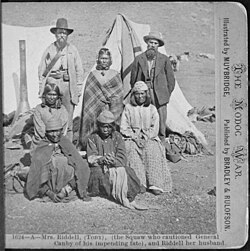
Escalation of Violence
Between 1846 and 1873, thousands of emigrants crossed Modoc territory. Under the leadership of Old Chief Schonchin, the Modoc began raiding these invading parties in 1847. Tensions peaked in September 1852 at Bloody Point on the east shore of Tule Lake, where the Modoc destroyed an emigrant train, killing 62 of the 65 people present.
In retaliation, settlers from Yreka, California, organized a militia. While some skirmishes occurred under Sheriff Charles McDermit and Jim Crosby, the most brutal response came from Ben Wright. In November 1852, Wright ambushed a Modoc group on the Lost River, killing approximately 40 people in the event now known as the Ben Wright Massacre.
The Klamath Reservation and Displacement
In 1864, a treaty was signed between the United States, the Klamath, the Modoc, and the Yahooskin band of Snake tribes. This agreement established the Klamath Reservation, requiring the tribes to cede vast lands bounded by the 44th parallel and the Cascade Mountains. In exchange, the U.S. promised a lump sum of $35,000 and annual payments totaling $80,000 over 15 years, along with infrastructure and staff.
The treaty forced the Modoc to leave their homes near Lost River, Tule Lake, and Lower Klamath Lake for the Upper Klamath Valley. However, the reservation could not support both the Klamath and Modoc populations. This led to food shortages, illness, and inter-tribal tension. Despite requests for a separate reservation closer to their ancestral lands, the federal and California governments refused.
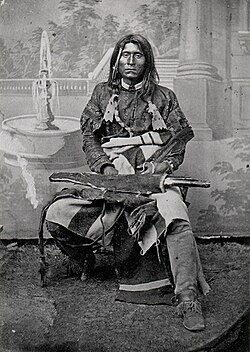
By 1870, a band of Modoc led by Kintpuash (also known as Captain Jack) left the reservation to return to their traditional homelands near the Lost River, seeking to escape harassment from the Klamath and reclaim their independence.
The Modoc War
Conflict erupted in November 1872 when the U.S. Army attempted to force Kintpuash's band back to the reservation. The Modoc retreated to Captain Jack's Stronghold in the Lava Beds of California. In a remarkable display of tactical skill, fewer than 53 Modoc warriors held off 3,000 U.S. Army troops for several months, winning multiple engagements.
The conflict ended in June 1873 when Kintpuash and his group surrendered, believing government promises that they would be treated fairly and allowed to remain on their land. These promises were not kept. In October 1873, Kintpuash and three warriors were executed for the death of Major General Edward Canby, who had been killed during a parley.
The remaining band, led by Scarfaced Charley, and the spiritual leader Curley Headed Doctor were exiled to Oklahoma as prisoners of war. While some were permitted to return to Oregon in 1909, many remained in Oklahoma.
Key Facts
- Traditional Housing: Beehive-shaped earthen dugout lodges plastered with mud.
- Key Leader: Kintpuash (Captain Jack) led the resistance during the Modoc War.
- The Stronghold: A small force of <53 warriors resisted 3,000 U.S. soldiers in the Lava Beds.
- 1864 Treaty: Established the Klamath Reservation in exchange for $35,000 and annual payments.
- Exile: Following the Modoc War, survivors were sent to Indian Territory (Oklahoma).
| Event/Group | Key Details | Outcome/Significance |
|---|---|---|
| Applegate Trail | Established 1846 by Jesse and Lindsay Applegate | Increased settler contact and conflict |
| Ben Wright Massacre | November 1852 ambush on the Lost River | Approx. 40 Modoc killed |
| 1864 Treaty | Cession of lands for Klamath Reservation | Forced relocation and inter-tribal tension |
| Modoc War | 1872-1873 conflict in Lava Beds | Execution of Kintpuash; exile to Oklahoma |
Frequently Asked Questions
Who was Kintpuash?
Kintpuash, also known as Captain Jack, was a Modoc leader who led his people away from the Klamath Reservation in 1870 to return to their ancestral lands. He led the resistance during the Modoc War before being captured and executed in 1873.
What was the significance of the Applegate Trail?
The Applegate Trail provided an alternative route to the Willamette Valley in western Oregon, bypassing the Hudson's Bay Company's control of the Columbia Route. It brought the first regular contact between European-American settlers and the Modoc people.
Why did the Modoc leave the Klamath Reservation?
The Modoc left because the reservation lacked sufficient food for both the Klamath and Modoc peoples, and they faced ongoing harassment from the Klamath. Additionally, they felt inadequately represented during the original treaty negotiations.
What happened to the Modoc after the Modoc War?
Following the war, Kintpuash and three others were executed. The rest of the band, including their chief Scarfaced Charley and spiritual leader Curley Headed Doctor, were sent to Oklahoma as prisoners of war.
Where is Captain Jack's Stronghold located?
Captain Jack's Stronghold is located within what is now Lava Beds National Monument in California.