Mitochondrial DNA Inheritance: Maternal Dominance and Paternal Leakage
In the study of human genetics, mitochondrial DNA (mtDNA)—the genetic material found in the mitochondria of cells—has long been viewed as a strictly maternal legacy. Because mtDNA is typically passed from mother to child, it serves as a powerful tool for researchers to trace maternal lineages across millennia, forming the scientific basis for the theory of mitochondrial Eve. While Y-chromosomal DNA allows for the tracing of agnate (paternal) lines, mtDNA provides a mirrored window into our maternal ancestry.
For decades, the scientific consensus held that paternal mtDNA is never transmitted to offspring. This is primarily because the father's mitochondria are located in the sperm midpiece, known as the mitochondrial sheath, which is generally lost during fertilization. Furthermore, because mtDNA is located in the cytoplasm of eukaryotes, it does not undergo meiosis or crossing-over, preventing the mixing of paternal and maternal genetic material.
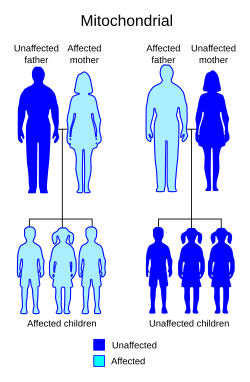
The Mechanism of Paternal Exclusion
To ensure strict maternal inheritance, the human body employs active biological safeguards to prevent paternal leakage—the accidental transmission of father's mtDNA to the embryo. During sexual reproduction, paternal mitochondria in the sperm are actively decomposed. Research from 1999 indicates that these mitochondria are marked with ubiquitin, a protein that tags them for destruction inside the embryo.
However, this process is not infallible. Some evidence suggests that the tail of the sperm, which contains additional mtDNA, may enter the egg. Additionally, certain assisted reproductive technologies, such as intracytoplasmic sperm injection (ICSI)—where a single sperm is injected directly into an oocyte—may interfere with the natural destruction of paternal mitochondria.
Challenges to the Maternal Dogma
While the "maternal inheritance dogma" remains strong, several landmark cases have challenged the idea that paternal transmission is impossible. In 2002, researchers documented a 28-year-old man who possessed both maternal and paternal mtDNA in his muscle tissue, though his other tissues remained purely maternal. This case provided the first observation of paternal leakage and heteroplasmy—the presence of more than one type of mitochondrial DNA within a single individual.
Further research by Kraytsberg et al. (2004) suggested that recombination (the exchange of genetic material) may have occurred between the maternal and paternal mtDNA in that individual. More recently, a 2018 study published in the Proceedings of the National Academy of Sciences (PNAS) identified 17 individuals from three unrelated multigeneration families who exhibited biparental mtDNA transmission. In these cases, paternal mtDNA ranged from 24% to 76%, following an autosomal dominant-like inheritance pattern.
The Scale of Paternal Transmission
Despite these findings, paternal transmission remains an extreme rarity. Some scientists argue the amount is negligible, noting that a human egg contains roughly 100,000 mitochondria compared to only 100 in the sperm. While biparental inheritance has been documented, there has been only one known human case where as much as 90% of a single tissue type's mitochondria were inherited from the father.
Key Facts
- Primary Inheritance: mtDNA is predominantly inherited from the mother.
- Biological Barrier: Paternal mitochondria are typically tagged with ubiquitin for destruction after fertilization.
- Heteroplasmy: This occurs when an individual has multiple types of mtDNA, which can result from mutations, maternal variation, or rare paternal leakage.
- Biparental Evidence: A 2018 study found paternal mtDNA in 17 individuals across three families.
- Genealogical Use: Because of its stability, mtDNA is used to trace maternal ancestry and the "African Eve" model.
Summary of mtDNA Inheritance Patterns
| Feature | Maternal Transmission | Paternal Transmission |
|---|---|---|
| Frequency | Universal/Standard | Extremely Rare/Exceptional |
| Mechanism | Cytoplasmic inheritance via oocyte | Paternal leakage (e.g., via sperm tail or ICSI) |
| Genetic State | Hemizygous (identical to mother) | Heteroplasmic (mixed mtDNA types) |
| Research Application | Tracing maternal lineage (Mitochondrial Eve) | Study of rare genetic exceptions and reproductive tools |
Frequently Asked Questions
Is it possible to inherit mitochondrial DNA from my father?
While it is extremely rare, yes. Although the vast majority of humans inherit mtDNA exclusively from their mothers, a few documented cases of biparental inheritance exist where paternal mtDNA was passed to the offspring.
What is heteroplasmy in mitochondrial DNA?
Heteroplasmy is the presence of multiple different mitochondrial DNA sequences within a single cell or individual. This can be caused by mutations during development, the presence of different sequences in the original ovum, or rare paternal leakage.
How does the body prevent paternal mtDNA from being inherited?
The body typically destroys paternal mitochondria after fertilization. This is achieved by marking the sperm's mitochondria with a protein called ubiquitin, which signals the embryo to decompose them.
Can IVF or ICSI affect mtDNA inheritance?
Yes, some in vitro fertilization (IVF) techniques, specifically intracytoplasmic sperm injection (ICSI), may interfere with the natural process of destroying paternal mitochondria, potentially increasing the chance of paternal leakage.
Why is mtDNA used to trace maternal ancestry?
Because mtDNA does not undergo meiosis or crossing-over and is inherited almost exclusively from the mother, it remains virtually unchanged over generations, allowing researchers to trace a direct maternal line back in time.