Missouri: The Show-Me State
Known as the Show-Me State, Missouri serves as a vital bridge between the Midwestern and Southern United States. From the bustling urban hubs of St. Louis and Kansas City to the rugged beauty of the Ozarks, Missouri is a land of diverse landscapes and deep historical significance. Its motto, Salus populi suprema lex esto ("Let the good of the people be the supreme law"), reflects a long-standing commitment to civic welfare.
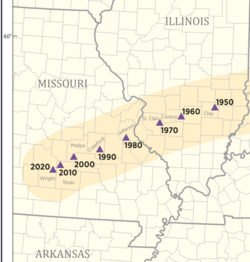
Missouri's strategic location has made it a crossroads for American expansion and commerce for centuries. Today, it remains a central pillar of the U.S. population, with the national population center having resided within the state since 1980.
Key Facts
- Capital: Jefferson City
- Largest City: Kansas City
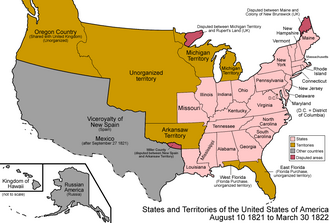
- Admission to Union: August 10, 1821 (24th state)
- Total Area: 69,704 square miles (21st largest in the U.S.)
- Estimated Population (2025): 6,270,541
- Highest Point: Taum Sauk Mountain (1,770 ft)
- Official Language: English
History and Evolution
Early History and Statehood
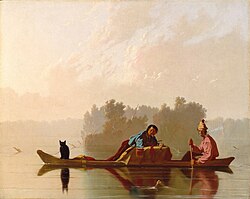
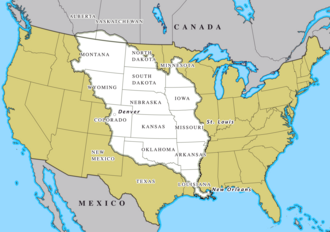
Before becoming a state, the region was part of the Missouri Territory. Its early economy was driven by fur trading and river commerce along the Missouri and Mississippi rivers. Missouri officially joined the Union on August 10, 1821, as the 24th state.
Conflict and Growth
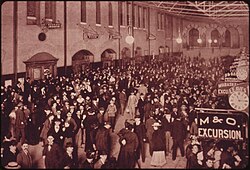
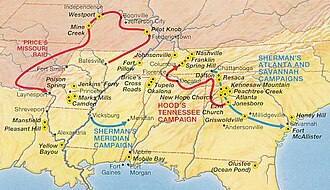
During the 19th century, Missouri was a site of intense conflict, particularly during the American Civil War, as it struggled with divided loyalties between the North and South. The late 1800s and early 1900s saw a surge in industrialization and transportation. St. Louis became a global transit hub, exemplified by the opening of Union Station in 1894, which was the world's largest and busiest train station at the time.
20th Century and Beyond
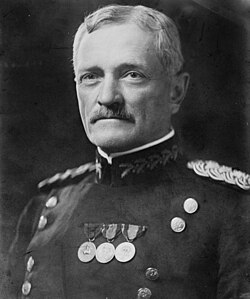
The 20th century brought significant social and economic shifts. The state contributed heavily to national efforts in World War I, with figures like General John J. Pershing hailing from Laclede, Missouri. The era also saw the rise of the automotive and aerospace industries, as well as the growth of the state's agricultural sector.
Geography and Climate
Topography and Natural Wonders
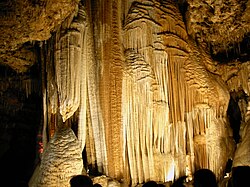
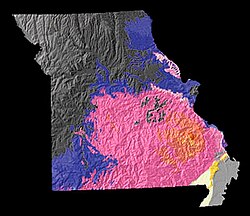
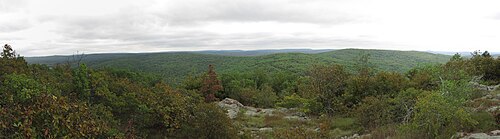
Missouri's terrain is varied, ranging from the glaciated plains of the north to the highlands of the Ozarks in the south. The state is particularly famous for its karst topography—a landscape formed from the dissolution of soluble rocks—which has resulted in thousands of caves, including the famous Meramec Caverns.
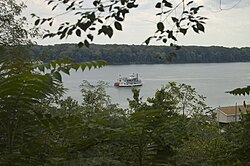
The state's water systems are dominated by the Missouri and Mississippi rivers, which have historically served as the primary arteries for trade and travel.
Climate Patterns
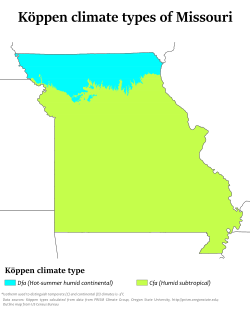
Missouri experiences a humid subtropical climate. Temperatures vary significantly by region, with Springfield generally seeing higher average highs than Kansas City or Columbia. Summers are typically hot and humid, while winters can bring freezing temperatures and snow.
Demographics and Society
Population and Ethnicity
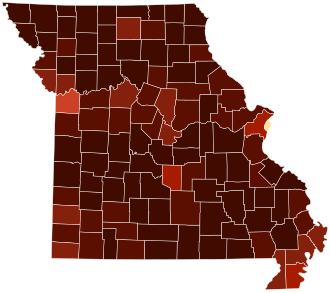
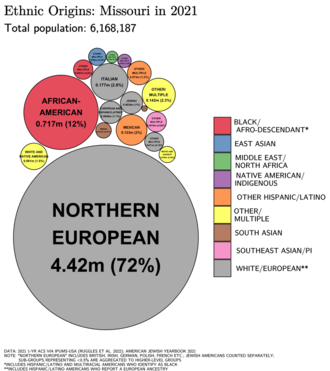
As of the 2020 census, Missouri's population is predominantly Non-Hispanic White (75.78%), followed by Black or African American (11.26%) and Hispanic or Latino (4.92%) populations. The state has seen a steady increase in its Asian population over the last several decades.
Religion and Language
Christianity is the most prevalent religion, with approximately 77% of the population identifying as Christian (58% Protestant and 16% Catholic). About 20% of Missourians are unaffiliated with any specific religion. While English is the official and most spoken language (93.9%), Spanish is the second most common spoken language at 2.6%.
Economy and Infrastructure
Economic Drivers
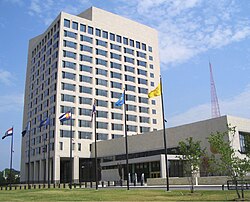
Missouri's economy is diverse, with strong sectors in agriculture, manufacturing, and finance. Notably, Missouri is the only state to host two main Federal Reserve Banks, located in St. Louis and Kansas City.
Transportation
The state maintains an extensive network of roads and rail. Amtrak provides long-distance services via routes like the Southwest Chief and the Texas Eagle, connecting Missouri to major cities like Los Angeles, Chicago, and San Antonio.
Culture and Heritage
Arts and Literature
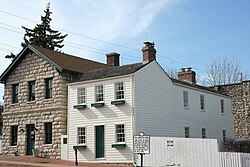
Missouri has a rich literary history, most notably as the home of Mark Twain, whose boyhood home in Hannibal remains a major cultural landmark.
Sports and Entertainment
The state is a powerhouse in professional sports, hosting several major league teams:
- MLB: St. Louis Cardinals and Kansas City Royals
- NFL: Kansas City Chiefs
- NHL: St. Louis Blues
- MLS: St. Louis City SC
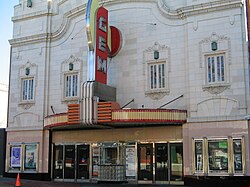
Additionally, Kansas City is world-renowned for its jazz heritage, centered in the 18th and Vine Jazz District.
State Summary
| Category | Detail |
|---|---|
| State Symbols | Bird: Eastern bluebird; Flower: White hawthorn; Tree: Flowering Dogwood |
| Government | Governor Mike Kehoe (R); Legislature: General Assembly |
| Key Cities | Kansas City, St. Louis, Springfield, Columbia |
| Landmarks | Gateway Arch, Meramec Caverns, Mark Twain Boyhood Home |
| Median Income | $68,500 (2023) |
Frequently Asked Questions
![Largest alone or in any combination ethnic origin by county in Missouri, per the 2020 census[89]](/images/4d/39/4d3992ef8b4ced3a7eb551d38ba54554edb09ba13994f42ea6427639bba07dee.jpg)
![Missouri State quarter featuring the Lewis and Clark Expedition[111]](/images/4e/f2/4ef202d1eed545db683b90fb5670de4f988cd2eb99625aa7af52290b5ad7fcd6.jpg)
Why is Missouri called the "Show-Me State"?
The nickname reflects a cultural trait of skepticism and a desire for evidence before believing a claim, essentially meaning "show me the proof."
What is the significance of the Gateway Arch?
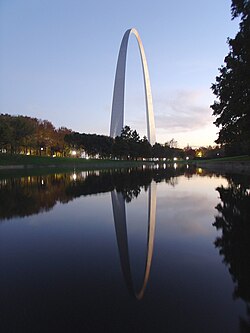
Located in St. Louis, the Gateway Arch symbolizes the westward expansion of the United States and the role of St. Louis as the "Gateway to the West."
Which cities are the largest in Missouri?
Kansas City is the largest city, followed by St. Louis and Springfield.
What are the primary professional sports teams in Missouri?
Major teams include the Kansas City Chiefs (NFL), the St. Louis Cardinals and Kansas City Royals (MLB), and the St. Louis Blues (NHL).
What is unique about Missouri's Federal Reserve system?
Missouri is the only state in the U.S. that has two main Federal Reserve Banks, located in Kansas City and St. Louis.