Missouri School of Mines and Metallurgy: Distinguished Professors and Teaching Staff
The academic legacy of the Missouri School of Mines and Metallurgy is defined by a diverse array of scholars, engineers, and scientists. From pioneering researchers in geochemistry to NASA astronauts and military leaders, the institution's teaching staff has consistently bridged the gap between theoretical academic study and real-world application across multiple disciplines.
Key Facts
- Interdisciplinary Reach: Faculty expertise spans civil engineering, computer science, chemistry, physics, and psychological science.
- Global Impact: Staff members have served as NASA astronauts, U.S. Army generals, and international award winners.
- Scientific Contributions: Notable achievements include the development of the Penico theorem and pioneering micro-gravity glass melting experiments.
- Leadership: Many professors transitioned into high-level administrative roles, including university chancellors and government representatives.
Engineering and Technical Pioneers
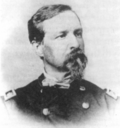
The institution has a storied history in the engineering arts. James William Abert, a Major in the U.S. Army, taught civil engineering and applied mathematics from 1872 to 1877, bringing experience from the Mexican-American War and the American Civil War to the classroom.
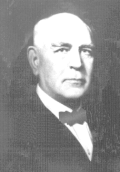
In the realm of mining and explosives, William Holding Echols served as a professor and later as the director of the school from 1888 to 1889. More recently, Paul Worsey, a Professor Emeritus of mining engineering, brought the field to a wider audience as a host on the Discovery Channel series The Detonators in 2009.
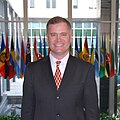
The Civil, Architectural, and Environmental Engineering department has seen significant contributions from Abdeldjelil Belarbi, an expert in reinforced and prestressed concrete, and Daniel Oerther, who is recognized for his work with 16S ribosomal RNA-targeted techniques—a method used to identify and compare bacteria—and his support of the Global Food Security Act of 2016.
Advancements in Science and Mathematics
The chemistry and physics departments have produced world-class researchers. Eugene Thomas Allen was a pioneer in geochemistry, the study of the chemical composition of the earth, while Daniel W. Armstrong became renowned for his work in chiral resolution, authoring over 740 publications.
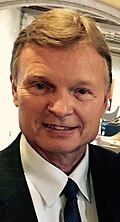
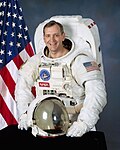
In mathematics, the institution has hosted figures like Anthony Joseph Penico, whose legacy lives on through the Penico theorem and Penico series. The department also welcomed Thomas Akers, a retired Air Force colonel and NASA astronaut who flew four Space Shuttle missions, including flights on Discovery and Endeavour.
Computing and Modern Technology
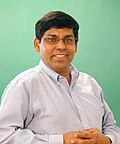
The evolution of computer science at the institution is marked by leaders like Sajal K. Das, a fellow of the Institute of Electrical and Electronics Engineers (IEEE) recognized for his work in parallel and distributed computing.
Other notable contributors to the electrical and computer engineering fields include David Pommerenke, an expert in system-level electrostatic discharge technology, and Yahong Zheng, who is recognized for her advancements in wireless communications.
Geosciences and Environmental Research
The school's commitment to the earth sciences is evident in the work of Nolan B. Aughenbaugh, whose research in Antarctica led to Aughenbaugh Peak being named in his honor. Additionally, Francisca Oboh-Ikuenobe has made significant marks in palynology (the study of pollen and spores) and sedimentology.
Humanities, Social Sciences, and Military Leadership
Beyond the hard sciences, the institution has fostered expertise in the humanities and leadership. N. Katherine Hayles contributed to the study of postmodern literature, while David C. Geary focused on evolutionary psychology and cognitive development.
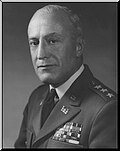
Military science was prominently represented by Emerson C. Itschner, a Lieutenant General who served as the Chief of Engineers from 1956 to 1961.
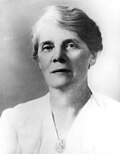
The school also saw the contributions of Ida A. Bengtson, a lecturer in bacteriology and the first woman hired by the U.S. Public Health Service's Hygienic Laboratory at the National Institutes of Health.
Faculty Summary Table
| Name | Department | Key Achievement/Notability |
|---|---|---|
| Thomas Akers | Mathematics and Statistics | NASA Astronaut; 4 Space Shuttle flights |
| Sajal K. Das | Computer Science | IEEE Fellow; Parallel and distributed computing |
| Delbert Day | Materials Science | First U.S. micro-gravity glass melting experiments |
| Anthony Joseph Penico | Mathematics and Statistics | Developed the Penico theorem |
| Ida A. Bengtson | Chemical and Biochemical Engineering | First woman hired at NIH Hygienic Laboratory |
| Nolan B. Aughenbaugh | Geosciences | Antarctic research; Aughenbaugh Peak namesake |
Frequently Asked Questions
Who is the most notable astronaut associated with the faculty?
Thomas Akers, a math instructor from 1999 to 2010, is a retired Air Force colonel and veteran of four Space Shuttle flights, including missions on Discovery and Endeavour.
What are some of the mathematical contributions made by the staff?
Professor Anthony Joseph Penico is particularly noted for his contributions to the field, specifically the Penico theorem, Penico solvability, and Penico series.
Which faculty members had significant military careers?
Several faculty members had high-ranking military careers, including James William Abert (U.S. Army Major) and Emerson C. Itschner, who reached the rank of Lieutenant General and served as Chief of Engineers.
Are there any faculty members recognized for their work in space science?
Yes, in addition to Thomas Akers, Delbert Day conducted the first U.S. glass melting experiments in micro-gravity aboard a NASA Space Shuttle.
Who was the first woman to achieve a milestone at the NIH through this faculty?
Ida A. Bengtson, who served as a lecturer in bacteriology, was the first woman hired to work in the United States Public Health Service's Hygienic Laboratory at the National Institutes of Health.