Minority Groups: Definitions, Classifications, and Social Dynamics
In sociology and political science, a minority group is not always defined by simple numbers, but often by the relationship between a dominant group and a subordinate one. These groups may be categorized by race, ethnicity, nationality, gender, sexuality, or physical and mental ability. Understanding these distinctions is essential for analyzing how social inequalities are formed and how different populations navigate their identities within a larger society.
Key Facts
- Race and Ethnicity: While often used interchangeably, race is frequently based on phenotypical (physical) characteristics, whereas ethnicity encompasses shared culture, language, and ancestry.
- Voluntary vs. Involuntary: Voluntary minorities (such as immigrants) typically move by choice for better opportunities, while involuntary minorities were brought into a society against their will.
- National Minorities: These are populations that are a minority in one state but share the same nationality or ethnicity as the majority in another state.
- Disadvantaged Groups: Some groups, such as women, may be numerically equal to the majority but are classified as disadvantaged due to subordinate social status.
- Clinical vs. Identity Terms: Terms like "sexual minority" are often used in public health research, though many in the LGBTQ+ community prefer identity-based labels.
Racial and Ethnic Minorities
Racial minorities, often referred to as people of color or non-white people, are groups that face discrimination based on race. Modern concepts of race largely stem from European and American classifications developed during the Age of Exploration to categorize colonized nations into pseudo-scientific phenotypical groups. In the United States, this created a hierarchy where "whiteness" sits at the top, and mixed-race individuals were historically classified as part of their subordinate race.
These pseudo-scientific definitions were sometimes codified into law. Examples include the one-drop rule and blood quantum laws in the U.S., apartheid in South Africa, and the Nuremberg race laws in Nazi Germany. In other instances, racism persists through social prejudice and de facto policies rather than explicit legislation.
Ethnicity differs from race in that it is influenced by cultural factors such as language shift, religious conversion, adoption, and cultural assimilation. While race and ethnicity often overlap, some ethnic minorities are classified as white, including some Roma, Sámi, and Jews. In the United Kingdom, the preference is to use ethnicity—defined by shared traditions, ancestry, and national origins—to categorize people. Under this system, anyone who is not white British is considered an ethnic minority, including other white Europeans like the White Irish (except in Northern Ireland).
National, Voluntary, and Involuntary Minorities
The definition of a national minority varies by state. However, organizations like the OSCE generally define it as a population that is a numerical minority in one state but shares the same ethnicity or nationality as the majority in another state.
Sociologists also distinguish between how people enter a minority status:
- Involuntary Minorities: Also called "castelike minorities," these are people brought into a society against their will. Examples in the U.S. include African Americans, Native Americans, Native Hawaiians, Puerto Ricans, and native-born Hispanics in the 1800s.
- Voluntary Minorities: These are immigrants who move to a new country seeking economic, educational, or political improvement. Because of their ambitions, they often possess high social capital and may perform better in school than involuntary migrating minorities, though they face initial challenges with language and cultural adaptation. Major groups in the U.S. include East Asians, South Asians, Africans, Cubans, and people from Mexico, Central America, and South America.
Gender and Sexuality Minorities
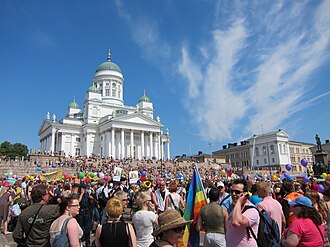
Public health researchers use the term sexual minority to describe individuals engaging in same-sex behavior, including those who do not identify as LGBTQ+. For example, men who have sex with men (MSM) may not identify as gay. Similarly, gender minorities include transgender, non-binary, and intersex individuals. It is important to note that many LGBTQ+ people dislike these terms because they feel like clinical categories rather than personal identities.
Despite their presence throughout history, LGBTQ+ people remain a social minority facing significant inequalities. These include social isolation, discrimination, and unequal access to housing, employment, and healthcare, which often lead to negative physical and mental health outcomes.
Disabled People and Neurodiversity
The disability rights movement has shifted the perception of disabled people from being "impaired" to being a minority group disadvantaged by societal structures. In the UK, the Human Rights Act 1998 increased awareness of these issues, specifically allowing for the prosecution of authorities who fail to protect people with learning disabilities from neglect or harm.
Many advocates emphasize neurodiversity—the idea that differences in psychological functioning (such as autism) are variations of the human experience rather than inferiorities. Similarly, the deaf community is often viewed as a linguistic and cultural minority. Many deaf individuals do not see themselves as disabled, but rather as people disadvantaged by institutions designed only for the dominant hearing group.
Religious Minorities and Disadvantaged Groups
Religious minorities hold faiths different from the majority of their country. While the West generally supports the freedom to choose, convert, or reject religion (atheism or agnosticism), this freedom is restricted elsewhere. For example, Egypt's identity card system requires citizens to choose between Islam, Christianity, or Judaism.
Finally, some groups are considered disadvantaged even if they are not a numerical minority. Women, for instance, are roughly equal in number to men in most societies but have historically occupied a subordinate social status. This has led to systemic inequalities, particularly in under-developed countries where women may be denied equal access to education and professional opportunities.
| Category | Primary Basis | Example/Characteristic |
|---|---|---|
| Racial | Phenotypical traits | Based on historical European/American classifications |
| Ethnic | Culture, Language, Ancestry | Sámi, Roma, or White Irish in the UK |
| National | Nationality/Statehood | Minority in one state, majority in another |
| Involuntary | Forced migration | African Americans, Native Americans |
| Voluntary | Chosen migration | Immigrants seeking economic opportunity |
| Gender/Sexual | Identity and Behavior | LGBTQ+ individuals |
| Disability | Physical/Psychological function | Deaf community, Neurodivergent individuals |
| Disadvantaged | Social Status | Women (numerically equal but subordinate) |
Frequently Asked Questions
What is the difference between race and ethnicity?
Race is primarily based on physical (phenotypical) characteristics and historical classifications. Ethnicity is broader, encompassing shared cultural experiences, religious practices, traditions, language, and national origins.
What are involuntary minorities?
Involuntary minorities, or "castelike minorities," are groups of people who were brought into a society against their will, such as through slavery or colonization.
Why are women called a disadvantaged group instead of a minority?
Because women typically make up roughly half of the population, they are not a numerical minority. However, they are termed a disadvantaged group because they often occupy a subordinate social status with unequal access to opportunities.
How does the deaf community view disability?
Many in the deaf community view themselves as a linguistic and cultural minority rather than as disabled. They argue that their challenges stem from social institutions and technologies that are designed only for the dominant hearing population.
What is the distinction between voluntary and involuntary minorities?
Voluntary minorities choose to migrate for better futures and often possess higher social capital and educational ambitions. Involuntary minorities were forced into their status and often face a more complex sense of divided identity.