Milk Tea Alliance: The Digital Solidarity Movement for Democracy in Asia
What began as a social media dispute over a misplaced image has evolved into a powerful symbol of regional cooperation. The Milk Tea Alliance is a decentralized, online-led movement that connects pro-democracy activists across Asia and beyond, uniting them in a shared struggle against authoritarianism and digital influence operations.
The Accidental Origin of a Movement
The alliance formed in 2020 following a series of events involving Thai actor Vachirawit Chivaaree, known as Bright. After inadvertently reposting an image that listed Hong Kong as a country—rather than a special administrative region of China—Bright became the target of intense attacks from Chinese netizens. While the actor apologized and removed the post, Thai netizens rallied to defend him, leading to a broader "Twitter war" and generalized criticism of the Chinese government.
The conflict escalated when Chinese netizens targeted Thai national symbols, including King Vajiralongkorn and Prime Minister Prayut Chan-o-cha. However, these attacks often backfired, as many Thai netizens were already critical of their own government and welcomed the insults. The tension peaked when the Chinese embassy in Bangkok issued a formal condemnation on Facebook, sparking a fierce digital battle.
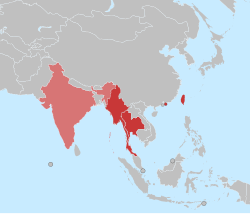
This friction created an unexpected bridge. Pro-democracy protesters in Thailand found common ground with activists in Hong Kong and Taiwan, who were similarly resisting Chinese encroachment. This rare moment of regional solidarity was described by some as a "volunteer army" rising against internet trolls.
Evolution into a Global Protest Network
Over time, the Milk Tea Alliance transitioned from a collection of anti-Beijing memes into a leaderless protest movement pushing for systemic change across Southeast Asia. It has become a non-institutionalized, pro-democracy alternative to ASEAN (the Association of Southeast Asian Nations), particularly in how it shapes the political consciousness of the region's youth.
Expansion Across Borders
The movement's reach expanded as other nations faced similar political struggles:
- India: Following the 2020 China–India skirmishes, India was included in the alliance, represented by masala chai.
- Australia: After Australia sought an investigation into the World Health Organization's handling of COVID-19, netizens added the country to the alliance, using the milk product Aptamil as a symbolic substitute for tea.
- Belarus: Inspired by the alliance, Belarusian activists used Ryazhenka (a traditional fermented milk drink) as a symbol of resistance against the government of Alexander Lukashenko during the 2020 protests.
- Myanmar: Following the 2021 coup d'état, Myanmar activists adopted the alliance, sharing images of Royal Myanmar Tea bags to signal solidarity with Thai and Taiwanese protesters.
The movement has also seen participation from individuals in Malaysia, Indonesia, and Iran, proving that the desire for democratic reform transcends specific borders.
Key Facts
- Origin: Started in 2020 after a social media conflict involving Thai actor Vachirawit Chivaaree.
- Core Purpose: A decentralized network supporting pro-democracy and anti-authoritarian movements.
- Key Participants: Primarily Thailand, Hong Kong, and Taiwan, with later additions including India, Myanmar, and Belarus.
- Symbolism: Uses local milk-based drinks (milk tea, masala chai, Ryazhenka) to represent national identity within a unified front.
- Digital Recognition: Twitter created a dedicated emoji in April 2021 to mark the alliance's first anniversary.
Alliance Summary Table
| Region/Country | Representative Drink/Symbol | Primary Driver of Participation |
|---|---|---|
| Thailand, Hong Kong, Taiwan | Milk Tea | Pro-democracy and anti-authoritarianism |
| India | Masala Chai | Border skirmishes with China |
| Myanmar | Royal Myanmar Tea | Resistance to the 2021 military coup |
| Belarus | Ryazhenka | Opposition to the Lukashenko government |
| Australia | Aptamil (Milk product) | WHO pandemic inquiry disputes |
Frequently Asked Questions
What exactly is the Milk Tea Alliance?
The Milk Tea Alliance is an informal, leaderless online movement of pro-democracy activists from various countries, primarily in Asia, who use social media to support one another against authoritarian regimes and digital harassment.
How did a drink become a symbol of political protest?
The alliance uses milk tea—a popular beverage across Asia—as a unifying cultural symbol. Different countries adopted their own local versions of milk tea or milk-based drinks to maintain their national identity while showing solidarity with the broader movement.
Which countries are part of the alliance?
While it began with Thailand, Hong Kong, and Taiwan, it has expanded to include India, Myanmar, Belarus, Malaysia, Indonesia, Iran, and Australia.
Is the Milk Tea Alliance a formal political organization?
No, it is a non-institutionalized movement. It operates primarily through hashtags and social media coordination rather than through a formal hierarchy or official leadership.
What role did social media play in its growth?
Social media, particularly Twitter, was the primary catalyst for the alliance. It allowed activists to bypass traditional diplomatic channels, share strategies, and provide mutual moral support during periods of civil unrest.