Military Astronaut Badges: Eligibility and Designations Across US Services
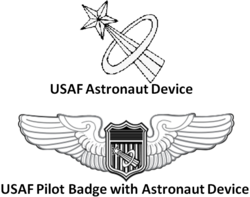
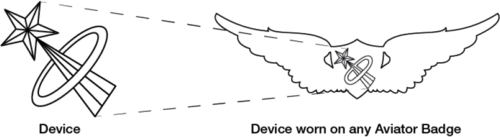
In the United States military, the achievement of spaceflight is recognized through specialized insignia. Each service branch issues its own version of the astronaut badge, which typically combines a standard aviation badge with a specific astronaut device—a shooting star passing through a halo—centered on the badge's shield, known as the escutcheon.
These badges serve as a visual record of an officer's qualifications and their contribution to space exploration, varying in design and requirements depending on the branch of service.
Key Facts

- Standard Device: The astronaut insignia features a shooting star through a halo.
- Flight Requirement: Most services require a flight exceeding 50 miles (80 kilometers) above Earth.
- Tiered Levels: The Air Force and Army use a three-tier system: Basic, Senior, and Command/Master.
- Rarity: The U.S. Army astronaut badge is considered one of the rarest badges issued by the Army.
- Inter-service Training: Navy, Marine Corps, and Coast Guard astronauts all utilize the naval aviation flight training program.
Eligibility Requirements

To earn an astronaut badge, officers from the U.S. Air Force, U.S. Navy, and U.S. Marine Corps must complete all mandated training and participate in a space flight that reaches an altitude of more than 50 miles (80 kilometers). The U.S. Army specifically awards its badge to officers who have orbited the Earth.

U.S. Air Force Astronaut Designations

The U.S. Air Force (USAF) does not treat "Astronaut" as a standalone rating. Instead, it is a qualifier added to one of the six established aeronautical rating badges, such as Pilot or Combat Systems Officer (formerly known as Navigator). The badge is awarded by the Air Force Chief of Staff following a written application and the completion of an operational space mission.
The Role of the Observer
USAF Mission Specialists who have completed training but have not yet flown a mission, and who do not hold other aeronautical ratings, are designated as Observers. They wear wings identical to Combat Systems Officers. Once they complete a successful space flight, they add the "shooting star" logo to their wings.

Enlisted Personnel Eligibility
In 2007, the Air Force opened astronaut mission specialist positions to enlisted personnel. To be eligible, candidates must:
- Be an active duty U.S. Air Force member and a U.S. citizen.
- Hold a bachelor's degree in engineering, mathematics, biological science, or physical science, with three years of experience.
- Possess a current Class II Flight Physical.
- Be between 62 and 75 inches tall.
Despite these openings, no enlisted astronaut badges are known to have been issued to date.
U.S. Army Astronaut Insignia

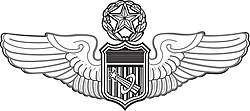
The U.S. Army issues a gold astronaut device to qualified aviators, flight surgeons, and aircrew members. The device was officially approved on May 17, 1983. Army astronauts who have not yet flown a mission and lack an aviation badge are first awarded the army aviation badge; the astronaut device is affixed to the shield only after a mission is completed.
Depending on the uniform, the badge varies in appearance: a black version is worn on the Army Combat Uniform (ACU), while silver wings with a gold device are used for Army Service Uniforms.

U.S. Navy, Marine Corps, and Coast Guard Insignia

Astronauts from the Navy, Marine Corps, and Coast Guard all receive their designations through the naval aviation flight training program administered by the U.S. Navy. They wear a single-degree insignia consisting of either the Naval Aviator or Naval Flight Officer insignia with a centered gold astronaut device.
Coast Guard Specifics
The U.S. Coast Guard (USCG) only issues the Naval Flight Officer version of the astronaut insignia, regardless of whether the astronaut is a qualified Naval Aviator. This is likely because USCG astronauts have flown as Mission Specialists rather than spacecraft pilots. Consequently, USCG astronauts wear both their Naval Aviator wings and their Coast Guard Astronaut wings.

U.S. Space Force Astronauts

As of 2025, two U.S. Space Force (USSF) officers have qualified as military astronauts. Both were originally commissioned in the USAF and served as technical flight test engineers rather than attending pilot or navigator training. They currently wear the USAF Senior Observer Astronaut insignia, which is identical to the Senior USAF Combat Systems Officer Astronaut insignia.
Summary of Astronaut Badge Systems
| Service Branch | Badge Degrees | Primary Requirement | Unique Characteristic |
|---|---|---|---|
| U.S. Air Force | Basic, Senior, Command | Training + Flight > 50 miles | Treated as a "qualifier" to existing ratings |
| U.S. Army | Basic, Senior, Master | Orbiting the Earth | Considered one of the rarest Army badges |
| U.S. Navy / USMC | Single Degree | Training + Flight > 50 miles | Shared training program via U.S. Navy |
| U.S. Coast Guard | Single Degree | Training + Flight > 50 miles | Only issues Naval Flight Officer version |
| U.S. Space Force | Varies (USAF based) | Qualification as Astronaut | Currently utilize USAF Observer insignia |
Frequently Asked Questions


What is the astronaut device?
The astronaut device is a specific symbol featuring a shooting star passing through a halo, which is centered on the shield (escutcheon) of a standard aviation badge.
How do the Air Force and Army distinguish between badge levels?
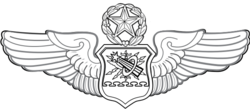
Both services use a tiered system. A star centered above the decoration denotes the Senior level, while a star combined with a wreath indicates the Command (Air Force) or Master (Army) level.
Can enlisted personnel become Air Force astronauts?
Yes, the Air Force opened mission specialist positions to enlisted personnel in 2007 for those meeting specific education, citizenship, physical, and height requirements, though no such badges have been issued yet.
Why does the Coast Guard issue different wings than the Navy?
The Coast Guard only issues the Naval Flight Officer version of the astronaut insignia, likely because their astronauts have served as Mission Specialists rather than spacecraft pilots.
What is the altitude requirement for the astronaut badge?
For the U.S. Air Force, Navy, and Marine Corps, an officer must participate in a space flight more than 50 miles (80 kilometers) above the Earth.