Microsoft Office Version History: From Windows 3.0 to Office 2024
Microsoft Office has evolved from a simple bundle of three productivity tools into a comprehensive ecosystem of applications spanning desktops, mobile devices, and the cloud. Since its debut in 1990, the suite has redefined how the world handles word processing, data analysis, and presentations.
Key Facts
- Launch: First released for Windows in October 1990.
- Core Suite: Originally consisted of Word, Excel, and PowerPoint.
- Major UI Shift: The "Ribbon" (Fluent User Interface) was introduced in Office 2007.
- Platform Expansion: Now available on Windows, macOS, iOS, Android, and via web browsers.
- Latest Perpetual Release: Office 2024, released in October 2024.
The Evolution of Microsoft Office for Windows
Microsoft Office for Windows began in October 1990 as a bundle for Windows 3.0, featuring Word 1.1, Excel 2.0, and PowerPoint 2.0. By 1992, Microsoft Office 3.0 (also known as Office 92) expanded the suite to include Mail 3.0 and became the first version available on CD-ROM. The Professional edition followed in 1993, adding Microsoft Access 1.1.
In 1993, Office 4.0 was released. To maintain parity with MS-DOS and Macintosh versions, Word's version number jumped to 6.0. Later, in 1994, Office 4.2 was launched for Windows NT, supporting various architectures including i386, Alpha, MIPS, and PowerPC.
Microsoft Office 95 marked a significant shift as a fully 32-bit version designed for Windows 95. It introduced Schedule+ and Binder, and standardized all application version numbers to 7.0 for suite parity. It was offered in Standard and Professional editions, with the latter including Access 7.0 and Bookshelf on CD-ROM.
The Modern Era: From Office 97 to 2010
Office 97 (version 8.0) introduced command bars—a design paradigm that unified menus and toolbars—alongside grammar checking and Natural Language Systems. Following this, Office XP (2002) introduced Safe Mode to help applications boot despite corrupted registries, and "Smart tags" for Word and Excel.
Office 2003 brought a more colorful icon set and debuted two new applications: OneNote and InfoPath. However, the most radical change occurred with Office 2007, which replaced traditional menus with the Fluent User Interface (the Ribbon) and adopted Office Open XML, an XML-based file format.
Office 2010 (version 14.0) introduced the backstage file menu and was the first version to offer both 32-bit and 64-bit variants. This era also saw the birth of Office Online and the renaming of Office Communicator to Lync 2010.
Recent Windows Releases (2013–2024)
Office 2013 adopted the Metro interface, mirroring the design of Windows 8 and Windows Phone. While it enhanced PowerPoint and OneNote, it removed legacy tools like the Clip Organizer and Office Picture Manager.
Subsequent releases—Office 2016, 2019, and 2021—focused on refinement and integration. The most recent milestone is Office 2024, released for LTSC (Long-Term Servicing Channel) customers on September 16, 2024, and for general consumers on October 1, 2024. This version maintains the perpetual license model, allowing users to purchase the software once rather than via subscription.
Microsoft Office for Mac
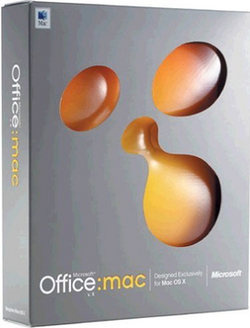
Interestingly, Microsoft released individual Mac versions of Word (1984), Excel (1985), and PowerPoint (1987) before the Office bundle existed. The first integrated Office for Mac arrived in 1989, predating the Windows bundle. Notably, Microsoft Access has never been included in the Mac suite.
Over time, the Mac version evolved from the classic Mac OS to Mac OS X. Office 98 Macintosh Edition was a turning point, re-engineered to be more "Mac-like" with drag-and-drop installation and QuickTime support. Office 2011 marked the transition to exclusive Intel processor support, dropping the PowerPC architecture.
Recent Mac versions, including Office 2016, 2019, 2021, and 2024, have aligned closely with the Windows counterparts in features and release cycles.
Mobile and Online Integration
The journey of Office on mobile began in 1996 with "Pocket Office" for Windows CE. This evolved into Office Mobile for Windows Mobile, eventually adding PowerPoint Mobile. Microsoft later expanded to the Symbian platform through a partnership with Nokia in 2009.
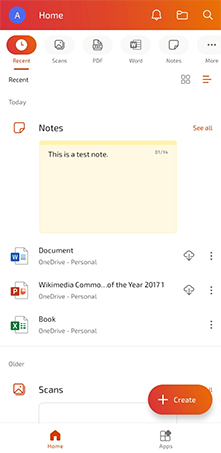
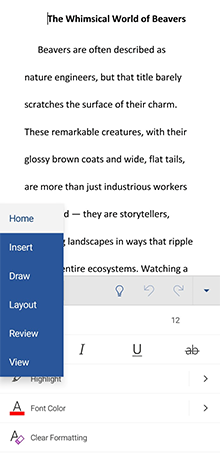
In 2013, Microsoft launched Office Mobile for iPhone and Android. By 2014, the suite expanded to the iPad, and the single "Office suite" app on iOS was split into standalone apps for Word, Excel, and PowerPoint. For Windows 10, Microsoft released universal apps that share code across smartphones and tablets.
To complete the ecosystem, Office Web Apps (now integrated with OneDrive) was released in 2010, allowing users to create and edit documents directly in a web browser.
Summary of Major Office Milestones
| Version/Year | Key Innovation/Feature | Platform Focus |
|---|---|---|
| Office 3.0 (1992) | First CD-ROM release | Windows |
| Office 95 (1995) | Full 32-bit architecture | Windows 95 |
| Office 2007 | Fluent UI (The Ribbon) & Open XML | Windows |
| Office 2010 | 64-bit variant & Office Online | Windows/Web |
| Office Mobile (2013) | iOS and Android launch | Mobile |
| Office 2024 | Latest perpetual license release | Windows/macOS |
Frequently Asked Questions
Why did Microsoft skip version 13.0?
Microsoft skipped version 13.0 when releasing Office 2010 due to a fear of the number 13 (triskaidekaphobia), moving directly from version 12.0 to 14.0.
What is the "Ribbon" in Microsoft Office?
The Ribbon, introduced in Office 2007 as part of the Fluent User Interface, is a tabbed toolbar that replaced traditional menus and toolbars to make features more accessible.
Is Microsoft Access available for Mac?
No, Microsoft does not include the Access database application in the Office for Mac suite.
What is the difference between a perpetual license and a subscription?
A perpetual license, such as that offered with Office 2024, is a one-time purchase for a specific version. A subscription (like Office 365) provides ongoing access to the latest updates and cloud services for a recurring fee.
When did Office first become available on mobile devices?
The earliest mobile version, "Pocket Office," was released in 1996 for Windows CE. Modern mobile apps for iOS and Android were launched in 2013.