MEXT: Japan's Ministry of Education, Culture, Sports, Science and Technology
The Ministry of Education, Culture, Sports, Science and Technology, commonly known by its English acronym MEXT (or Monbu-kagaku-shō in Japanese), is a cornerstone of the Japanese executive branch. As one of Japan's eleven ministries, MEXT is responsible for the strategic oversight and development of the nation's intellectual, physical, and cultural capital.
The ministry's broad mandate ensures that Japan remains competitive globally while preserving its unique cultural heritage. From managing the standards of primary education to funding cutting-edge research in biotechnology and space exploration, MEXT coordinates the systems that shape the lives of students and professionals across the archipelago.
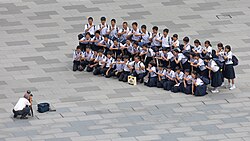
Key Facts
- Established: January 6, 2001 (via the merger of the Ministry of Education, Science, Sports and Culture and the Science and Technology Agency).
- Headquarters: Chiyoda-ku, Tokyo, Japan.
- Current Minister: Yohei Matsumoto.
- Key Child Agencies: Agency for Cultural Affairs and Japan Sports Agency.
- Global Reach: Manages the prestigious Monbukagakusho Scholarship and the JET Programme.
History and Evolution
The roots of MEXT date back to 1871, when the Meiji government established the first Ministry of Education to modernize the nation. However, the modern iteration of the ministry was formed on January 6, 2001. This reorganization merged the former Ministry of Education, Science, Sports and Culture with the Science and Technology Agency to create a more integrated approach to human development and scientific progress.
Organizational Structure
MEXT is led by the Minister of Education, Culture, Sports, Science and Technology, supported by two state ministers, two parliamentary vice-ministers, an administrative vice-minister, and two deputy ministers. The ministry is divided into specialized bureaus and agencies to manage its diverse portfolio.
Administrative and International Oversight
The Minister's Secretariat handles general policies, auditing, human resources, and community relations. For global engagement, the Director-General for International Affairs serves as the primary liaison between Japan's National Commission and UNESCO (United Nations Educational, Scientific and Cultural Organization) to promote sustainable development.
Additionally, the Department of Facilities Planning and Disaster Prevention focuses on the resilience of school infrastructure, specifically reducing damage from earthquakes, while supporting university research activities.
Education Bureaus
- Education Policy Bureau: Focuses on the concept of lifelong learning as outlined in the Basic Act on Education, using objective evidence to design policy.
- Elementary and Secondary Education Bureau: Oversees the development of students from preschool through upper secondary school.
- Higher Education Bureau: Manages undergraduate and graduate education, including grant permissions, teacher quality, and the admission of domestic and international students.
Sports and Culture
MEXT operates two major child agencies to promote well-being and the arts:
- Japan Sports Agency: Promotes physical education, public health, and Japan's competitiveness in international athletics.
- Agency for Cultural Affairs: Works toward a "Nation Based on Culture and Art" by encouraging participation in the arts.
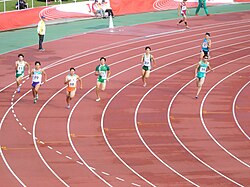
Science and Technology
The ministry's scientific wing is split into three primary bureaus:
- Science and Technology Policy Bureau: Promotes science and technology for both students and professionals.
- Research Promotion Bureau: Focuses on the development of scientific research, particularly in physics and technology.
- Research and Development Bureau: Addresses social challenges, focusing on energy, the environment, deep-sea exploration, and space.
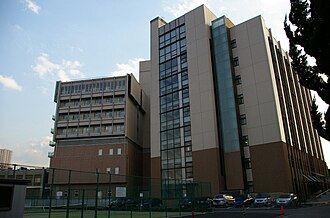
Research Funding and Global Programs
MEXT significantly boosts scientific advancement through the Japan Society for the Promotion of Science. By utilizing national bonds rather than relying solely on taxes, the ministry has funded critical research in fields such as bioinformatics, human genome research, biotechnology, brain research, and micro-mechatronics (micromachinery).
International Scholarships and Exchange
MEXT is globally recognized for its support of international students and educators:
- Monbukagakusho Scholarship: A prestigious award for research students (Masters/Ph.D.), undergraduates, and specialized training students.
- JASSO Scholarship: In cooperation with the Japan Student Services Organization, MEXT funds this program for the top 1% of international students, providing up to ¥80,000 per month.
- JET Programme: MEXT is one of three ministries that operate this exchange program.
Support for Japanese Nationals Abroad
MEXT provides the CLARINET (Children Living Abroad and Returnees Internet) portal for families overseas. It also manages the staffing of nihonjin gakkō (full-time Japanese international schools) and hoshū jugyō kō (supplementary schools), providing teachers and subsidies to ensure Japanese education continues worldwide.
MEXT Summary Table
| Sector | Primary Agency/Bureau | Key Focus Area |
|---|---|---|
| Education | Higher Education Bureau | University grants and student admissions |
| Culture | Agency for Cultural Affairs | Arts promotion and cultural participation |
| Sports | Japan Sports Agency | Physical health and international athletics |
| Science | Research and Development Bureau | Space, deep sea, and environmental issues |
| International | Director-General for International Affairs | UNESCO relations and global development |
Frequently Asked Questions
What is the difference between the Research Promotion Bureau and the Research and Development Bureau?
The Research Promotion Bureau focuses on the general development of scientific research in fields like physics and technology, while the Research and Development Bureau specifically targets social problems, such as energy, the environment, and exploration of space and the deep sea.
What is the Monbukagakusho Scholarship?
It is a government-funded scholarship provided by MEXT for international students who wish to study in Japan as undergraduate, graduate (Masters/Ph.D.), or specialized training students.
How does MEXT support Japanese children living outside of Japan?
MEXT provides information via the CLARINET internet portal and sends full-time teachers to nihonjin gakkō (international schools) and hoshū jugyō kō (supplementary schools), while also subsidizing weekend schools with over 100 students.
Which agencies fall under the jurisdiction of MEXT?
The two primary child agencies under MEXT are the Agency for Cultural Affairs and the Japan Sports Agency.
How is MEXT's scientific research funded?
Much of the funding is facilitated through the Japan Society for the Promotion of Science, often utilizing national bonds to support high-tech research in areas like biotechnology and biomedical engineering.