Mercury Relays: Principles of Operation and Application
A mercury relay is a specialized electrical switch that utilizes the unique properties of liquid mercury to establish or break an electrical connection. Unlike traditional mechanical relays that rely on physical armatures hitting a contact point, these devices operate through the displacement of liquid metal within a glass tube, offering distinct advantages in stability and longevity.
How Mercury Relays Work
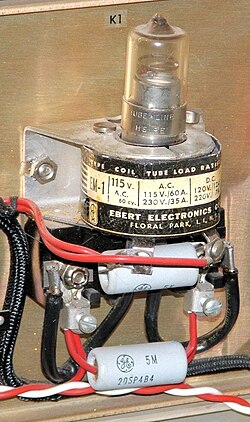
At its core, a mercury relay consists of a vertical glass tube containing a pool of liquid mercury. The device features isolated electrical contacts: one located at the bottom of the tube and another positioned partway up, typically within a side arm of the glass. The fundamental mechanism of the relay is displacement.
To facilitate this, a magnetic slug made of iron or steel is placed inside the tube. Because the slug is denser than mercury, it sinks by gravity, displacing the liquid and forcing the mercury level to rise. When the mercury rises high enough to bridge the gap between the bottom contact and the side contact, the electrical circuit is completed.
Operational Configurations
Depending on the placement of the coil and the volume of mercury, these relays can be configured for two primary types of operation.
Normally Closed Operation
In a normally closed setup, the control coil is placed around the top of the tube. In its resting state, the slug sinks, displacing the mercury and closing the circuit. When the coil is energized, it attracts the slug upward, lifting it out of the mercury pool. This allows the mercury to flow back down, away from the upper contact, which opens the circuit.
Normally Open Operation
For traditional normally open operation, the side contact is positioned higher or the volume of mercury is reduced so that the circuit remains open while the slug floats. In this configuration, the control coil is mounted below the resting level of the slug. When energized, the coil pulls the slug deeper into the pool, displacing more mercury and raising the liquid level to the side contact, thereby closing the circuit.
Key Facts
- High Durability: Capable of a large number of switching cycles.
- Low Resistance: Provides low and stable contact resistance.
- Self-Restoring: The mercury surface automatically restores itself after an electrical arc.
- Current Efficiency: Allows a small control current to switch significantly higher currents.
- Orientation Sensitive: Must be mounted near-vertically to function correctly.
Technical Specifications and Limitations
Mercury relays are frequently integrated into automatic controllers that require continuous, unattended switching over extended periods. Their ability to handle arcs without permanent damage makes them highly reliable for industrial automation.
However, their reliance on gravity and liquid levels introduces specific constraints. The sensitivity of the relay is directly tied to its angle relative to the vertical axis. Because of this dependency, mercury relays are unsuitable for use in mobile equipment or environments subject to high vibration, as these conditions would fluctuate the mercury level and cause erratic switching.
| Feature | Normally Closed (NC) | Normally Open (NO) |
|---|---|---|
| Coil Position | Top of tube | Below slug rest level |
| Resting State | Slug sinks; circuit closed | Slug floats; circuit open |
| Energized Action | Slug lifted; circuit opens | Slug pulled down; circuit closes |
| Mercury Movement | Flows downward | Rises upward |
Frequently Asked Questions
What is the primary advantage of using mercury in a relay?
The primary advantages include low and stable contact resistance and a self-restoring surface after an electrical arc, which allows for a high number of switching cycles without wear.
Why can't mercury relays be used in vehicles?
Mercury relays are unsuitable for mobile equipment because their sensitivity depends on their angle relative to the vertical. Movement or high vibration would disrupt the mercury level, leading to unreliable operation.
What is the role of the magnetic slug?
The magnetic slug (made of iron or steel) is used to displace the liquid mercury. By moving the slug up or down via a magnetic coil, the level of the mercury is altered to either bridge or break the electrical contacts.
How is the sensitivity of a mercury relay adjusted?
The sensitivity of the relay can be altered by adjusting the angle of the glass tube relative to the vertical position.
What are these relays typically used for?
They are often installed in automatic controllers that require extended periods of continuous, unattended switching operation where high reliability is essential.