Memmingen Airport: A Strategic Hub for the Allgäu Region
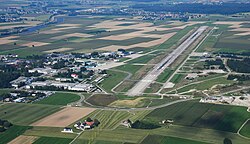
Located in the scenic town of Memmingerberg, Memmingen Airport (FMM) serves as a vital gateway for the Allgäu region and the wider Swabia area of Bavaria. Positioned approximately 110 km from Munich, it offers a cost-effective alternative to the larger Munich Airport, catering to travelers from Augsburg, Lake Constance, and western Austria. Notably, it holds the distinction of being the highest commercial airport in Germany, situated at an elevation of 633 meters (2,077 ft) above mean sea level.
From its origins as a military installation to its current status as a thriving low-cost carrier hub, the airport has undergone a dramatic transformation to support the growing demand for European leisure and metropolitan travel.
Key Facts
- IATA Code: FMM | ICAO Code: EDJA
- Location: Memmingerberg, Bavaria, Germany
- Primary Carriers: Ryanair and Wizz Air
- 2025 Statistics: Over 3.69 million passengers and 33,200 aircraft movements
- Runway: Single asphalt runway (06/24) measuring 2,981 meters (9,777 ft)
- Altitude: Highest commercial airport in Germany (633 m AMSL)
A History of Transformation
Military Origins and the Cold War
The site was first established as a military airfield in 1935. During World War II, it housed the Kampfgeschwader 255 (later Kampfgeschwader 51), operating Dornier Do 17 and Heinkel He 111H-20 aircraft. The facility suffered significant damage from attacks in 1944 and 1945. Following the war, the site served briefly as a refugee camp before being utilized by US allied forces as a training ground in the 1950s.
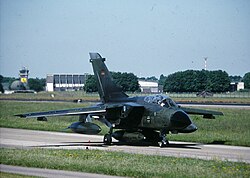
Between 1959 and 2003, the airport was the home of the German Air Force's Jagdbombergeschwader 34 ("Allgäu"). The squadron operated a succession of aircraft, including the F-84F Thunderstreak, the F-104 Starfighter, and eventually the Tornado IDS. During this era, the base played a critical role in NATO's nuclear deterrence, maintaining a nuclear weapons depot and Quick Reaction Alert aircraft until the weapons were relocated in 1996. The military airfield was officially decommissioned in 2003.
Transition to Civilian Aviation
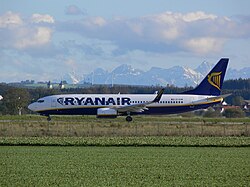
The airport reopened for civilian use in 2004. Early commercial efforts included domestic flights by TUIfly to cities like Berlin and Hamburg, as well as holiday destinations. However, the airport's trajectory shifted significantly in 2009 when Ryanair began operations, followed by Wizz Air. These low-cost carriers transformed the airport into a regional hub for budget-conscious travelers.
The airport achieved its first profitable business year in 2017 and has since seen exponential growth. By December 2018, it welcomed its 10 millionth passenger. Recent years have seen a surge in capacity, with Ryanair increasing its based aircraft to five Boeing 737s by December 2025 to meet rising demand.
Airport Facilities and Infrastructure
The Passenger Terminal
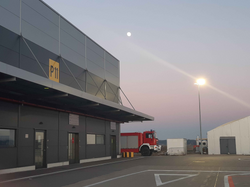
The terminal is designed for efficiency, featuring 11 check-in counters—including self-bag drop machines for Ryanair and Wizz Air—and 12 departure gates. The layout is divided into Schengen flights (Zone A, ground floor) and Non-Schengen flights (Zone B, upper floor). Because the airport does not utilize jet bridges, passengers use walk-boarding or bus-boarding to reach their aircraft.
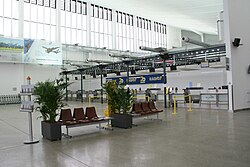
To accommodate growth, the arrivals hall and baggage claim area were expanded in 2021, and new gates were added in 2024. Future plans announced in 2025 include a vast terminal expansion with an enlarged second floor, two additional gates, enhanced security, and a new multi-story parking garage.
Runway and Technical Specifications
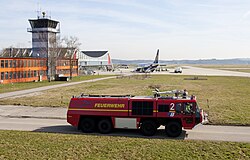
The airport operates a single asphalt runway (06/24). Originally narrow due to its military jet fighter history, the runway was widened to the international standard of 45 meters (148 ft) in 2019. It is equipped with an Instrument Landing System (ILS) Category 1 for runway 24, NDB/DME, and GPS RNAV. A new all-weather taxiway (Taxiway R) was completed in March 2025 to ensure operational reliability regardless of weather conditions.
Airlines and Connectivity
Memmingen Airport is primarily a base for Ryanair and Wizz Air, though it also hosts seasonal charters and other carriers. The most popular destinations include Palma de Mallorca, Sofia, and Banja Luka.
| Rank | Destination | Weekly Flights | Available Seats | Operating Airlines |
|---|---|---|---|---|
| 1 | Palma de Mallorca | 15 | 79,000 | Eurowings, Ryanair |
| 2 | Sofia | 8 | 48,000 | Ryanair, Wizz Air |
| 3 | Banja Luka | 7 | 45,000 | Ryanair |
| 4 | London–Stansted | 7 | 44,000 | Ryanair |
| 5 | Belgrade | 7 | 43,000 | Wizz Air |
Ground Transportation
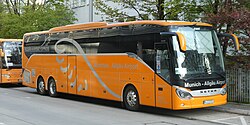
Travelers can reach the airport via several road and rail options. Local bus lines 2 and 810/811 provide a 15-minute connection to Memmingen town center and the railway station. From there, Deutsche Bahn provides frequent services to Munich (approx. 1 hour) and Augsburg (approx. 1 hour 10 minutes), as well as Swiss Federal Railways services to Zurich and Bregenz.
Frequently Asked Questions
What is the IATA code for Memmingen Airport?
The IATA code for Memmingen Airport is FMM.
Which airlines have a base at Memmingen?
Ryanair and Wizz Air are the primary focus airlines at the airport, with Ryanair basing five Boeing 737 aircraft as of December 2025.
How do I get from Memmingen Airport to Munich?
Passengers can take a local bus to Memmingen railway station, where Deutsche Bahn trains run to Munich with a journey time of approximately one hour.
Does the airport have jet bridges?
No, Memmingen Airport does not have jet bridges; it utilizes walk-boarding and bus-boarding for all passengers.
What makes Memmingen Airport unique among German airports?
It is the highest commercial airport in Germany, situated at an elevation of 633 meters above mean sea level.