Media Markets: How Broadcast Regions and DMAs Shape Audience Reach
A media market—also referred to as a broadcast market, media region, or television market area—is a specific geographic region where the population consumes similar media offerings. This includes television, radio, newspapers, and digital media. These markets serve as the primary framework for audience measurement, advertising planning, and broadcast regulation globally, though the specific methods for defining them vary by country.
While many markets align with metropolitan areas, some span multiple cities or include rural regions with shared coverage. Because boundaries can overlap near regional borders, audiences sometimes have access to media from neighboring markets. Typically, a market is identified by its largest city, though some regions use multiple names to account for geography or separated metropolitan hubs, such as Albany – Schenectady – Troy, New York, or Harrisburg – Lebanon – Lancaster – York, Pennsylvania.
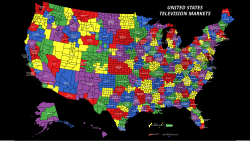
Key Facts
- Purpose: Media markets are used to determine how advertisers reach specific audiences based on demographics (age, gender, ethnicity) and psychographics (income levels).
- US Regulation: In the United States, the Federal Communications Commission (FCC) uses Television Market Areas (TMAs) to regulate transmissions and "must-carry" rules for cable and satellite.
- Nielsen DMAs: There are 210 Nielsen Designated Market Areas (DMAs) in the US, with 70 using automated metering for viewership estimates.
- Radio vs. TV: Radio markets are generally smaller than television markets due to stricter broadcast power restrictions and the wider reach of cable TV.
- Global Variation: In the US, media regions are defined by private institutions; in the UK, government-run stations map their own regions.
Television Market Structures in the United States
Television Market Areas (TMA)
A Television Market Area (TMA) consists of a group of counties covered by a specific set of television stations. Regulated by the FCC under 47 CFR § 76.51, TMAs determine which channels cable and satellite subscribers must receive and restrict the rebroadcasting of signals to stations within the same market, with the exception of the "significantly viewed" list.
Due to the digital television transition and challenging terrain like mountains, a TMA may cover a larger area than the stations can actually reach via broadcast. In such cases, outlying areas rely on cable, satellite, or small translators. For example, Olean, New York, is part of the Buffalo market despite being 70 miles away and lacking direct signals from Buffalo's major stations.
Designated Market Areas (DMA)
The term Designated Market Area (DMA) is a trademark of Nielsen Media Research. Nielsen uses DMAs to identify which TV stations best reach an area and attract the highest viewership. Currently, there are 210 DMAs across the United States.
Historical Context: ADIs
Previously, Arbitron maintained "areas of dominant influence" (ADI) for television ratings. Established in 1966, there were 209 ADIs in the continental US for the 1993–1994 season before Arbitron ceased its television ratings service in late 1993.
Radio Market Dynamics
Radio markets are managed by Nielsen Audio (formerly Arbitron) and are known as Arbitron Radio Metros. These are significantly smaller than TMAs; while a TMA might cover ten counties, a Radio Metro typically covers only two to four. Consequently, a single TMA may encompass several separate Radio Metros.
There are 302 Radio Metros in the US, though they do not cover the entire country. In 2009, Nielsen entered the radio ratings market, specifically competing in markets ranked 101st and smaller.
Media Market Comparison Summary
| Market Type | Primary Entity | Scope/Scale | Primary Use |
|---|---|---|---|
| TMA | FCC | County groups | Regulation & Must-Carry rules |
| DMA | Nielsen | 210 US regions | Viewership & Ad planning |
| Radio Metro | Nielsen Audio | 2-4 counties | Radio audience measurement |
Frequently Asked Questions
What is the difference between a TMA and a DMA?
A Television Market Area (TMA) is a regulatory term used by the FCC to manage broadcast rules and cable carriage. A Designated Market Area (DMA) is a commercial term trademarked by Nielsen to measure viewership and advertising reach.
Why are radio markets smaller than television markets?
Radio markets are smaller because broadcast power restrictions for radio are stricter than those for television, and television signals are extended further through cable infrastructure.
How are media markets named?
They are usually named after the largest city in the region. However, if multiple large cities are present or geography is complex, the market may be identified by several cities, such as Chico – Redding, California.
How do advertisers use media market data?
Advertisers use demographic data (age, gender, ethnicity) and psychographic data (income levels) within these markets to target their campaigns to specific audience segments.
Do all areas of the US fall into a media market?
Virtually all of the United States is located within the boundaries of exactly one TMA, although not all areas are covered by the 302 existing Radio Metros.