Mealworms: Biology, Nutritional Value, and Environmental Potential
The mealworm, scientifically known as Tenebrio molitor, is the larval stage of the yellow mealworm beetle, a species of darkling beetle. While often recognized as common household pests or pet supplies, these insects are increasingly being studied for their significant nutritional profiles and their unique ability to interact with environmental waste.

Key Facts
- Scientific Name: Tenebrio molitor
- Life Stages: Egg, larva, pupa, and adult (holometabolic)
- Nutritional Profile: High in protein (14–25g per 100g) and essential minerals
- Environmental Use: Capable of degrading polystyrene (Styrofoam)
- Regulatory Status: Approved as novel food in the European Union
Biological Classification and Description
Tenebrio molitor belongs to the kingdom Animalia, phylum Arthropoda, and the order Coleoptera. As holometabolic insects—meaning they undergo complete metamorphosis—they progress through four distinct life stages: egg, larva, pupa, and adult.
The physical dimensions of the species vary significantly between stages. The larvae, commonly called mealworms, typically reach lengths of approximately 2.5 centimeters (0.98 inches) or more. In contrast, the adult beetles are smaller, generally measuring between 1.25 and 1.8 centimeters (0.49 to 0.71 inches) in length. Adult beetles are characterized by a dark brown or black coloration.
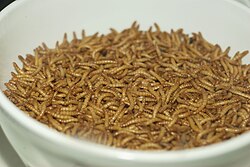
The Mealworm Life Cycle
The life cycle of the mealworm is a complex process influenced by environmental factors such as temperature and parental age. The cycle begins when eggs hatch, typically within 4 to 19 days of being laid by the female.
Larval Development and Instars
During the larval stage, mealworms feed on vegetation and dead insects. They grow through a series of molts known as instars. While the number of instars can vary from 9 to 20, most larvae complete between 15 and 17 instars. The larvae are initially white, gradually turning brown after the second instar. Body length increases with each successive molt, peaking at the 17th instar before slightly decreasing.
Pupation and Adulthood
After the final larval molt, the insect enters the pupal stage. The pupa is initially whitish and darkens to brown over time. Depending on environmental conditions like temperature, the adult beetle emerges after 3 to 30 days. An adult female can lay an average of 500 eggs during her 6–12 month lifespan.
Factors Influencing Development
Research indicates that both temperature and the age of the parents play critical roles in the development of Tenebrio molitor:
- Temperature: Higher temperatures can shorten the larval stage and decrease the number of molts.
- Parental Age: Offspring from older beetles tend to have shorter larval stages and experience more rapid weight increases at an earlier age. However, as parents age, the percentage of eggs that successfully hatch decreases; for example, hatching rates may drop from 90% in the first two months to approximately 50% after four months.
Nutritional Value and Human Consumption
In recent years, mealworms have gained attention as a sustainable food source. They were approved for consumption in Switzerland in May 2017, and the European Union authorized dried mealworms as a novel food in June 2021.
| Nutrient/Metric | Mealworm Larvae (Raw) | Beef (Reference) |
|---|---|---|
| Energy (kcal) | 206 | Variable |
| Protein (g) | 14–25 | Variable |
| Minerals (K, Cu, Na, Se, Fe, Zn) | High (Rivals beef) | High |
| Vitamins | Higher by weight (excluding B12) | Standard |
Health Considerations and Allergies
While mealworms are safe for most, there are potential health risks to consider. In rare instances, live larvae have been found in the gastrointestinal tracts of humans and animals. Additionally, studies have shown that approximately 4.3% of tested patients showed sensitization to mealworms, often occurring alongside cross-sensitization to other insects like crickets or shrimp.
Environmental Impact: Polystyrene Degradation
Beyond nutrition, mealworms offer potential solutions for waste management. In 2015, research discovered that 100 mealworms can degrade polystyrene (commonly known as Styrofoam) into organic matter at a rate of 34–39 milligrams per day. This process is driven by microorganisms within the mealworm's gut rather than the insect itself.
Frequently Asked Questions
How much protein is in mealworms?
Every 100 grams of raw mealworm larvae contains between 14 and 25 grams of protein.
Can mealworms eat plastic?
Yes, mealworms can degrade polystyrene into usable organic matter, a process facilitated by microbes in their gut.
Are mealworms safe to eat?
Yes, they have been authorized as a safe novel food by the European Food Safety Authority, though individuals with allergies to other arthropods (like shrimp) should exercise caution.
What do mealworms eat?
In their larval stage, mealworms typically feed on vegetation and dead insects. In commercial settings, they are often raised on bran or oatmeal.
How long do mealworm beetles live?
The adult beetle typically has a lifespan of approximately 6 to 12 months.