Mayo Clinic: A History of Medical Innovation and Integrated Care
The story of the Mayo Clinic is one of evolution—from a small-town private practice in the 19th century to a global leader in healthcare. Founded on the principles of collaboration and patient-centered care, the institution pioneered the integrated multi-specialty practice, a model where diverse medical experts work together to treat the whole patient rather than isolated symptoms.
The Early Years and the Birth of Saint Mary's
The clinic's roots trace back to Dr. William Worrall Mayo, a British-born physician mentored by the scientist John Dalton. After migrating to the United States in 1846 and pursuing medical degrees, Mayo eventually settled in Rochester, Minnesota. On January 27, 1864, he opened a private practice above the Union Drug Store, offering medical services day and night.
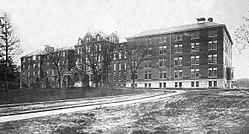
The trajectory of the practice changed forever on August 21, 1883, when a devastating tornado struck Rochester, killing at least 37 people and injuring over 200. Dr. Mayo led the medical relief efforts, collaborating with Mother Alfred Moes and the Sisters of Saint Francis. This partnership led to a handshake agreement: the Sisters would fund a hospital if the Mayo family provided the medical care. This resulted in the opening of Saint Mary's Hospital on September 30, 1889.
The Evolution of Group Practice
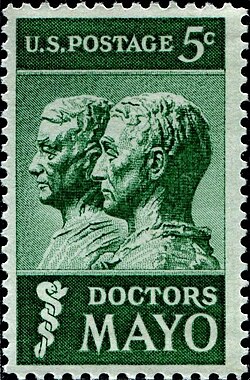
As medicine became more specialized and transportation improved, the Mayo brothers—Dr. Will and Dr. Charlie—expanded their father's solo practice into a collaborative group. They welcomed partners such as Augustus W. Stinchfield and Henry Stanley Plummer to broaden their clinical scope.
Dr. Henry Plummer, a thyroid specialist and polymath, was instrumental in shaping the clinic's operational DNA. He developed the integrated dossier, a medical record system that allowed physicians to share patient information efficiently, replacing the fragmented system of verbal reports and letters. Plummer also designed critical infrastructure, including pneumatic tube systems and steam sterilization rooms.
National Expansion and Nonprofit Transition
In 1919, the Mayo brothers and their wives took a monumental step by donating their assets and life savings to transform the private partnership into a not-for-profit organization. This shift ensured that the clinic's primary focus remained on patient care, research, and education.
Following World War II, the clinic expanded its footprint. Key milestones include the 1972 opening of the Mayo Medical School (now the Mayo Clinic Alix School of Medicine) and the 1986 unification with Saint Mary's and Rochester Methodist hospitals. The clinic later expanded into Florida (1986), Arizona (1987 and 1998), and eventually established an international presence in the United Arab Emirates (2019) and London (2020).
Key Facts
- Founded: Originated from W.W. Mayo's 1864 practice; Saint Mary's Hospital opened in 1889.
- Innovation: Developed the first integrated medical record (dossier) and the first hospital-based blood bank (1935).
- Nobel Prize: Two physicians were awarded the 1950 Nobel Prize in Medicine for the discovery of cortisone.
- Global Reach: Operates campuses in Minnesota, Florida, Arizona, and the UK.
- Governance: Mandates that CEOs must be physicians from within the organization.
Contributions to Medicine and Science
Mayo Clinic has consistently pushed the boundaries of medical science. In 1905, they advanced the use of frozen tissue during surgery to diagnose cancer in real-time. During World War II, the clinic developed the G-suit—a garment with air bladders that prevented blood from pooling in pilots' legs during high G-force maneuvers.
Other landmark achievements include:
- Surgical Firsts: Performing the first FDA-approved hip replacement in the U.S. (1969) and purchasing the first U.S. CT scanner (1973).
- Regenerative Medicine: Launching first-in-human studies in 2013 using patient cells to heal heart damage.
- Technological Partnerships: Collaborating with Apple in 2014 to develop HealthKit for personal health data management.
- Advanced Therapy: Treating over 10,000 patients with proton beam therapy as of 2023.
Architecture, Art, and Education
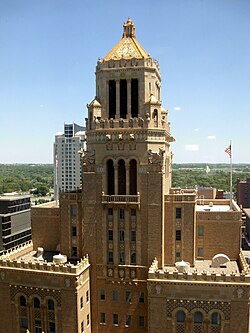
The clinic's physical environment is designed to support healing. In 1914, it opened the first building specifically designed for multispecialty group practice. The Plummer Building, listed on the National Register of Historic Places, continues this legacy. The clinic also maintains a world-class art collection, featuring works by Andy Warhol, Auguste Rodin, and Joan Miró, based on the belief that arts and healing are linked.
Education is equally central. Since 1915, the clinic has offered graduate medical education, now encompassing five distinct schools within the Mayo Clinic College of Medicine and Science.
| Year | Event/Innovation | Significance |
|---|---|---|
| 1864 | Private Practice Opened | Foundation of the Mayo medical legacy in Rochester. |
| 1889 | Saint Mary's Hospital Opens | First formal hospital partnership. |
| 1919 | Nonprofit Transition | Assets donated to create a not-for-profit entity. |
| 1935 | First Hospital Blood Bank | Pioneered blood storage for clinical use. |
| 1950 | Nobel Prize in Medicine | Awarded for the discovery of cortisone. |
| 2020 | Advanced Care at Home | Launched virtual care model for home patients. |
Frequently Asked Questions
What is the integrated multi-specialty practice model?
It is a collaborative approach where physicians from different medical specialties work together as a team to coordinate a patient's care, rather than the patient visiting separate, unconnected doctors.
Who was Henry Plummer and why was he important?
Dr. Henry Plummer was an early partner who revolutionized medical organization by creating the integrated medical record (dossier) and designing specialized building systems to improve surgical efficiency.
How did Mayo Clinic contribute to aviation safety?
During World War II, Mayo Clinic researchers developed the G-suit, which used air bladders to prevent pilots from losing consciousness due to blood pooling in the legs during high G-force maneuvers.
Is Mayo Clinic a for-profit business?
No. In 1919, the Mayo brothers and their wives donated their assets and savings to transform the practice into a not-for-profit organization.
What is the significance of the Mayo stand?
The Mayo stand is a one-legged mobile instrument stand designed by the hospital to provide surgeons with easy access to tools during procedures.