Master of Arts Degree: The Evolution of the Ancient University Model
The Master of Arts (MA) degree is one of the most recognized academic credentials in the world, yet its origins and the way it is awarded vary significantly between institutions. While most modern universities treat the MA as a postgraduate degree requiring further study and examination, a few ancient institutions maintain a tradition where the degree is linked more to seniority and time than to additional coursework.
This system is rooted in the Middle Ages, when a comprehensive education in the liberal arts typically spanned seven years. During this era, students entered university at a remarkably young age, often between 13 and 14. The curriculum was divided into two stages: the Trivium (grammar, rhetoric, and dialectic) and the Quadrivium (geometry, arithmetic, astronomy, and music).
The Traditional Path to Mastery
Historically, a student first earned a baccalaureate, or bachelor's degree, after completing a portion of their studies. While the division between the Trivium and Quadrivium did not always align perfectly with the BA and MA degrees, the University of Cambridge adopted this structure during the Tudor period and maintained it long after other European institutions had evolved.
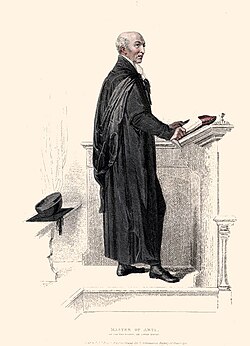
Upon achieving the Master of Arts, a graduate became a full member of the university, granting them the right to vote in the Convocation. These graduates were then eligible to teach at the university for a specific duration, during which time they were known as regent masters. Once their teaching tenure ended, they became non-regent masters, at which point they could either leave academia or pursue advanced studies in the higher faculties of Divinity, Medicine, or Canon and Civil Law.
Social Hierarchy and Academic Exemptions
For centuries, the university experience was heavily influenced by social class. Noblemen occupied the highest tier, paying four times the standard fees. Some were granted an MA after only two years of residence, bypassing the BA entirely. These students were visually distinguished by gold tassels on their mortarboard caps, while others wore black.
Below the nobility were fellow-commoners (at Cambridge and Dublin) or gentlemen commoners (at Oxford). They paid double fees, dined with fellows, and were often exempt from the lectures and exercises required for a BA, allowing them to graduate a year early. The standard students were known as commoners (Oxford) or pensioners (Cambridge and Dublin). At the lowest level were servitors (Oxford) and sizars (Cambridge and Dublin), whose fees were subsidized in exchange for performing menial tasks. Notable figures such as Isaac Newton (a subsizar) and Oliver Goldsmith (a sizar) began their journeys in this tier.
Certain institutional exemptions also existed. Until 1865, all students at King's College, Cambridge, came from Eton College and could graduate BA and MA without university exams. A similar arrangement existed at New College, Oxford, for students from Winchester College until 1834.
The Shift Toward Modern Examination
As the requirements for the BA degree became more rigorous, the requirements for the MA gradually declined. By the 18th century, the MA had largely become a formality, with residency requirements often met simply by keeping a name on the college books. Oxford introduced modern BA and MA exams in 1800, though the MA examination was abolished by 1807.
Newer institutions, such as Durham University (est. 1838) and the University of London (est. 1840), broke from this ancient model by requiring further examination for the MA. This shift established the modern standard where the MA is a distinct higher degree. However, some early 20th-century exceptions occurred, such as the "steamboat ladies"—women at Oxford and Cambridge who received ad eundem degrees from the University of Dublin because their own universities refused to grant degrees to women.
Global Variations and the American Experience
The practice of awarding an MA based on seniority was not limited to the UK. In the United States, several prestigious institutions followed this model. Harvard University practiced this from the mid-1600s until 1872, and Yale did so until 1871. Columbia University (originally King's College) abolished the practice in 1880 in favor of formal examinations.
Other American colleges, including Amherst, Dartmouth, and Union, awarded the MA "in course" to graduates after three years. By 1882, some critics described the US Master of Arts as a "meaningless record" of a graduate's survival and a return visit to their college three years after graduation.
Key Facts
- Ancient Model: At Oxford, Cambridge, and Dublin, the MA is still awarded roughly seven years after matriculation, reflecting the original seven-year liberal arts cycle.
- Curriculum: The original education consisted of the Trivium (language/logic) and the Quadrivium (mathematics/science).
- Regent Masters: Historically, an MA was a license to teach at the university.
- Social Tiers: Students were historically divided into noblemen, commoners/pensioners, and servitors/sizars.
- Modern Shift: Most universities now treat the MA as a postgraduate degree requiring additional study and exams.
| Model Type | Requirement | Example Institutions |
|---|---|---|
| Ancient/Seniority | Time since matriculation/graduation | Oxford, Cambridge, Trinity College Dublin |
| Modern/Academic | Further study and examination | University of London, Durham University |
| Historical US "In Course" | Three years post-graduation survival | Harvard, Yale, Columbia (pre-1880s) |
Frequently Asked Questions
Why is the MA still awarded by time at Oxford and Cambridge?
This reflects the medieval tradition where a full liberal arts education took seven years. Because much of the foundational learning moved to grammar schools, the time gap remains as a historical vestige of that seven-year cycle.
What were the Trivium and Quadrivium?
The Trivium consisted of grammar, rhetoric, and dialectic. The Quadrivium consisted of arithmetic, geometry, astronomy, and music. Together, they formed the basis of the liberal arts.
Who were the "steamboat ladies"?
They were female students from Oxford and Cambridge who traveled to the University of Dublin to receive degrees (including MAs) between 1904 and 1907, as their home universities did not yet confer degrees upon women.
What is the difference between a regent and a non-regent master?
A regent master was an MA who was currently teaching at the university. A non-regent master had completed their teaching requirement and could either leave the university or pursue higher degrees in law, medicine, or divinity.
How did social rank affect degrees in the past?
Noblemen and gentlemen commoners paid higher fees and often enjoyed exemptions from lectures and exams, sometimes receiving their degrees faster than students of lower social ranks, such as sizars or servitors.