Master Control in Broadcast Television: The Technical Hub of Broadcasting
In the complex world of television and radio broadcasting, the journey of a signal from a camera to a viewer's screen involves several critical stages. At the heart of this process lies master control, the technical hub of a broadcast operation. Found in most over-the-air television stations and networks, master control serves as the final checkpoint before a signal is transmitted to the public.
Defining Master Control and Its Role
Master control is the final point of signal processing before it is sent via terrestrial television, cablecast, satellite providers, or cable television operators. While it may seem similar to other control rooms, it serves a distinct purpose. Unlike a production control room (PCR), where directors coordinate live switching between different cameras in a studio, master control manages the overall output of the station.
For smaller operations, a transmission control room (TCR) may be used. A TCR is essentially a scaled-down version of centralcasting, providing the necessary tools for signal transmission on a smaller scale.
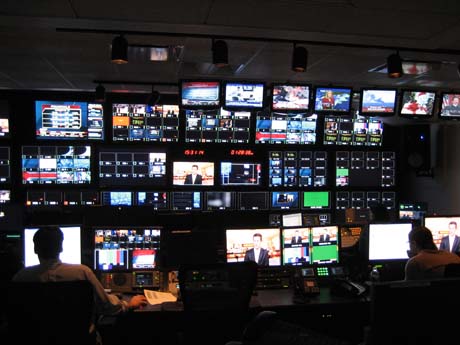
The Technology Behind the Hub
A modern master control room is equipped with a sophisticated array of hardware and software designed to ensure a seamless viewing experience. Key equipment typically includes:
- Video Monitors: Banks of screens used to monitor various signal sources and the final output.
- Signal Receivers: Satellite receivers that pull in remote feeds.
- Playback Systems: Videotape machines and modern video servers.
- Automation Equipment: Computer-based broadcast automation used for the precise recording and playback of programming.
- Transmission Gear: The hardware required to push the signal to the transmitter or provider.
The Role of the Master Control Operator
To maintain continuous operation, master control is generally staffed 24/7 by one or two operators. These professionals are the last line of defense for the on-air product, carrying out several critical responsibilities:
- Quality Assurance: Monitoring the accuracy and quality of the broadcast signal.
- Regulatory Compliance: Ensuring the transmission adheres to government regulations. This includes technical standards (preventing over-modulation or dead air—periods of silence/black screen) and content standards (managing station IDs and preventing indecency).
- Technical Troubleshooting: Quickly identifying and fixing equipment malfunctions to avoid outages.
- Playout Preparation: Organizing and preparing programming for its scheduled air time.
Centralization and Joint Master Control
The industry has seen a shift toward consolidation to increase efficiency. Many station groups and networks now utilize a joint master control (JMC), where multiple stations are operated from a single regional center, a process often called centralcasting.
A prominent example of this is NBC's "hub-spoke project." In this model, a single central hub controls the automation systems and monitors the air signals for dozens of stations, reducing the operational burden on local employees at owned-and-operated stations.
This trend is also prevalent outside the United States. The Canadian Broadcasting Corporation (CBC), for instance, manages four radio networks, two broadcast television networks, and various cable/satellite services using only two master control points: one for English language services in Toronto and one for French language services in Montreal.
| Facility Type | Primary Function | Key Characteristic |
|---|---|---|
| Production Control Room (PCR) | Studio coordination | Switching between cameras |
| Master Control | Final signal hub | Final point before transmission |
| Transmission Control Room (TCR) | Scaled-down transmission | Smaller version of centralcasting |
| Joint Master Control (JMC) | Regional consolidation | One hub controlling multiple stations |
Key Facts
- Master control is the final technical stop before a signal reaches the transmitter or cable provider.
- It is distinct from the Production Control Room (PCR), which focuses on studio camera switching.
- Operators monitor for dead air and over-modulation to meet government technical regulations.
- Modern facilities rely heavily on computer broadcast automation for playback.
- Centralcasting (JMC) allows a single hub to manage dozens of remote stations.
Frequently Asked Questions
What is the difference between master control and a production control room?
A production control room (PCR) is used during the creation of a program to switch between cameras and audio sources. Master control is the final hub that manages the overall output of the station, including commercials and pre-recorded segments, before the signal is transmitted.
What are the responsibilities of a master control operator?
Operators ensure the continuous operation of the station by monitoring signal quality, troubleshooting equipment, preparing programming for playout, and ensuring the station complies with government regulations regarding content and technical standards.
What is "dead air" in broadcasting?
Dead air refers to an unintended period of silence or a blank video screen during a broadcast, which master control operators must work to prevent or resolve quickly.
How does a Joint Master Control (JMC) work?
A JMC consolidates the technical operations of multiple stations into one regional center. This allows a single hub to monitor signals and manage automation for many different stations simultaneously, as seen in NBC's hub-spoke project.
What equipment is typically found in a master control room?
Typical equipment includes video monitors, satellite receivers, video servers, videotape machines, transmission equipment, and computer-based broadcast automation systems.