Marvel Cinematic Universe: The Evolution of a Shared Media Empire
The Marvel Cinematic Universe (MCU) represents a groundbreaking shift in storytelling, transforming traditional comic book adaptations into a massive, interconnected shared media universe. Created by Marvel Studios and owned by The Walt Disney Company, the MCU began in 2008 with the release of Iron Man and has since expanded across films, television, digital series, and theme park attractions.
Unlike standalone sequels, the MCU operates on a cohesive timeline where events in one production directly influence others. This ambitious architecture allows characters from different franchises to cross over, culminating in massive ensemble events that redefine the scale of cinematic storytelling.
Key Facts
- Origin: Launched in 2008 with Iron Man.
- Ownership: Managed by Marvel Studios under The Walt Disney Company.
- Structure: Divided into overarching narrative arcs called "Sagas," which are further broken down into "Phases."
- Scope: Spans feature films, short films (One-Shots), television series, animated content, and video game tie-ins.
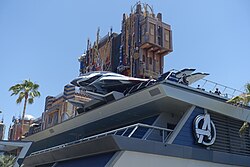
- Physical Presence: Includes immersive experiences like Avengers Campus at Disney parks.
The Architecture of the MCU
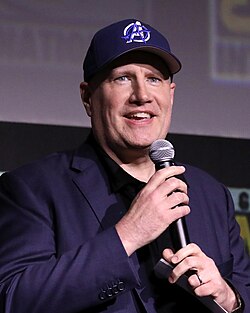
The development of the MCU was driven by a vision of a shared universe, a concept heavily shaped by Marvel Studios president Kevin Feige. By coordinating multiple directors and writers, Feige ensured that individual stories contributed to a larger, overarching plot.
The Infinity Saga
The first major era of the MCU, known as The Infinity Saga, focused on the collection of the Infinity Stones. This era is divided into three distinct phases:
- Phase One (2008–2012): Established the core heroes and culminated in the first team-up in The Avengers.
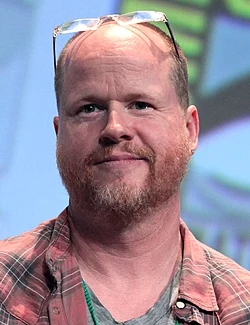
- Phase Two (2013–2015): Expanded the cosmic scale and introduced internal conflicts. Joss Whedon played a pivotal role here, providing creative insight across films and directing Avengers: Age of Ultron.
- Phase Three (2016–2019): The climax of the saga, resolving the conflict with Thanos in Avengers: Endgame.
The Multiverse Saga
Following the conclusion of the Infinity Saga, the MCU entered The Multiverse Saga, which explores alternate realities and parallel timelines. This era integrates characters from other properties, including those from 21st Century Fox, and is structured as follows:
- Phase Four (2021–2022)
- Phase Five (2023–2025)
- Phase Six (2025–2027)
Expansion Beyond the Big Screen
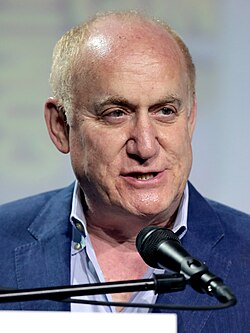
The MCU's reach extends far beyond theatrical releases. Marvel Television, previously led by Jeph Loeb, produced series for networks including ABC, Netflix, Hulu, and Freeform, integrating street-level heroes like Daredevil and Jessica Jones into the broader lore.
The franchise has also diversified into various other media formats:
- Literary Material: Tie-in comics, novels, and official guidebooks.
- Digital & Animation: Web series and Marvel Studios Animation projects.
- Audio & Music: Original scores and special concert experiences, such as the Infinity Saga Concert Experience.
- Gaming: Numerous video game tie-ins based on the films.
Immersive Experiences
The MCU has transitioned from the screen to the physical world through Avengers Campus, located in parks such as Disney California Adventure and Hong Kong Disneyland. These attractions allow fans to interact with the environment of the films.
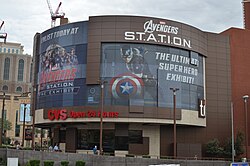
Additionally, the brand has expanded into other live attractions, including Avengers S.T.A.T.I.O.N in Las Vegas and themed dining on Disney cruises.
MCU Overview Summary
| Category | Details |
|---|---|
| Primary Creator | Marvel Studios |
| Key Architect | Kevin Feige |
| Major Sagas | The Infinity Saga, The Multiverse Saga |
| Media Formats | Films, TV, Comics, Games, Theme Parks |
| Timeline Range | 1260 BC to 2028 (In-universe) |

Frequently Asked Questions
What is the difference between a Saga and a Phase?
A Saga is a broad narrative arc that spans several years and multiple films (e.g., The Infinity Saga). A Phase is a smaller subdivision within a Saga, typically grouping a set of releases that build toward a specific milestone.
Who is responsible for the overall creative direction of the MCU?
Kevin Feige, the president of Marvel Studios, is the primary figure responsible for conceiving and managing the shared media universe.
Does the MCU include television shows?
Yes. The MCU includes series produced by both Marvel Television (for networks like Netflix and ABC) and Marvel Studios (primarily for Disney+), as well as digital and animated series.
What is the "Sacred Timeline"?
The Sacred Timeline refers to the primary sequence of events in the MCU, though the introduction of the Multiverse has established that events can also occur outside this main timeline in alternate realities.
Where can fans experience the MCU in real life?
Fans can visit Avengers Campus at Disney California Adventure, Hong Kong Disneyland, and Walt Disney Studios Park, or visit the Avengers S.T.A.T.I.O.N in Las Vegas.