Mariscal Sucre International Airport
Mariscal Sucre International Airport (IATA: UIO, ICAO: SEQM) serves as the primary gateway to Quito, Ecuador. As the busiest airport in the country, it is a critical piece of infrastructure for both national connectivity and international trade. Located in the Tababela parish, approximately 18 kilometers (11 mi) east of the capital city, it is frequently referred to by locals as Tababela Airport.
The airport is named in honor of Antonio José de Sucre, a key leader in the South American independence movement. Since its opening, it has gained global recognition for its quality, becoming the first airport in the Western Hemisphere to receive a 5-star rating from Skytrax.
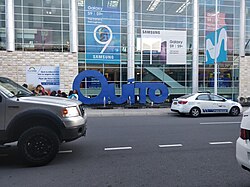
Key Facts
- Location: Tababela, Quito Canton, Pichincha, Ecuador.
- Elevation: 2,400 meters (7,900 ft) above mean sea level (AMSL).
- Opening Date: February 20, 2013.
- Hub Status: Main hub for Avianca Ecuador and the largest hub for LATAM Ecuador.
- Scale: Covers 1,500 hectares (3,707 acres), ten times larger than the previous airport.
- Passenger Volume: Handled 4.3 million passengers in 2022.
From Old to New: A Necessary Transition
The current facility replaced a 53-year-old airport of the same name. The original airport was situated in the heart of the mountainous city, which presented significant operational risks due to high wind currents and limited space. These constraints made it impossible to expand for larger aircraft or increased traffic, leading to several incidents and crashes in its final years.
Construction of the new site began in 2006 on the Oyambaro plain. Following a series of certification tests—including a nine-minute inaugural test flight on July 2, 2012, involving an American Airlines Boeing 757—the airport officially commenced operations on February 20, 2013.
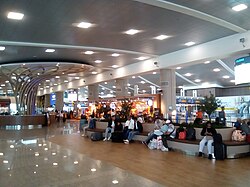
Airport Infrastructure and Operations
The airport is designed for high-capacity throughput, featuring a single primary runway (18/36) measuring 4,100 meters (13,451 ft) with a pavement surface. Its high elevation of 2,400 meters is a notable characteristic for flight crews and aircraft performance.
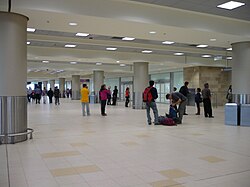
Passenger Experience
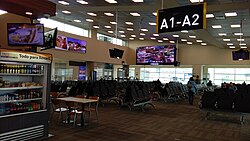
The terminal is equipped with modern check-in counters, departures screens, and boarding gates to manage millions of annual travelers.
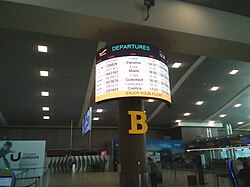
Airline Connectivity
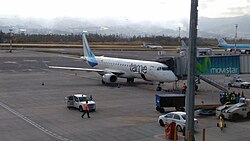
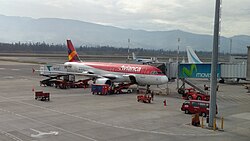
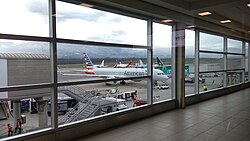
The airport hosts a diverse array of carriers. While it was previously the main hub for the state-owned TAME (liquidated in 2020), it now serves as a strategic base for Avianca Ecuador and LATAM Ecuador. Major international carriers including KLM, Iberia, Delta, and United Airlines provide vital links to Europe and North America.
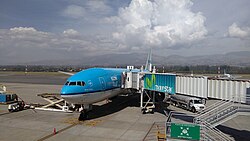
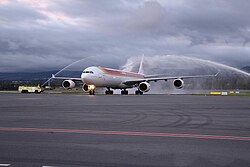
KLM operates daily flights to Quito and Guayaquil using the Boeing 777, while Iberia has historically connected the city to Madrid using the Airbus A340-600.
Economic Impact and Air Cargo
Beyond passenger travel, Mariscal Sucre is a powerhouse for logistics. According to the 2024 Sustainability Report from Corporación Quiport, the airport handled roughly 364,674 metric tons of cargo in 2024, ranking it fifth in Latin America and the Caribbean.
The airport is fundamental to Ecuador's agricultural economy; approximately 92 percent of the 300,943 metric tons of export cargo consists of flowers.
| Feature | Detail |
|---|---|
| IATA / ICAO Codes | UIO / SEQM |
| Operator | Quiport, CORPAQ |
| Runway Length | 4,100 m (13,451 ft) |
| Elevation | 2,400 m (7,900 ft) |
| Total Area | 1,500 hectares |
Frequently Asked Questions
Why was the old Quito airport replaced?
The old airport was located in a mountainous area with dangerous wind currents and lacked the space to expand for larger aircraft, posing significant safety risks.
Which airlines use Mariscal Sucre as a hub?
The airport currently serves as the main hub for Avianca Ecuador and the largest hub for LATAM Ecuador.
What is the primary export handled by the airport's cargo terminal?
Flowers are the dominant export, making up approximately 92 percent of the airport's export air cargo.
How does the airport rank in terms of quality?
It was the first airport in the Western Hemisphere to be certified with a 5-star regional airport rating by Skytrax.
Where exactly is the airport located?
It is located in the Tababela parish, about 18 kilometers (11 mi) east of Quito, on the Oyambaro plain.