Manizales: The World Capital of Coffee
Perched in the heart of the Colombian Andes, Manizales is a city of striking contrasts, where steep mountain slopes meet a vibrant urban culture. As the capital of the Department of Caldas, it is widely recognized as the "World Capital of Coffee" (Capital Mundial del café) and is celebrated for its hospitality, earning it the motto "The city of open doors." From its role as a global coffee hub to its status as a premier center for higher education, Manizales blends agricultural tradition with modern academic and economic growth.
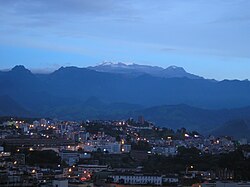
The city is defined by its dramatic geography, situated near the imposing Nevado del Ruiz volcano. This proximity to nature, combined with its high altitude, gives the city a unique atmosphere and a climate that feels like eternal spring.
Key Facts
- Founded: October 12, 1849, by the "Expedition of the 20."
- Elevation: 2,160 meters (7,090 ft) above sea level.
- Primary Economy: Coffee production, higher education, and the service sector (call centers).
- Climate: Subtropical highland climate (Cfb), characterized by moist, spring-like temperatures.
- Notable Landmark: The Cathedral of Manizales, the third tallest in Latin America.
- Sports Fame: Home to Once Caldas, winners of the 2004 Copa Libertadores.
Geography and Climate
Manizales is located in the northern part of the Coffee-Growers Axis (Eje Cafetero) within the Colombian Central Mountain Range. The city is known for its "abrupt topography," featuring steep slopes and ridgelines. Because the area is seismically unstable, the city has implemented specific architectural adaptations and public works to ensure safety.
The city sits in the basin of the Chinchiná River and the sub-basin of the Guacaica River. Its most prominent natural neighbor is the Nevado del Ruiz volcano, which reaches an altitude of 5,321 meters. While the fertile land is perfect for coffee, the region faces natural threats from volcanic eruptions, mudslides, and earthquakes.
Climatically, Manizales is classified as having a subtropical highland climate. It avoids the extreme heat typical of the tropics, maintaining uniform temperatures throughout the year. The city experiences two primary seasons: wet and dry, each lasting approximately three months. October is typically the wettest month, with annual precipitation averaging around 1,500 millimeters.
Economy and Education
Historically, the economy of Manizales has been driven by the cultivation and production of coffee. This industry spurred the growth of various factories producing rubber, chocolate, soaps, and metallurgy. Today, the city hosts critical coffee institutions such as Cenicafé and Almacafé.
In the latter half of the 20th century, Manizales evolved into a major academic hub. It is considered one of the largest university cities in Colombia, boasting more universities per capita than any other Colombian city. This academic environment attracts students from across the country, including regions like Tolima, Antioquia, and Valle.
Modern economic diversification has seen a surge in the service sector, particularly call centers. The city's business-friendly environment was highlighted by a 2010 World Bank study, which ranked Manizales as the easiest Colombian city to do business in.
Infrastructure and Urban Mobility
Due to the mountainous terrain, travel is significantly faster in an east-west direction. The primary longitudinal thoroughfares include Avenida Santander—the city's most important motorway—Avenida Paralela, and Avenida Kevin Ángel. North-south travel is primarily handled by Avenida Centenario and Avenida 12 de Octubre.
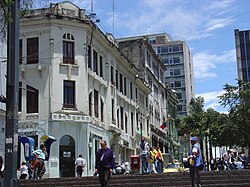
To overcome its steep topography, the city inaugurated the Manizales Aerial Tramway (Gondola Lift) in 2009. This system connects the downtown area with the regional bus station and the suburb of Villamaria, transporting up to 2,100 people per hour.
Air travel is currently served by La Nubia Airport. However, due to frequent fog and topographical constraints that prevent runway expansion, the city is constructing the International Coffee Airport in the town of Palestina. This new facility will feature a longer runway (up to 3,500 meters) and 24/7 operations.
Arts, Culture, and Tourism
Manizales is a vibrant cultural center known for its annual festivals. The Manizales International Theater Festival and the Manizales Jazz Festival are two of the most prestigious events in Latin America. Additionally, the Manizales Fair, established in 1951, features bullfights, horseback riding parades, and "trova" concerts.
A highlight of the fair is the International Coffee Beauty Pageant (Reinado Internacional del Café), which began in 1957 to promote the region's flagship product.
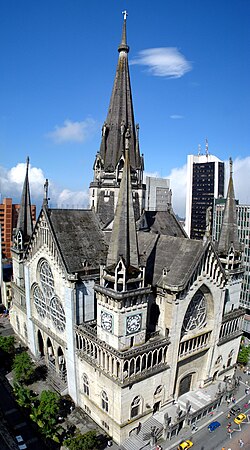
For tourists, the city offers a mix of architectural marvels and natural beauty. The Cathedral of Manizales stands as a towering neo-Gothic landmark at 113 meters. Nature lovers frequent the Nevado del Ruiz Natural Park, the Los Yarumos Ecological Park, and various hot springs such as Ruiz and Otoño.
Sports and Recreation
The city is a powerhouse in Colombian sports, particularly football. The Palogrande Stadium is the home of Once Caldas, a team that achieved international glory by winning the Copa Libertadores in 2004.
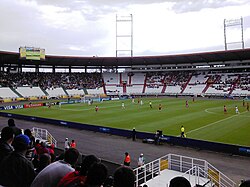
Beyond football, Manizales has a history of professional basketball and futsal. The city has also hosted major international events, including the 2011 FIFA U-20 World Cup and the 2001 Copa America.
| Category | Detail |
|---|---|
| Department | Caldas |
| Population (2018) | 434,403 (Municipality) / 552,155 (Metro) |
| Elevation | 2,160 m (7,090 ft) |
| Key Industry | Coffee & Education |
| Climate Type | Subtropical Highland (Cfb) |
| Major Airport | La Nubia (Current) / International Coffee Airport (Under construction) |
Frequently Asked Questions
Why is Manizales called the World Capital of Coffee?
Manizales is a primary center for the production of Colombian coffee and hosts several critical industry institutions, including Cenicafé and the Departmental Committee of Coffee Growers of Caldas.
What is the weather like in Manizales?
The city has a subtropical highland climate, meaning it stays moderately cool and moist year-round, similar to spring, with alternating wet and dry seasons.
What are the main transportation challenges in the city?
The "abrupt topography" of steep slopes makes north-south travel slower than east-west travel. To mitigate this, the city uses an aerial tramway (gondola lift) to move passengers efficiently.
Which sports team is most famous in Manizales?
Once Caldas is the most prominent team, known for winning the South American Copa Libertadores in 2004 and multiple Colombian First A championships.
What makes the Cathedral of Manizales special?
The cathedral is a significant architectural landmark and is recognized as the third tallest cathedral in Latin America, reaching a height of 113 meters.