Manhunting in Modern Military and Intelligence Operations
In the realm of national security and warfare, manhunting refers to specialized military operations conducted by intelligence organizations and special operations forces. The primary objective of these missions is to locate, capture, or eliminate specific enemy combatants, who are formally categorized as high-value targets (HVTs).
While the term encompasses a variety of tactical approaches, it has become particularly prominent in the context of United States military strategy during the global war on terror.
The Scope of Manhunting Operations
Manhunting is most frequently associated with counterterrorist activities. Depending on the mission objective and legal framework, these operations can take several forms. Some missions focus on the apprehension of targets for interrogation or trial, while others involve government-sanctioned targeted killing or extrajudicial execution. Due to the nature of these lethal actions, such operations often spark significant political and legal controversy.
Beyond the pursuit of enemy combatants, similar tactics and techniques are employed in other critical military operations, including personnel recovery and the rescue of hostages.
Key Facts
- Primary Goal: To search for, capture, or kill high-value targets (HVTs).
- Executing Entities: Typically carried out by special operations forces and intelligence agencies.
- Tactical Overlap: Techniques used in manhunting are also applied to hostage rescue and personnel recovery.
- Controversy: Targeted killings and extrajudicial executions often lead to legal and political debate.
Notable Historical Examples
The United States has utilized manhunting strategies in several high-profile operations. These include Operation Red Dawn and the search for Abu Musab al-Zarqawi. One of the most significant captures was that of Saddam Hussein, who was located in a concealed underground bunker.
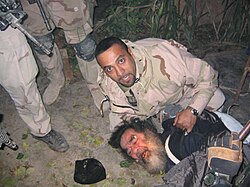
Other landmark missions include the killing of Osama bin Laden in May 2011 and Operation Absolute Resolve, which targeted the apprehension of Nicolás Maduro.
Similarly, Israel has employed these tactics during the Gaza war. Notable examples include the assassination of Mohammed Deif in July 2024 and the killing of Yahya Sinwar in October 2024.
| Target | Operation/Context | Outcome | Date/Period |
|---|---|---|---|
| Saddam Hussein | US Military Operation | Apprehended | Not Specified |
| Osama bin Laden | US Military Operation | Killed | May 2011 |
| Nicolás Maduro | Operation Absolute Resolve | Apprehension Target | Not Specified |
| Mohammed Deif | Gaza War (Israel) | Assassinated | July 2024 |
| Yahya Sinwar | Gaza War (Israel) | Killed | October 2024 |
Frequently Asked Questions
What is a high-value target?
A high-value target (HVT) is an important enemy combatant that intelligence and military forces prioritize for capture or elimination due to their role or influence within an opposing organization.
Who typically carries out manhunting missions?
These operations are generally conducted by special operations forces and various intelligence organizations.
Is manhunting only used for killing targets?
No. While some operations involve targeted killing, others are focused on the apprehension of targets or are used in personnel recovery and hostage rescue missions.
Why are some manhunting operations controversial?
Controversy typically arises when operations involve extrajudicial executions or government-sanctioned targeted killings, raising complex legal and political questions.
Which countries have recently used manhunting tactics?
The United States and Israel are two prominent examples, with the US focusing on the war on terror and Israel conducting operations during the Gaza war.